
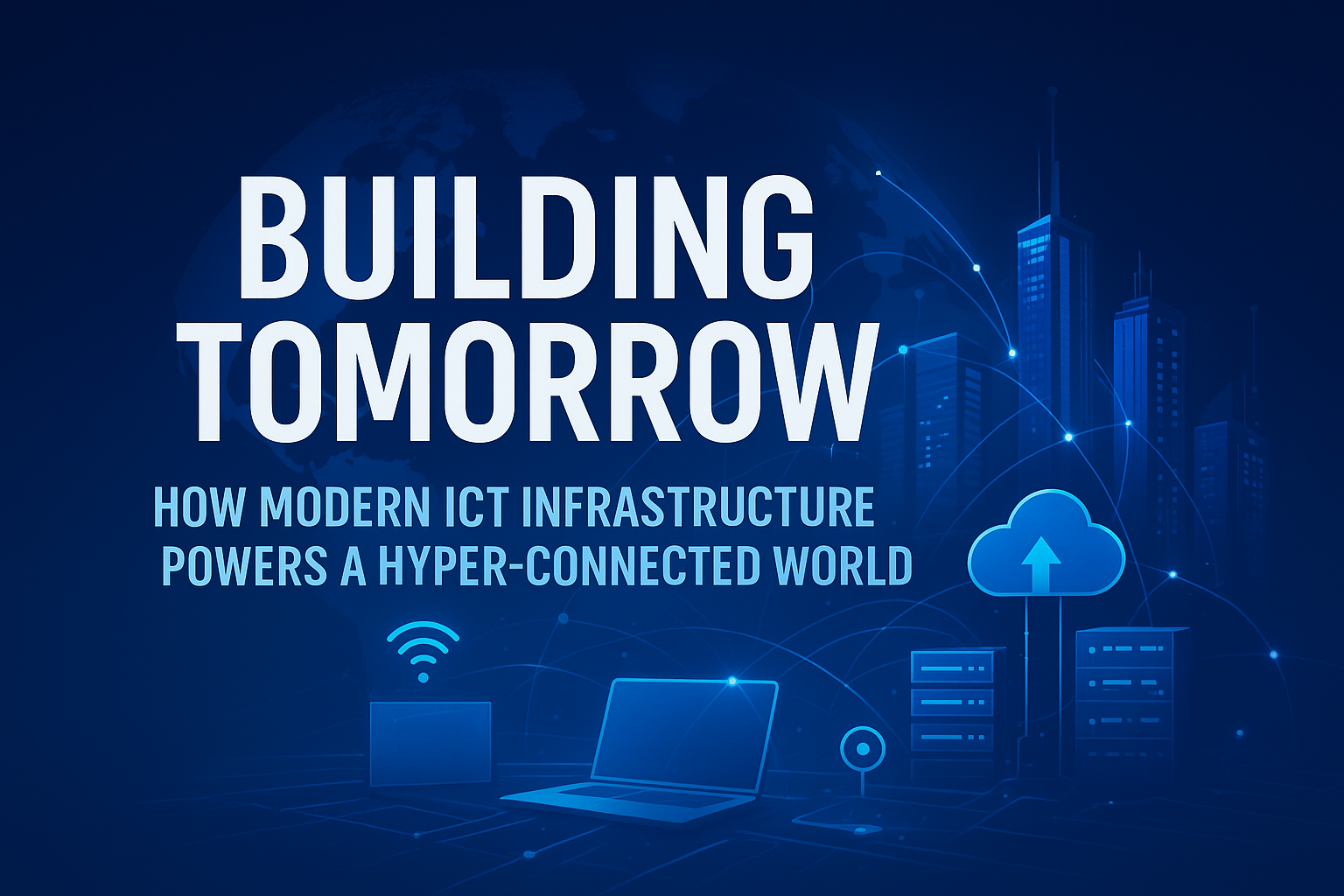
In today’s fast-evolving digital era, Information and Communication Technology (ICT) sits at the center of global transformation. From the way we communicate to how we learn, work, and innovate, ICT infrastructure forms the backbone of a world that is becoming more interconnected every day. As technologies mature and digital access expands, ICT not only enhances our daily experiences but also reshapes economies, education systems, and entire industries.
A New Digital Landscape
The modern world operates on a network of invisible highways—fiber-optic cables, wireless networks, cloud platforms, data centers, and satellite systems. These components make up the ICT infrastructure that enables seamless communication, instant data sharing, and digital collaboration.
Whether sending a message across continents or managing a business workflow in the cloud, these actions rely on robust ICT foundations. And as new technologies like 5G, AI, and edge computing emerge, the digital landscape is transforming at unprecedented speed.
Driving Innovation Across Industries
Strong ICT infrastructure acts as a catalyst for innovation. In healthcare, remote consultations and AI-powered diagnostics improve accessibility. In education, digital classrooms bridge the gap for learners across rural and urban areas. Businesses adopt cloud systems to scale efficiently, while governments deploy ICT solutions to improve public services.
The integration of ICT in everyday operations increases productivity, reduces costs, and creates opportunities that were unimaginable just a decade ago.
Connecting Communities and Empowering People
Beyond technology, ICT infrastructure plays a vital role in social development. By expanding digital connectivity to underserved areas, more people can access online learning, remote work opportunities, financial services, and digital entrepreneurship.
This shift contributes to narrowing the digital divide—a critical step toward inclusive economic growth.
The Future of ICT: Smarter, Faster, Stronger
Looking ahead, the future of ICT infrastructure is defined by advancements such as:
- 5G and beyond, enabling ultra-fast communication
- AI-driven automation, optimizing systems and decision-making
- Edge computing, bringing data processing closer to users
- Sustainable technologies, reducing environmental impact
- Expanded satellite networks, connecting remote regions globally
These innovations will fuel next-generation applications—from smart cities and autonomous transportation to advanced robotics and immersive virtual worlds.
Conclusion
ICT infrastructure is more than technology—it is the framework shaping the future of our connected society. As digital transformation accelerates, nations, businesses, and individuals must embrace these advancements to remain competitive and connected.
In building stronger ICT systems today, we are laying the foundation for a smarter, more inclusive, and more innovative world tomorrow.


Be First to Comment