
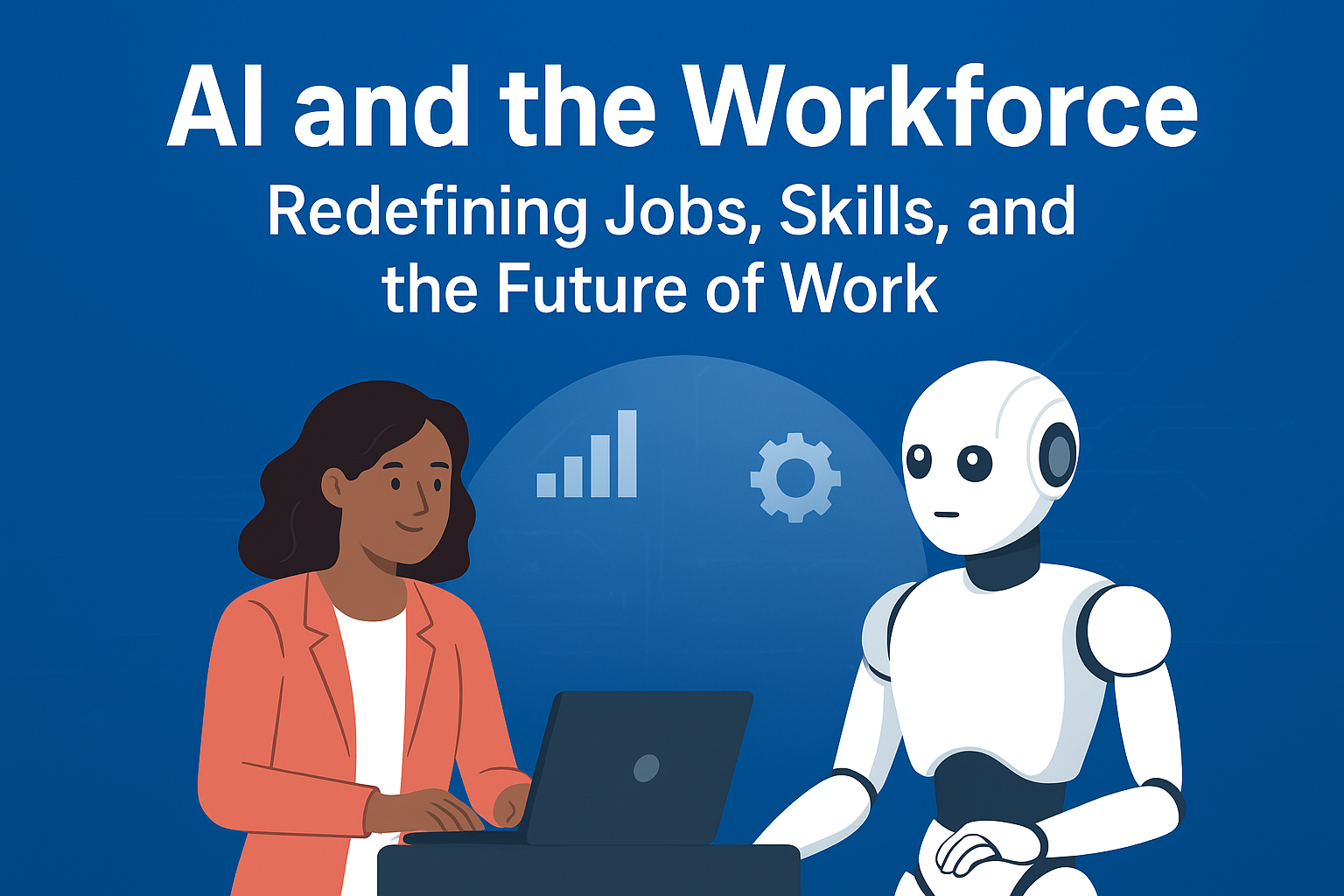
Artificial intelligence is no longer a distant concept—it’s a central force shaping the global economy. From automation tools to intelligent virtual assistants, AI is transforming how businesses operate and how people work. While some fear job displacement, others see AI as a powerful engine for opportunity, innovation, and new career paths.
To understand the future of work, we must examine how AI affects employment today and the skills that will define tomorrow’s workforce.
The Evolving Role of AI in Today’s Job Market
AI systems are increasingly capable of performing tasks once handled exclusively by humans—such as analyzing data, recognizing patterns, forecasting trends, and even generating content. These advancements are reshaping industries at every level:
- Manufacturing: Robotics and automation optimize production and reduce human error.
- Customer Service: Chatbots and AI assistants handle inquiries 24/7.
- Healthcare: AI-driven diagnostics and predictive analytics improve patient outcomes.
- Finance: Algorithms detect fraud, assess risk, and automate complex transactions.
- Transport & Logistics: Self-driving tech and route-optimization tools streamline operations.
The integration of AI does not signal the end of human roles—it marks the beginning of smarter, more efficient work structures.
Are Jobs Really Being Replaced? The Real Picture
AI does automate tasks, but research shows it rarely eliminates entire jobs. Instead, it transforms roles by shifting repetitive work to machines and freeing people to focus on:
- Creativity
- Strategic thinking
- Relationship management
- Decision-making
- Problem-solving
In many cases, AI creates more jobs than it removes. New roles in data science, machine learning, AI ethics, automation engineering, and prompt design are emerging faster than companies can fill them.
The Rise of AI-Driven Careers
As AI adoption grows, several new career paths are gaining prominence:
- AI Trainers & Prompt Engineers
Specialists who teach AI systems how to understand, reason, and follow instructions. - Automation Managers
Professionals who oversee workflows powered by AI tools. - Data Analysts & Machine Learning Engineers
Roles focused on turning data into actionable intelligence. - AI Compliance & Ethics Officers
Ensuring AI systems are fair, transparent, and aligned with legal standards.
These careers highlight a shift toward hybrid roles where humans collaborate with intelligent systems.
Skills Needed for the Future of Work
The workforce of tomorrow will require a blend of technical and human-centric skills.
1. Digital & Technical Literacy
Understanding AI tools, automation platforms, and data systems will be fundamental.
2. Critical Thinking
AI provides information—humans provide interpretation.
3. Adaptability
Technology evolves fast; the ability to learn continuously will be essential.
4. Emotional Intelligence
Human connection, empathy, and leadership cannot be automated.
5. Creativity
AI can assist, but human imagination remains unmatched.
Opportunities for Businesses and Workers
AI presents immense opportunities for both employers and employees:
- Businesses gain speed, accuracy, and reduced operational costs.
- Employees gain tools that reduce workload and boost productivity.
- Entrepreneurs can build AI-powered services, apps, and consulting agencies.
- Freelancers can use AI to scale content, marketing, and design tasks.
The key is embracing AI as a partner—not a competitor.
Challenges to Overcome
Despite its benefits, AI introduces challenges:
- Skill gaps
- Ethical concerns
- Workforce displacement anxiety
- Unequal access to digital tools
- Misuse or overreliance on AI systems
Governments, companies, and educational institutions must collaborate to ensure a balanced, inclusive transition.
The Future of Work: Humans + AI
The future is not about humans versus AI—it’s about humans working with AI.
Workplaces will evolve into hybrid environments where intelligent systems handle routine tasks while humans drive creativity, innovation, and complex decision-making. New industries will emerge, new jobs will be created, and career paths will expand in ways we can’t yet imagine.
Final Thoughts
Artificial intelligence is transforming the future of work, but the outcome depends on how we adapt. Those who embrace innovation, learn new skills, and stay agile will thrive in this new era.
AI is not the end of employment—it is the evolution of it.


Be First to Comment