
Introduction
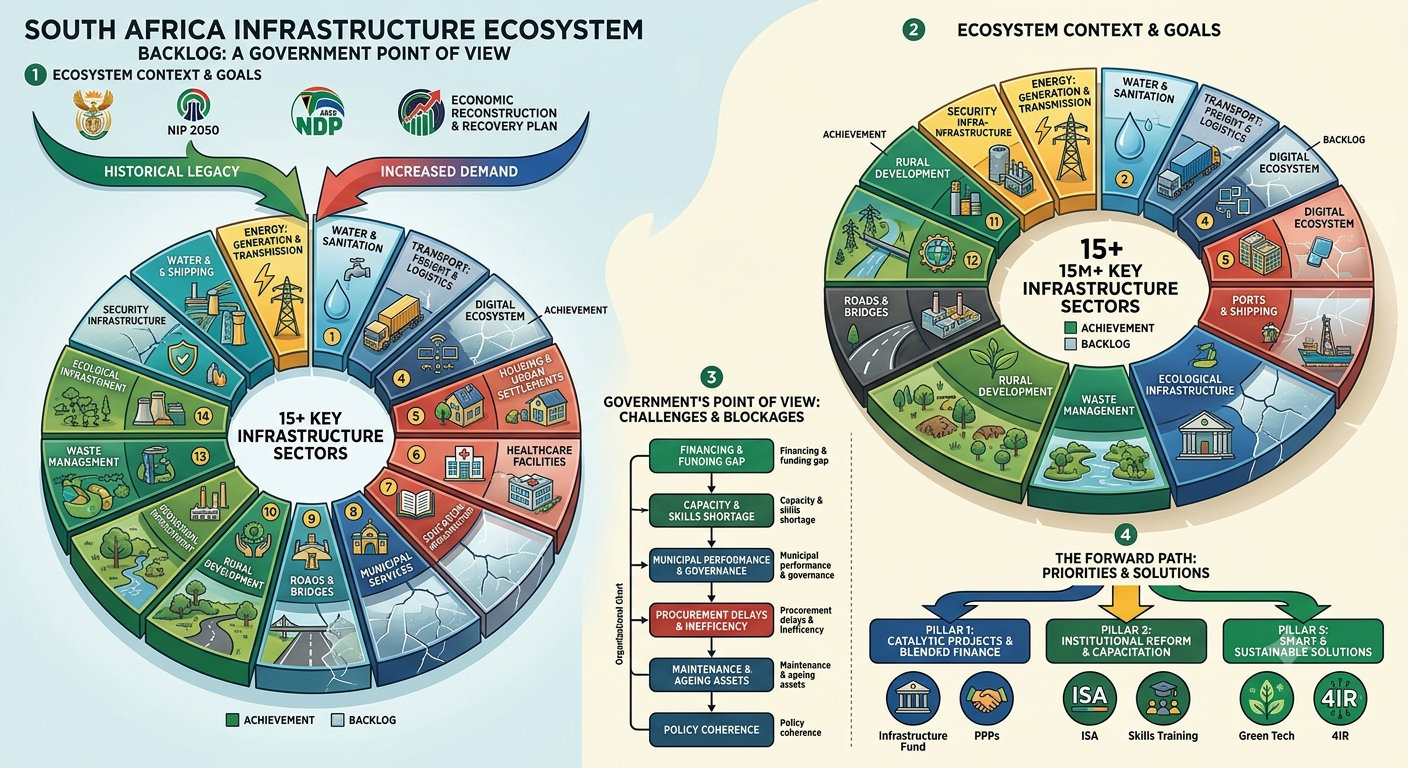
Infrastructure is the foundation of a country’s economy, social development, and national security. It includes roads, railways, electricity, water systems, hospitals, schools, telecommunications, ports, airports, housing, waste management, and digital networks. South Africa possesses one of Africa’s largest infrastructure networks, yet decades of underinvestment, rapid urbanisation, population growth, maintenance backlogs, corruption, skills shortages, and governance challenges have created significant infrastructure deficits.
From the South African government’s perspective, addressing these infrastructure backlogs is central to achieving economic growth, reducing unemployment, improving public service delivery, and enhancing citizens’ quality of life. The government has identified infrastructure development as one of the primary pillars of the country’s long-term development strategy.
Understanding an Infrastructure Ecosystem
An infrastructure ecosystem refers to the interconnected systems that support a modern society, including:
- Energy
- Water
- Transport
- Communications
- Health
- Education
- Housing
- Agriculture
- Digital infrastructure
- Industrial infrastructure
- Environmental protection
- Security infrastructure
When one sector fails, many others are affected because infrastructure systems are interconnected.
1. Electricity Infrastructure Backlog
The electricity sector remains South Africa’s largest infrastructure challenge.
Major problems
- Aging power stations
- Insufficient generation capacity
- Transmission bottlenecks
- Distribution failures
- Illegal electricity connections
- Equipment theft
- Cable vandalism
Consequences
- Load shedding
- Factory shutdowns
- Reduced investment
- Job losses
- Higher production costs
Government priorities
- Expansion of renewable energy
- Modernisation of transmission lines
- Grid expansion
- Independent Power Producer (IPP) projects
- Battery storage development
2. Water Infrastructure Backlog
South Africa faces severe water infrastructure challenges.
Problems include:
- Aging pipelines
- Leaking municipal systems
- Broken reservoirs
- Poor wastewater treatment
- Drought impacts
- Illegal water connections
Current estimates suggest that billions of litres of treated water are lost annually through leaks.
Government priorities include:
- Dam construction
- Pipeline replacement
- Water conservation
- Smart metering
- Improved wastewater treatment
3. Sanitation Infrastructure Backlog
Many communities still lack:
- Safe toilets
- Sewer networks
- Wastewater treatment
- Rural sanitation systems
Challenges include:
- Sewer spills
- River pollution
- Public health risks
- Environmental degradation
4. Road Infrastructure Backlog
South Africa has over 750,000 kilometres of roads, many requiring maintenance.
Common issues include:
- Potholes
- Cracked road surfaces
- Poor drainage
- Damaged bridges
- Rural access roads
Economic effects include:
- Increased vehicle repair costs
- Slower freight movement
- Reduced tourism
- Higher logistics costs
5. Railway Infrastructure Backlog
The national rail network has deteriorated due to:
- Cable theft
- Signal failures
- Aging locomotives
- Vandalism
- Maintenance delays
This has shifted much freight from rail to roads, increasing road damage and transport costs.
6. Port Infrastructure Backlog
Major ports experience:
- Congestion
- Equipment shortages
- Slow cargo handling
- Limited container capacity
Effects include:
- Export delays
- Higher shipping costs
- Reduced international competitiveness
7. Airport Infrastructure Backlog
Although major airports remain relatively modern, challenges include:
- Aging regional airports
- Maintenance funding shortages
- Security upgrades
- Air traffic technology improvements
8. Housing Infrastructure Backlog
South Africa continues to face a large housing deficit.
Key challenges include:
- Informal settlements
- Urban migration
- Land shortages
- Slow housing delivery
Government priorities include:
- Affordable housing
- Upgrading informal settlements
- Integrated human settlements
9. Hospital Infrastructure Backlog
Many public hospitals require:
- Building renovations
- Modern medical equipment
- Expanded emergency facilities
- Digital patient systems
Problems include:
- Aging buildings
- Water interruptions
- Electricity instability
- Equipment shortages
10. School Infrastructure Backlog
Challenges include:
- Overcrowded classrooms
- Pit toilets in some rural schools
- Limited laboratories
- Poor internet connectivity
- Aging buildings
Investment priorities include:
- Smart classrooms
- School renovations
- Digital education infrastructure
11. Digital Infrastructure Backlog
The Fourth Industrial Revolution requires:
- High-speed internet
- Fibre networks
- 5G coverage
- Data centres
- Cloud computing
Challenges include:
- Rural connectivity gaps
- Limited broadband
- High internet costs
- Digital inequality
12. Telecommunications Infrastructure
Expansion is needed in:
- Mobile towers
- Fibre optics
- Satellite communications
- Emergency communication systems
Benefits include:
- Digital business growth
- Online education
- Telemedicine
- E-government services
13. Stormwater Infrastructure Backlog
Many municipalities struggle with:
- Flooding
- Blocked drainage systems
- Poor urban planning
- Damaged culverts
Climate change is increasing the urgency of upgrading stormwater systems.
14. Waste Management Infrastructure
Challenges include:
- Limited landfill capacity
- Illegal dumping
- Poor recycling facilities
- Hazardous waste management
Future priorities include:
- Circular economy initiatives
- Waste-to-energy plants
- Recycling infrastructure
15. Public Transport Infrastructure
Many commuters depend on:
- Minibus taxis
- Buses
- Commuter rail
Challenges include:
- Aging buses
- Declining rail reliability
- Congestion
- Limited integrated transport planning
16. Agricultural Infrastructure
Agriculture requires investment in:
- Irrigation systems
- Farm roads
- Grain storage
- Cold-chain logistics
- Rural electrification
Improved infrastructure supports food security and exports.
17. Industrial Infrastructure
Industrial growth depends on:
- Reliable electricity
- Transport links
- Industrial parks
- Logistics hubs
- Manufacturing zones
Infrastructure investment can stimulate industrialisation and job creation.
18. Dam Infrastructure
Many dams require:
- Structural rehabilitation
- Sediment removal
- Safety inspections
- Capacity expansion
Healthy dam infrastructure supports water security, agriculture, and flood management.
19. Municipal Infrastructure
Municipalities face extensive backlogs in:
- Roads
- Water supply
- Sewer systems
- Electricity distribution
- Public buildings
Key challenges include limited technical capacity, funding constraints, and maintenance backlogs.
20. Climate Resilience Infrastructure
South Africa increasingly needs infrastructure that can withstand:
- Floods
- Droughts
- Heatwaves
- Wildfires
- Coastal erosion
Examples include:
- Flood barriers
- Climate-resilient bridges
- Water recycling plants
- Green infrastructure
- Renewable energy systems
Root Causes of Infrastructure Backlogs
Several structural factors contribute to these challenges:
- Population growth
- Rapid urbanisation
- Aging infrastructure
- Inadequate maintenance
- Budget limitations
- Corruption and procurement irregularities
- Skills shortages
- Vandalism and cable theft
- Climate change
- Weak municipal governance
- Slow project implementation
Economic Impact
Infrastructure deficits affect the economy by:
- Reducing economic growth
- Increasing unemployment
- Raising logistics costs
- Discouraging investment
- Limiting industrial expansion
- Increasing service delivery protests
- Worsening inequality
- Lowering global competitiveness
Government Strategies
The South African government has outlined several approaches to address these challenges:
- Expanding public infrastructure investment
- Encouraging public-private partnerships (PPPs)
- Modernising state-owned infrastructure
- Strengthening municipal infrastructure management
- Supporting renewable energy development
- Improving maintenance planning
- Digitising infrastructure monitoring
- Enhancing anti-corruption measures
- Developing technical and engineering skills
- Leveraging infrastructure financing through development finance institutions
- It is important to distinguish between infrastructure investment requirements and infrastructure backlog values. The South African government publishes investment allocations, but it does not publish one official rand value for every infrastructure backlog. Many of the figures below are estimates from government departments, state-owned entities, industry studies, and engineering assessments.
Estimated South African Infrastructure Backlog Values (2025–2026)
Infrastructure Sector
Estimated Backlog Value (Rand)
Main Issues
Electricity generation, transmission and distribution
R450–R600 billion
New generation capacity, transmission expansion, municipal distribution upgrades
Water supply infrastructure
R350–R450 billion
Dams, pipelines, reservoirs, treatment plants
Sanitation and wastewater
R180–R250 billion
Wastewater treatment works, sewer systems, pump stations
National, provincial and municipal roads
R300–R400 billion
Rehabilitation, resurfacing, bridge repairs
Rail infrastructure
R180–R250 billion
Freight rail, commuter rail, signalling, locomotives
Ports and logistics
R120–R180 billion
Container terminals, cranes, dredging, expansion
Airports
R25–R40 billion
Regional airport upgrades and maintenance
Public hospitals and clinics
R120–R180 billion
Refurbishment, new hospitals, medical equipment
Schools and education facilities
R90–R140 billion
Classrooms, laboratories, sanitation, digital learning
Housing and human settlements
R350–R500 billion
Housing backlog exceeding two million households
Digital infrastructure
R100–R150 billion
Fibre, 5G, rural broadband, government digital systems
Municipal infrastructure
R500–R700 billion
Roads, electricity, water, sewerage and public facilities
Stormwater and flood control
R60–R90 billion
Urban drainage systems and flood protection
Waste management
R40–R70 billion
Landfills, recycling plants, waste-to-energy facilities
Agricultural infrastructure
R70–R100 billion
Irrigation, rural roads, storage, cold-chain logistics
Public transport
R180–R250 billion
Bus rapid transit, commuter rail, taxi interchanges
Dam rehabilitation
R80–R120 billion
Dam safety, rehabilitation and expansion
Industrial zones and logistics hubs
R100–R160 billion
Industrial parks, SEZs and logistics corridors
Climate resilience infrastructure
R120–R180 billion
Flood defences, drought resilience, coastal protection
Estimated Total National Infrastructure Backlog
Adding these sectoral estimates suggests that South Africa’s total infrastructure backlog is approximately:
Lower estimate: R3.4 trillion
Upper estimate: R4.8 trillion
This aligns with statements by government and industry that South Africa requires well over R1 trillion in public infrastructure spending over the medium term, with substantially more investment from both the public and private sectors to eliminate accumulated backlogs by around 2030–2035. (SAnews)
Historical Growth of the Infrastructure Backlog
Year
Estimated Total Backlog
2010
~R1.2 trillion
2012
~R1.4 trillion
2014
~R1.7 trillion
2016
~R2.1 trillion
2018
~R2.6 trillion
2020
~R3.0 trillion
2022
~R3.5 trillion
2024
~R4.0 trillion
2025–2026
R4.0–R4.8 trillion
The increase reflects aging infrastructure, population growth, urbanisation, deferred maintenance, electricity constraints, municipal financial challenges, and rising construction costs, even as government has increased infrastructure investment commitments. (National Treasury of South Africa)
Conclusion
South Africa’s infrastructure ecosystem is both a challenge and an opportunity. Addressing backlogs across energy, water, transport, housing, healthcare, education, digital connectivity, and municipal services is essential for achieving sustainable development. A coordinated approach that combines effective governance, long-term planning, private sector participation, technological innovation, and consistent maintenance can transform infrastructure into a catalyst for inclusive economic growth, improved public services, and greater resilience.
The successful reduction of these infrastructure backlogs will strengthen South Africa’s competitiveness, create employment, improve living standards, and support the country’s long-term vision of a modern, inclusive, and prosperous economy.






Be First to Comment