
Abstract
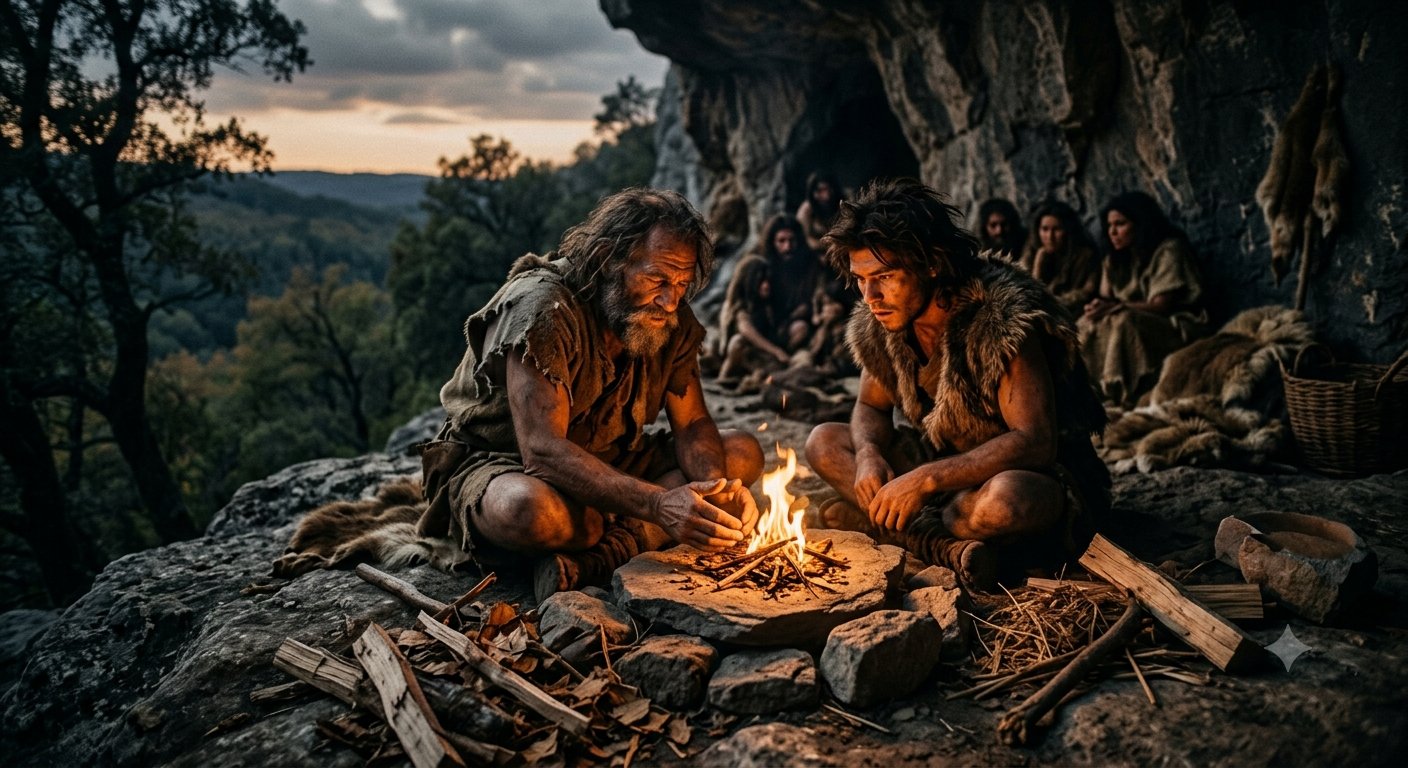
Fire is one of humanity’s greatest discoveries. Unlike the wheel, writing, or agriculture, fire was not invented from nothing—it was discovered in nature and later mastered by humans. The ability to control fire fundamentally transformed human evolution, civilization, science, technology, medicine, engineering, and industry. This thesis examines the origins of fire in the universe, its natural formation on Earth, the evolution of human interaction with fire, and its continuing importance in the modern and future world.
Chapter 1: Introduction
Fire has been central to the development of civilization for hundreds of thousands of years. Before humans controlled fire, survival depended almost entirely on daylight, raw food, and natural shelters. Once fire was mastered, human societies experienced dramatic improvements in health, security, communication, manufacturing, transportation, and scientific understanding.
Fire represents a rapid chemical reaction called combustion, during which fuel reacts with oxygen, releasing heat, light, and combustion products.
The three essential ingredients required for fire are known as the Fire Triangle:
- Heat
- Fuel
- Oxygen
Without one of these components, fire cannot continue.
Chapter 2: Fire Before Humanity
Fire existed billions of years before humans.
Natural sources of fire include:
- Lightning strikes
- Volcanic eruptions
- Meteorite impacts
- Spontaneous combustion of dry vegetation
- Wildfires caused by extreme heat
- Underground coal seam fires
Early Earth possessed volcanic activity capable of producing lava temperatures exceeding 1,000°C, creating extensive natural fires long before life evolved.
Chapter 3: Geological History of Fire
Scientific evidence indicates that:
- Earth formed approximately 4.54 billion years ago.
- Atmospheric oxygen remained too low for sustained fire during Earth’s earliest history.
- Around 420–430 million years ago, oxygen levels became sufficient to support widespread natural wildfires.
- Fossilized charcoal from this period confirms recurring fires.
Fire became an important ecological force, shaping forests and plant evolution.
Chapter 4: Early Human Discovery of Fire
Early humans did not initially create fire.
Instead, they encountered naturally occurring fires caused by:
- Lightning
- Volcanic lava
- Burning trees
- Grassland fires
Archaeological evidence suggests that species such as Homo erectus may have controlled fire roughly 1 million years ago, with stronger evidence from sites dating about 790,000 years ago. Later species, including Homo heidelbergensis and Homo sapiens, developed increasingly reliable fire-making techniques.
Chapter 5: Learning to Control Fire
Initially, humans preserved burning branches from natural fires.
Later they learned to:
- Protect embers
- Transport burning wood
- Build primitive fireplaces
- Maintain fires overnight
- Ignite new fires independently
This represented one of the greatest technological milestones in human history.
Chapter 6: The Invention of Fire-Making
Although fire itself was discovered rather than invented, humans invented methods to produce it.
Friction Method
Examples include:
- Hand drill
- Bow drill
- Fire plough
- Fire saw
Mechanical friction converts motion into heat until dry tinder ignites.
Stone Method
Striking certain stones creates sparks.
Examples:
- Flint
- Quartz
- Iron pyrite
Later, steel was added to improve spark generation.
Compression Method
Some cultures developed fire pistons, rapidly compressing air to generate enough heat to ignite tinder—an early demonstration of thermodynamic principles.
Chapter 7: Scientific Understanding of Fire
Combustion requires:
- Fuel
- Oxygen
- Activation energy
The basic reaction is:
Fuel + Oxygen → Carbon Dioxide + Water Vapor + Heat + Light
The energy released is stored in chemical bonds and is liberated during combustion.
Chapter 8: Fire and Human Evolution
Many anthropologists believe cooking with fire contributed significantly to human evolution.
Benefits included:
- Easier digestion
- Increased energy extraction from food
- Reduced exposure to foodborne pathogens
- Smaller digestive systems
- More energy available for brain development
- Longer lifespans
Fire also provided warmth and protection, allowing humans to occupy colder regions.
Chapter 9: Fire and Civilization
Fire accelerated civilization by enabling:
Food
- Cooking
- Food preservation
- Boiling water
Shelter
- Warm housing
- Ceramic production
- Brick making
Safety
- Predator deterrence
- Night-time illumination
Communication
- Signal fires
- Beacons
- Lighthouses
Chapter 10: Fire in Ancient Civilizations
Many early civilizations revered fire.
Examples include:
- Ancient Egypt
- Mesopotamia
- Greece
- Rome
- India
- China
Fire played roles in religion, metalworking, pottery, and public life.
Chapter 11: Fire and Metallurgy
Fire enabled extraction and shaping of metals.
Milestones include:
- Copper smelting
- Bronze production
- Iron smelting
- Steel manufacturing
These developments supported stronger tools, agriculture, and construction.
Chapter 12: Fire and Industrial Development
The control of fire underpinned major technological advances:
- Steam engines
- Railways
- Electricity generation
- Internal combustion engines
- Gas turbines
- Jet engines
- Rocket propulsion
Most modern thermal power stations still rely on heat produced by combustion or nuclear reactions to generate electricity.
Chapter 13: Fire in Science
Fire contributes to many scientific fields:
- Chemistry (combustion reactions)
- Physics (heat transfer)
- Engineering (energy systems)
- Materials science
- Environmental science
- Astronomy (stellar processes involve different forms of energy release, not ordinary fire)
Chapter 14: Fire in Medicine
Fire has influenced medicine through:
- Sterilization
- Surgical cauterization
- Pharmaceutical manufacturing
- Medical waste disposal
- Laboratory equipment sterilization
Chapter 15: Fire in Modern Industry
Industries dependent on controlled heat include:
- Cement
- Glass
- Ceramics
- Steel
- Petrochemicals
- Food processing
- Semiconductor manufacturing
- Aerospace
Chapter 16: Fire Safety
Modern societies manage fire using:
- Fire-resistant materials
- Automatic sprinklers
- Smoke detectors
- Fire extinguishers
- Emergency evacuation procedures
- Firefighting organizations
Understanding combustion has greatly reduced fire-related risks.
Chapter 17: Environmental Effects
Benefits:
- Nutrient recycling
- Habitat renewal in some ecosystems
- Seed germination for certain plant species
Challenges:
- Wildfire destruction
- Air pollution
- Greenhouse gas emissions
- Soil degradation
- Loss of biodiversity
Climate change has increased the frequency and intensity of severe wildfires in many regions.
Chapter 18: Fire in the Future
Future energy systems aim to reduce reliance on combustion while still using heat where appropriate.
Areas of development include:
- Clean hydrogen combustion
- Sustainable biofuels
- Electrified industrial heating
- Controlled nuclear fusion
- Advanced fire-resistant materials
- Smart wildfire detection using artificial intelligence and satellites
Chapter 19: Timeline of Fire
| Approximate Date | Event |
|---|---|
| 4.54 billion years ago | Earth forms |
| 420–430 million years ago | Oxygen levels support widespread natural wildfires |
| ~1 million years ago | Earliest evidence that humans controlled fire |
| ~790,000 years ago | Strong archaeological evidence of habitual fire use |
| Tens of thousands of years ago | Widespread fire-making technologies emerge |
| Bronze Age | Fire powers metal production |
| Iron Age | Advanced furnaces develop |
| 18th century | Steam engines drive the Industrial Revolution |
| 20th century | Fire powers automobiles, aircraft, and rockets |
| 21st century | Cleaner combustion and alternative energy technologies advance |
Chapter 20: Conclusion
Fire is not merely a source of heat or light—it is one of the foundations of human civilization. From natural wildfires on the early Earth to modern power stations and spacecraft, the mastery of fire has enabled extraordinary progress. It transformed diet, health, technology, engineering, manufacturing, and scientific understanding.
The future of fire lies in using its underlying principles more efficiently and sustainably, balancing humanity’s energy needs with environmental stewardship. Although many modern technologies increasingly rely on electricity and renewable energy, controlled heat and combustion will continue to play an essential role in industry, exploration, and innovation for generations to come.




Be First to Comment