
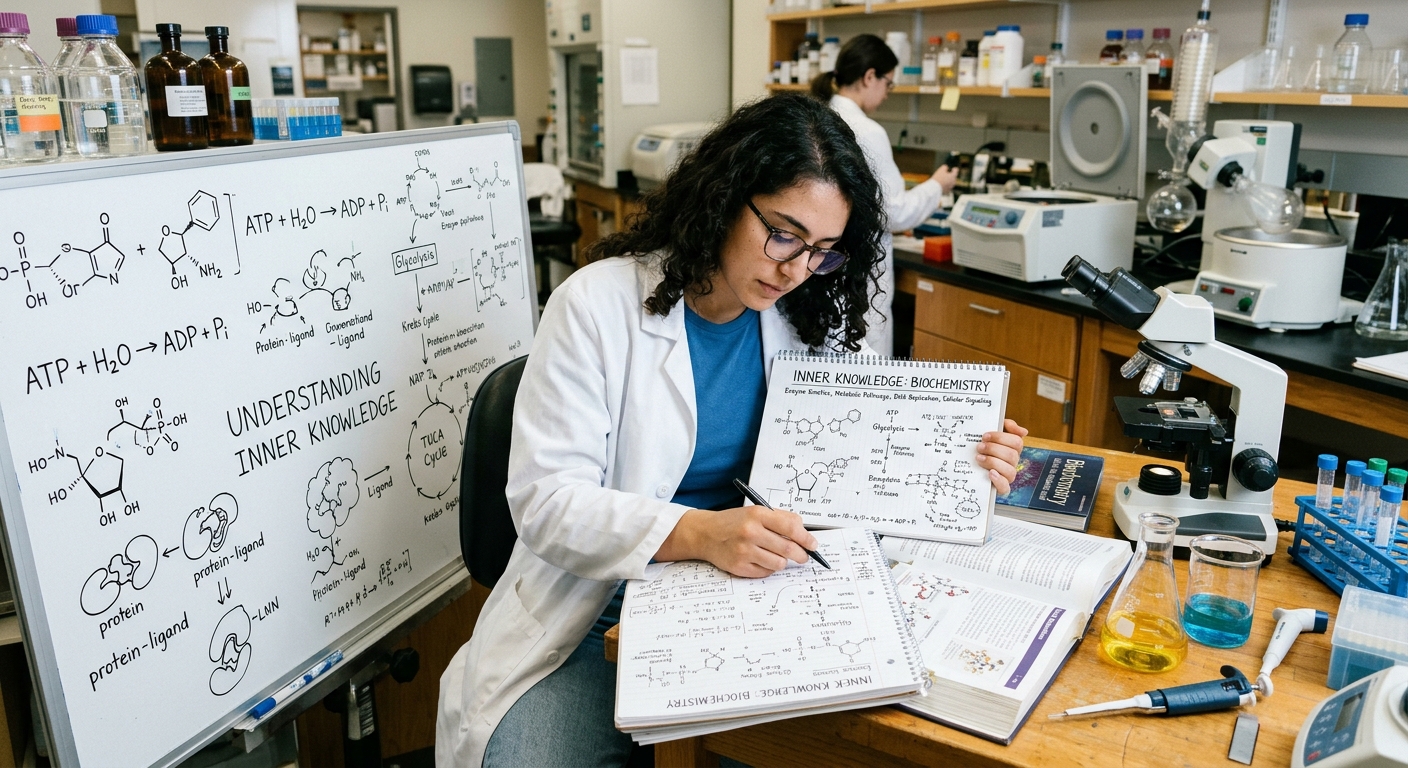
Understanding the Inner Architecture of Life, Molecular Systems, Energy, Cells, and Human Survival
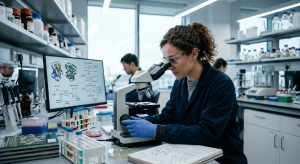
Scoperto un metabolismo nascosto nel nucleo cellulare – Tom’s Hardware
Unit 2 Photosynthesis, Respiration, and Macromolecules – Mr. Rath’s Classroom Website
12
The Science of Life at the Molecular Level
Central thesis: Biochemistry is the scientific discipline that explains how life works through chemical reactions, molecular structures, biological energy, genetic information, proteins, enzymes, cells, and interconnected metabolic systems.
Everything happening inside a living organism depends on biochemical processes. From the movement of muscles and communication between neurons to digestion, immunity, growth, memory, and cellular repair, biochemistry provides the molecular explanations.
To understand biochemistry properly, we must look beyond individual chemical substances. We must understand how thousands of molecular systems coordinate to maintain life.
This thesis develops that understanding from the smallest chemical building blocks to the complete human biological system.
PART 1. FOUNDATIONS OF BIOCHEMISTRY
Chapter 1. What exactly is biochemistry?
Biochemistry is the scientific study of the chemical composition, structures, properties, reactions, and interactions of substances found in living organisms.
It combines several scientific disciplines:
- Chemistry – understanding atoms, molecules, and chemical reactions.
- Biology – understanding living organisms and their organisation.
- Physics – understanding energy, molecular movement, forces, and interactions.
- Genetics – understanding DNA, RNA, and inherited information.
- Molecular biology – understanding biological processes at molecular level.
- Physiology – understanding how organs and biological systems function.
- Biotechnology – applying biological knowledge to develop useful technologies.
The central question of biochemistry is:
How do non-living chemical molecules organise themselves into the highly coordinated systems that make life possible?
For example, consider a human being.
When you eat food:
- Your digestive system breaks food into smaller molecules.
- Enzymes accelerate chemical reactions.
- Nutrients enter the bloodstream.
- Cells absorb glucose, amino acids, fatty acids, and other nutrients.
- Mitochondria help convert energy from nutrients into ATP.
- ATP supports cellular activities.
- Proteins maintain and repair cellular structures.
These processes are all biochemical.
Chapter 2. The hierarchy of biological organisation
Life is organised through several interconnected levels.
science-resources – Cells, tissues, organs and organisms
| Level | Description | Example |
|---|---|---|
| 1. Atoms | Fundamental chemical elements | Carbon, oxygen |
| 2. Molecules | Atoms chemically bonded | Water, glucose |
| 3. Macromolecules | Large biological molecules | DNA, proteins |
| 4. Molecular complexes | Interacting molecular structures | Ribosomes |
| 5. Organelles | Specialised cellular structures | Mitochondria |
| 6. Cells | Basic units of life | Neurons |
| 7. Tissues | Groups of specialised cells | Muscle tissue |
| 8. Organs | Structures containing different tissues | Heart |
| 9. Organ systems | Coordinated organs | Nervous system |
| 10. Organism | Complete living individual | Human being |
The important principle is that each level depends on the organisation and functioning of the levels below it.
PART 2. THE CHEMICAL FOUNDATION OF LIFE
Chapter 3. The six major elements of biological life
The human body and other living organisms are primarily constructed from six chemical elements.
Elements of Life AP Biology: CHNOPS, Carbon, and Biological Molecules | APScore5
These are commonly abbreviated as CHNOPS.
| Element | Symbol | Biological significance |
|---|---|---|
| Carbon | C | Forms the structural backbone of organic molecules |
| Hydrogen | H | Participates in chemical reactions and energy transfer |
| Oxygen | O | Essential for aerobic cellular respiration |
| Nitrogen | N | Found in amino acids and nucleic acids |
| Phosphorus | P | Essential for ATP, DNA, RNA and cell membranes |
| Sulfur | S | Found in certain amino acids and proteins |
3.1 Carbon: the foundation of organic chemistry
Carbon is particularly important because it can form four covalent bonds.
This enables carbon atoms to form:
- Long molecular chains.
- Branched structures.
- Rings.
- Complex three-dimensional molecules.
Carbon forms the structural foundation of carbohydrates, lipids, proteins, and nucleic acids.
Without carbon’s bonding versatility, the enormous molecular diversity of biological life would not be possible.
3.2 Hydrogen and oxygen
Hydrogen and oxygen combine to form water.
\[ H_2O \]
Water is fundamental to biological survival because it:
- Dissolves many biological substances.
- Supports chemical reactions.
- Helps transport nutrients.
- Regulates temperature.
- Maintains cellular volume.
- Provides the environment for molecular interactions.
3.3 Nitrogen, phosphorus and sulfur
Nitrogen contributes to the construction of amino acids and genetic molecules.
Phosphorus is central to energy transfer through ATP and the structure of DNA and RNA.
Sulfur contributes to protein structure, including bonds that help stabilise certain protein shapes.
Chapter 4. Atoms, electrons and chemical bonding
To understand biochemistry, we must understand atoms.
An atom contains:
- Protons: positively charged particles.
- Neutrons: particles without electrical charge.
- Electrons: negatively charged particles.
Electrons determine how atoms interact chemically.
There are several important chemical bonds and interactions in biological systems.
| Bond or interaction | Meaning | Biological importance |
|---|---|---|
| Covalent bond | Atoms share electrons | Holds molecular structures together |
| Ionic interaction | Attraction between charged particles | Protein structure and molecular interactions |
| Hydrogen bond | Attraction involving polar bonds | DNA pairing and protein structure |
| Van der Waals forces | Weak attractions between nearby atoms | Molecular recognition |
| Hydrophobic interactions | Nonpolar groups cluster away from water | Protein folding and membranes |
The combined effects of these interactions determine the structures and behaviour of biological molecules.
PART 3. THE FOUR MAJOR BIOLOGICAL MACROMOLECULES
Chapter 5. Carbohydrates – the molecular energy and structural system
IB HL 2.3.A1 & S1 Cellulose & Starch v Glycogen
Carbohydrates are biological molecules primarily containing carbon, hydrogen, and oxygen.
Their functions include:
- Providing energy.
- Storing energy.
- Supporting cellular recognition.
- Contributing to structural materials in organisms.
There are three major categories.
1. Monosaccharides
These are simple sugars.
Examples:
- Glucose.
- Fructose.
- Galactose.
Glucose is especially important because many cells use it as an energy source.
2. Disaccharides
These consist of two monosaccharides joined together.
Examples:
- Sucrose.
- Lactose.
- Maltose.
3. Polysaccharides
These are large carbohydrate molecules made from many sugar units.
Examples:
- Glycogen – energy storage in animals.
- Starch – energy storage in plants.
- Cellulose – structural material in plant cell walls.
The importance of glucose
Glucose can enter cellular metabolic pathways, particularly glycolysis.
During glycolysis, one glucose molecule is converted into two pyruvate molecules.
The process produces:
- Two net ATP molecules.
- Two NADH molecules.
- Two pyruvate molecules.
This is one of the first stages of extracting usable energy from glucose.
Chapter 6. Lipids – the biological energy-storage and membrane system
Lipids are a diverse group of molecules that generally have limited solubility in water.
Their functions include:
- Long-term energy storage.
- Formation of cell membranes.
- Insulation and protection.
- Hormone production and signalling.
- Absorption of fat-soluble vitamins.
Major lipid categories include:
Triglycerides: Important energy-storage molecules made from glycerol and three fatty acids.
Phospholipids: Major structural components of cell membranes.
Sterols: Cholesterol is an important example. It contributes to membrane properties and serves as a precursor for steroid hormones and bile acids.
Understanding the phospholipid bilayer
The cell membrane is built largely from phospholipids.
Each phospholipid has:
- A hydrophilic head that interacts with water.
- Two hydrophobic fatty-acid tails that avoid water.
This arrangement produces a double-layered membrane.
The membrane controls the movement of substances into and out of cells and supports communication between cells and their environment.
Chapter 7. Proteins – the molecular machinery of life
PPT – Ch. 3 – Organic Molecules PowerPoint Presentation, free download – ID:638947
Solved Substrate Active site Enzyme (a) In this | Chegg.com
High-Resolution Microscope Watches Proteins Strut Their Stuff | The Scientist
8
Proteins are among the most functionally diverse biological molecules.
They are made from amino acids connected through peptide bonds.
There are 20 standard amino acids used to construct human proteins.
Proteins perform numerous functions:
| Protein function | Example |
|---|---|
| Structural support | Collagen |
| Oxygen transport | Haemoglobin |
| Chemical catalysis | Digestive enzymes |
| Molecular transport | Membrane transport proteins |
| Movement | Actin and myosin |
| Immune defence | Antibodies |
| Cellular signalling | Receptors |
| Molecular transport inside cells | Kinesin |
The four levels of protein architecture
Primary structure: The sequence of amino acids.
Secondary structure: Local arrangements, particularly alpha helices and beta sheets.
Tertiary structure: The complete three-dimensional shape of an individual protein chain.
Quaternary structure: The arrangement of multiple protein chains into a functional complex.
Frontiers | Protein structure prediction via deep learning: an in-depth review
Why protein structure matters
A protein’s three-dimensional structure influences its function.
For example, enzymes possess particular regions that bind substrates and facilitate chemical reactions.
Some proteins change their shape when they bind other molecules. This allows biological systems to regulate their activity.
Protein folding is therefore fundamental to biological function.
Chapter 8. Nucleic acids – the information-storage system of life
Structure and Function of RNA | Microbiology | Study Guides
Two major nucleic acids are:
- DNA – deoxyribonucleic acid.
- RNA – ribonucleic acid.
DNA stores hereditary information.
RNA participates in using that information to produce functional molecules, particularly proteins.
DNA contains four major nitrogenous bases:
| Base | Letter |
|---|---|
| Adenine | A |
| Thymine | T |
| Guanine | G |
| Cytosine | C |
RNA uses uracil (U) instead of thymine.
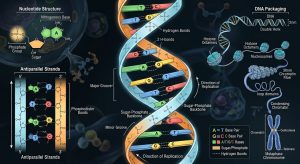
In the standard DNA double helix:
- Adenine pairs with thymine.
- Guanine pairs with cytosine.
The sequence of bases carries biological information.
The central dogma of molecular biology
Genetics: DNA to Protein Tutorial | Sophia Learning
A simplified representation is:
\[ DNA \rightarrow RNA \rightarrow Protein \]
This describes two important processes:
- Transcription: DNA information is copied into RNA.
- Translation: Ribosomes use messenger RNA instructions to assemble amino acids into proteins.
DNA can also be replicated so genetic information can be passed to new cells.
An important qualification: not all RNA becomes protein. Some RNA molecules perform regulatory, structural, and catalytic functions.
PART 4. CELLULAR BIOCHEMISTRY – THE INNER FACTORY OF LIFE
Chapter 9. Understanding the architecture of a human cell
The cell is the fundamental structural and functional unit of the human body.
Every human tissue and organ depends on specialised cells performing coordinated biological activities.
Animal Cell Diagram Generator — Labeled & Unlabeled | SciFig
A human cell contains multiple specialised structures called organelles.
9.1 The major cellular organelles
| Organelle | Main function | Biochemical significance |
|---|---|---|
| Nucleus | Stores most cellular DNA | Controls gene expression |
| Nucleolus | Produces ribosomal components | Supports protein synthesis |
| Mitochondria | Cellular energy metabolism | ATP production |
| Ribosomes | Manufacture proteins | Translate genetic information |
| Rough ER | Processes newly made proteins | Protein production and folding |
| Smooth ER | Lipid synthesis and other functions | Lipid metabolism and detoxification |
| Golgi apparatus | Modifies and sorts molecules | Protein and lipid distribution |
| Lysosomes | Break down cellular materials | Recycling and degradation |
| Peroxisomes | Perform oxidation reactions | Fatty-acid metabolism |
| Cytoskeleton | Maintains cellular organisation | Movement and intracellular transport |
| Cell membrane | Separates cell from environment | Communication and transport |
9.2 The nucleus: the genetic information centre
The nucleus contains most of the cell’s DNA.
Its functions include:
- Storing genetic information.
- Regulating access to genes.
- Supporting DNA replication.
- Supporting RNA transcription.
- Coordinating cellular development and activity.
The nucleus does not independently control every activity. Cellular behaviour emerges from interactions between genetic regulation, proteins, signalling systems, metabolism, and environmental conditions.
9.3 Ribosomes: the protein manufacturing machinery
Ribosomes are molecular complexes made from ribosomal RNA and proteins.
Their primary function is translation.
They read messenger RNA and assemble amino acids in the correct sequence.
This is essential because proteins perform much of the work required to keep cells alive.
9.4 The Golgi apparatus: molecular processing and distribution
The Golgi apparatus receives proteins and lipids, modifies certain molecules, sorts them, and directs them to appropriate destinations.
It functions as part of the cell’s molecular distribution network.
9.5 Lysosomes: the recycling department
Lysosomes contain enzymes that break down biological materials.
They help recycle:
- Damaged cellular components.
- Certain proteins.
- Lipids.
- Complex carbohydrates.
- Material taken into cells.
This recycling helps maintain cellular organisation.
Chapter 10. Mitochondria – the energy-conversion system
Mitochondria are specialised organelles that perform important energy-related functions.
They are particularly important in cells with high energy requirements, including muscle cells and many neurons.
Their major structures include:
- Outer mitochondrial membrane.
- Intermembrane space.
- Inner mitochondrial membrane.
- Cristae – folds of the inner membrane.
- Matrix – the internal compartment.
How mitochondria produce ATP
ATP means adenosine triphosphate.
It is a major energy-transfer molecule used by living cells.
The process of aerobic cellular respiration involves several interconnected stages.
Cellular Respiration Infographic | LivePhysics™
Stage 1: Glycolysis
Occurs in the cytoplasm.
Glucose is converted into two pyruvate molecules.
This generates a net two ATP and two NADH per glucose molecule.
Stage 2: Pyruvate oxidation
Under aerobic conditions, pyruvate enters mitochondria and is converted into acetyl-CoA.
Carbon dioxide is released and NADH is generated.
Stage 3: Citric acid cycle
Also called the Krebs cycle or tricarboxylic acid cycle.
Acetyl-CoA is processed through a series of enzyme-controlled reactions.
These reactions produce:
- NADH.
- FADH₂.
- ATP or GTP.
- Carbon dioxide.
Stage 4: Electron transport chain
The electron transport chain consists of protein complexes embedded in the inner mitochondrial membrane.
Electrons from NADH and FADH₂ move through these complexes.
The released energy supports the pumping of protons across the inner mitochondrial membrane.
This produces an electrochemical proton gradient.
Stage 5: ATP synthase
Biochemistry Series Part 7: Citric Acid Cycle & Oxidative Phosphorylation – Wasil Zafar
ATP synthase is a remarkable molecular machine.
It uses energy from protons flowing down their electrochemical gradient to produce ATP from ADP and inorganic phosphate.
\[ ADP + P_i + Energy \rightarrow ATP \]
Under typical conditions, complete aerobic oxidation of one glucose molecule yields approximately 30–32 ATP molecules in human cells, although the actual yield can vary.
Why mitochondria are important
Mitochondria support:
- Cellular energy production.
- Regulation of programmed cell death.
- Calcium handling.
- Metabolic coordination.
- Certain stages of cellular signalling.
A critical scientific principle: ATP is not simply stored energy. It is a continuously produced and consumed energy-transfer molecule. Cells must continually regenerate it.
PART 5. THE BIOCHEMISTRY OF ENERGY
Chapter 11. ATP – the universal energy currency
ATP consists of three main components:
- Adenine.
- Ribose sugar.
- Three phosphate groups.
ATP provides energy for many cellular activities.
Examples include:
| Cellular activity | ATP requirement |
|---|---|
| Muscle contraction | Supports actin and myosin cycling |
| Active transport | Powers ion pumps |
| Protein synthesis | Supports molecular assembly |
| Cell movement | Supports cytoskeletal activity |
| Molecular transport | Powers motor proteins |
| Cellular maintenance | Supports numerous chemical reactions |
ATP hydrolysis is commonly represented as:
\[ ATP + H_2O \rightarrow ADP + P_i \]
This reaction is energetically favourable under cellular conditions.
However, ATP does not independently make every reaction happen. Cells couple ATP hydrolysis to reactions that otherwise would not proceed favourably.
Chapter 12. Metabolism – the complete chemical economy of life
Metabolism refers to all the chemical reactions occurring within a living organism.
Metabolism has two major divisions.
Catabolism
Breaks down larger molecules into smaller molecules and often releases usable energy.
Protein Synthesis Diagram Illustrating Transcription and Translation Process
Anabolism
Builds larger molecules from smaller components and requires energy.
12.1 Catabolic processes
Examples include:
- Glycogen breakdown.
- Fatty-acid oxidation.
- Glycolysis.
- Protein breakdown.
These processes provide molecules and energy that can be used elsewhere.
12.2 Anabolic processes
Examples include:
- Protein synthesis.
- DNA synthesis.
- Glycogen formation.
- Fatty-acid synthesis.
- Membrane construction.
These processes support growth, maintenance, and repair.
12.3 The relationship between anabolism and catabolism
The two processes are interconnected.
Catabolism supplies:
- Energy.
- Metabolic intermediates.
- Reducing equivalents.
Anabolism uses these resources to construct biological structures.
This relationship is fundamental to maintaining life.
Chapter 13. The importance of enzymes
Science Diagram Maker for Every Discipline | SciFig
Enzymes are biological catalysts.
Most enzymes are proteins, although some RNA molecules can also catalyse reactions.
They accelerate chemical reactions by lowering the activation energy required for a reaction to proceed.
An enzyme generally has a specific region called an active site.
A simplified process is:
- A substrate approaches the enzyme.
- The substrate binds to the active site.
- An enzyme-substrate complex forms.
- The reaction occurs.
- Products are released.
- The enzyme can catalyse another reaction.
What affects enzyme activity?
- Temperature.
- pH.
- Substrate concentration.
- Enzyme concentration.
- Inhibitors.
- Activators.
- Availability of required cofactors.
Examples of important enzymes include:
| Enzyme | Function |
|---|---|
| Amylase | Breaks down starch |
| Pepsin | Digests proteins |
| Lipase | Breaks down fats |
| Lactase | Breaks down lactose |
| DNA polymerase | Synthesises DNA |
| ATP synthase | Produces ATP |
| Catalase | Breaks down hydrogen peroxide |
Enzyme regulation
Cells must regulate enzymes carefully.
Some enzymes are activated or inhibited by other molecules.
Others are controlled through chemical modifications, including phosphorylation.
This regulation helps coordinate thousands of biochemical reactions without allowing them to operate independently.
PART 6. THE BIOCHEMISTRY OF THE HUMAN BODY
Chapter 14. Digestive biochemistry – converting food into molecular building blocks
Digestive System: Digestion of protein in stomach and role of pancreatic juice
Digestion is a coordinated process that converts food into molecules that can be absorbed and used by the body.
Carbohydrate digestion
- Salivary amylase begins starch digestion.
- Pancreatic amylase continues starch digestion in the small intestine.
- Intestinal enzymes produce absorbable monosaccharides.
Protein digestion
- Stomach acid helps denature proteins.
- Pepsin begins protein digestion.
- Pancreatic proteases continue the process.
- Intestinal enzymes produce amino acids and small peptides for absorption.
Fat digestion
- Bile helps emulsify dietary fats.
- Pancreatic lipase breaks down triglycerides.
- Products are absorbed through intestinal cells and processed for transport.
The role of the liver
The liver is one of the most biochemically active organs.
Its responsibilities include:
- Processing absorbed nutrients.
- Regulating blood glucose.
- Producing bile.
- Synthesising many blood proteins.
- Processing drugs and other substances.
- Storing glycogen.
- Processing amino acids.
- Converting ammonia into urea.
The liver is therefore a central metabolic processing organ.
Chapter 15. Blood biochemistry and molecular transport
Infographic composition of blood concept
Blood is a specialised transport tissue.
It contains:
- Plasma.
- Red blood cells.
- White blood cells.
- Platelets.
Haemoglobin
Haemoglobin is a protein found in red blood cells.
It contains iron-containing heme groups that bind oxygen reversibly.
Its primary role is transporting oxygen from the lungs to tissues.
It also contributes to carbon dioxide transport and blood acid-base regulation.
Blood glucose
Glucose circulates in blood and supplies many tissues with an important energy source.
The body regulates glucose concentration through hormones, particularly insulin and glucagon.
Electrolytes
Important electrolytes include:
| Electrolyte | Main functions |
|---|---|
| Sodium | Fluid balance and electrical signalling |
| Potassium | Electrical activity of cells |
| Calcium | Muscle contraction, signalling and bone structure |
| Magnesium | Enzyme activity and ATP-related reactions |
| Chloride | Fluid balance and acid-base regulation |
| Phosphate | ATP, bones and cellular metabolism |
The correct balance of these substances is essential for normal physiological function.
Chapter 16. Hormonal biochemistry – the body’s chemical communication network
Hormones are chemical messengers produced by specialised cells and organs.
They communicate with target cells through specific receptors.
Some major hormones include:
| Hormone | Primary role |
|---|---|
| Insulin | Helps regulate blood glucose |
| Glucagon | Helps increase blood glucose |
| Thyroid hormones | Regulate many aspects of metabolism |
| Adrenaline | Coordinates rapid stress responses |
| Cortisol | Supports longer-term stress and metabolic responses |
| Growth hormone | Regulates growth and metabolism |
| Melatonin | Helps coordinate sleep-wake timing |
Understanding insulin
Insulin is produced by beta cells in the pancreas.
When blood glucose rises, insulin secretion generally increases.
Insulin:
- Promotes glucose uptake in skeletal muscle and fat cells.
- Supports glycogen formation.
- Promotes fat storage under appropriate metabolic conditions.
- Supports protein synthesis.
- Suppresses certain glucose-producing processes in the liver.
Understanding glucagon
Glucagon is produced by alpha cells in the pancreas.
It helps maintain blood glucose when levels are low, particularly by stimulating the liver to release glucose through glycogen breakdown and glucose production.
Insulin and glucagon are important components of metabolic regulation.
PART 7. BIOCHEMISTRY OF THE BRAIN AND NERVOUS SYSTEM
Chapter 17. Neurochemistry – the molecular language of the brain
The brain depends on highly coordinated biochemical and electrical activities.
Neurons communicate through electrical signals and chemical signalling molecules.
Important neurotransmitters include:
| Neurotransmitter | Important functions |
|---|---|
| Glutamate | Major excitatory neurotransmitter |
| GABA | Major inhibitory neurotransmitter |
| Dopamine | Movement, motivation and learning |
| Serotonin | Mood, sleep and other regulatory functions |
| Acetylcholine | Muscle activation, attention and memory |
| Noradrenaline | Alertness and attention |
How chemical communication occurs
A simplified synaptic communication process:
- An electrical signal reaches a neuron’s terminal.
- Calcium enters the terminal.
- Vesicles release neurotransmitters.
- Neurotransmitters cross the synaptic gap.
- They bind to receptors on another cell.
- Receptor activation changes the receiving cell’s activity.
- Neurotransmitters are removed, recycled, or broken down.
Publisher of Open Access Journals | MDPI
The importance of calcium
Calcium is not merely a structural mineral.
Inside cells, calcium acts as an important signalling molecule.
It helps regulate:
- Neurotransmitter release.
- Muscle contraction.
- Cellular communication.
- Enzyme activity.
- Gene expression.
The concentration of calcium inside cells is tightly controlled because its signalling effects must be coordinated.
Chapter 18. Myelin and the biochemistry of nerve communication
File:Propagation of action potential along myelinated nerve fiber en.svg – Wikimedia Commons
Myelin is a specialised, lipid-rich insulating structure surrounding many nerve fibres.
It is produced by:
- Oligodendrocytes in the central nervous system.
- Schwann cells in the peripheral nervous system.
Myelin supports rapid and efficient nerve signal conduction.
The gaps between myelin segments are called nodes of Ranvier.
Electrical impulses are regenerated at these nodes, producing saltatory conduction.
The biochemical importance of myelin includes:
- Supporting nerve-fibre insulation.
- Maintaining axonal health.
- Supporting efficient electrical signalling.
- Helping coordinate communication between nervous-system regions.
PART 8. GENETICS, PROTEIN SYNTHESIS AND CELLULAR CONTROL
Chapter 19. DNA replication, transcription and translation
These processes explain how genetic information is maintained and used.
DNA to RNA to Protein Infographic | LivePhysics™
DNA replication
DNA replication copies genetic material before cell division.
The enzyme DNA polymerase helps synthesise new DNA strands using existing strands as templates.
Transcription
During transcription, RNA polymerase produces an RNA molecule using DNA as a template.
In protein-coding genes, the resulting RNA is processed into mature messenger RNA in human cells.
Translation
Ribosomes read messenger RNA in groups of three nucleotides called codons.
Transfer RNA molecules deliver corresponding amino acids.
The ribosome links the amino acids together to produce a polypeptide chain.
That chain then undergoes folding and sometimes further processing to become a functional protein.
Chapter 20. Cellular signalling and biological communication
Cells continuously exchange information.
They must respond to:
- Nutrients.
- Hormones.
- Temperature.
- Mechanical forces.
- Environmental changes.
- Signals from neighbouring cells.
A typical signalling pathway includes:
- Signal molecule.
- Receptor.
- Signal-transduction mechanism.
- Intracellular response.
- Regulation or termination of the signal.
For example, insulin binds to its receptor, activating intracellular signalling pathways that help regulate metabolism and glucose uptake.
Cell signalling connects molecular biochemistry to the functioning of entire tissues and organs.
PART 9. IMMUNITY, REPAIR AND BIOLOGICAL PROTECTION
Chapter 21. Immunological biochemistry
How Our Immune System and Vaccines Protect Us From Diseases | Lesson Plan
The immune system protects the body against harmful microorganisms and other threats.
Its activities depend on biochemical communication between cells and molecules.
Important components include:
- Antibodies.
- Cytokines.
- Complement proteins.
- White blood cells.
- Cell-surface receptors.
- Signalling molecules.
Antibodies
Antibodies are specialised proteins produced by B-cell-derived plasma cells.
They recognise particular molecular structures called antigens.
They can help neutralise pathogens and mark them for removal by other immune mechanisms.
Cytokines
Cytokines are signalling proteins.
They coordinate immune-cell activity and influence inflammation, tissue repair, and immune responses.
Oxidative stress
Cells naturally produce reactive oxygen species during metabolism.
At controlled levels, some reactive oxygen species participate in normal cellular signalling.
When production exceeds the ability of protective and repair systems to maintain balance, oxidative stress can occur.
Cells have antioxidant systems involving molecules and enzymes such as:
- Glutathione.
- Superoxide dismutase.
- Catalase.
- Glutathione peroxidase.
These systems help regulate oxidative damage.
Chapter 22. Cellular repair and autophagy
Autophagy is a cellular process through which cells deliver certain internal components to lysosomes for degradation and recycling.
It helps cells:
- Remove damaged components.
- Recycle nutrients.
- Adapt to changing conditions.
- Maintain cellular quality control.
Another important process is DNA repair.
Cells possess molecular mechanisms that detect and repair many forms of DNA damage.
These mechanisms help maintain genetic stability.
Cellular survival therefore depends not only on producing molecules but also on recognising, repairing, and recycling damaged ones.
PART 10. BIOCHEMICAL REGULATION AND HOMEOSTASIS
Chapter 23. How the body maintains internal stability
Homeostasis is the regulation of internal conditions within ranges compatible with life.
The body must maintain appropriate conditions for its biochemical reactions.
These include:
- Blood glucose.
- Body temperature.
- Blood pH.
- Water balance.
- Electrolyte concentrations.
- Oxygen availability.
- Carbon dioxide levels.
The importance of pH
pH measures the acidity or alkalinity of a solution.
Blood pH is normally maintained within a narrow range of approximately 7.35–7.45.
The body regulates it through:
- Chemical buffer systems.
- Respiratory control of carbon dioxide.
- Kidney regulation of acids and bicarbonate.
Even relatively small changes in pH can influence protein structure and enzyme activity.
Negative feedback
Negative feedback is a major biological control mechanism.
For example:
When blood glucose rises:
- Pancreatic beta cells detect the change.
- Insulin secretion increases.
- Target tissues respond.
- Blood glucose generally decreases.
- Insulin secretion adjusts as conditions change.
This is an example of a biochemical control system maintaining stability.
PART 11. THE ADVANCED MOLECULAR MACHINERY OF LIFE
Chapter 24. Molecular motors – the transport and movement system
PPT – Mitosis PowerPoint Presentation, free download – ID:630663
Diamond Light Source: The Jewel in the Crown of UK Science and Innovation
Skeletal Muscles — Human Anatomy
7
One of the most fascinating discoveries in biochemistry is that cells contain molecular machines capable of converting chemical energy into movement.
Three important molecular motor systems are:
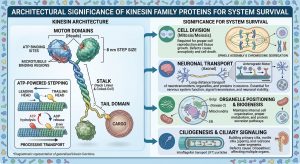
Kinesin: Commonly transports cargo along microtubules, usually towards their plus ends.
Dynein: Commonly transports cargo towards microtubule minus ends and also participates in the movement of cilia and flagella.
Myosin: Interacts with actin filaments and contributes to muscle contraction and other cellular movements.
These proteins use ATP-dependent mechanisms to generate movement.
Their functions are important for:
- Transporting cellular materials.
- Distributing organelles.
- Positioning intracellular structures.
- Supporting cell division.
- Maintaining neuronal function.
The connection between biochemistry and molecular machinery is particularly important: chemical reactions can produce organised mechanical work.
Chapter 25. Molecular recognition and biological specificity
Biological systems must distinguish between different molecules.
Examples include:
- Enzymes recognising substrates.
- Antibodies recognising antigens.
- Receptors recognising hormones.
- DNA-binding proteins recognising genetic sequences.
- Transport proteins recognising particular substances.
This specificity is produced through molecular shape, electrical charge, hydrogen bonding, hydrophobic interactions, and other physical and chemical properties.
It is one of the foundations of biological organisation.
PART 12. BIOCHEMISTRY AND THE FUTURE OF SCIENCE
Chapter 26. The relationship between biochemistry and modern medicine
Biochemistry has transformed our understanding of human biology and medical science.
It allows researchers to investigate diseases at molecular level rather than examining only visible symptoms.
Some important applications include:
| Scientific application | Biochemical contribution |
|---|---|
| Diabetes research | Understanding insulin and glucose metabolism |
| Cancer research | Understanding mutations and cellular signalling |
| Neurological research | Understanding neurotransmitters and neuronal proteins |
| Genetic medicine | Understanding DNA and gene expression |
| Immunology | Understanding antibodies and immune signalling |
| Cardiovascular science | Understanding cholesterol and lipid metabolism |
| Infectious disease | Understanding microbial proteins and metabolism |
| Pharmaceutical science | Understanding how medicines interact with biological targets |
26.1 Molecular medicine
Molecular medicine investigates diseases through their underlying molecular mechanisms.
For example, researchers can investigate:
- Which proteins are malfunctioning?
- Which genes contain mutations?
- Which metabolic pathways have changed?
- Which cellular signalling systems are disrupted?
- Which molecular interactions can be modified?
This knowledge contributes to the development of more targeted medical treatments.
Chapter 27. Biotechnology and industrial biochemistry
Enhancing bioprocess efficiency in the Life Sciences industry | Endress+Hauser
Biochemistry is not restricted to hospitals and medical laboratories.
It also contributes to modern industrial development.
Major applications include:
1. Agricultural biotechnology
- Plant metabolism research.
- Soil microbial biochemistry.
- Nutrient absorption.
- Crop stress responses.
- Biological fertilisers.
2. Food production
- Fermentation.
- Food preservation.
- Enzyme technology.
- Food quality analysis.
- Nutritional science.
3. Pharmaceutical manufacturing
- Protein-based medicines.
- Vaccine development.
- Enzyme production.
- Biologically manufactured medicines.
4. Environmental biotechnology
- Wastewater treatment.
- Microbial decomposition.
- Bioremediation.
- Biological waste management.
5. Industrial enzymes
Enzymes are used in food processing, detergents, textiles, and other manufacturing industries.
PART 13. HOW SCIENTISTS INVESTIGATE BIOCHEMISTRY
Chapter 28. The scientific instruments and technologies
Modern biochemistry depends on sophisticated analytical instruments.
Le parcours photographique d’un chef de secteur en chimie (CCTT-TransBIOTech) | Acfas
Protein Crystallography Examples at Jessica Goza blog
Back to School: What Mitochondria Really Do | Yale School of Medicine
4
| Technology | What it investigates |
|---|---|
| Mass spectrometry | Molecular mass and chemical composition |
| Chromatography | Separation of molecular mixtures |
| X-ray crystallography | Three-dimensional molecular structures |
| Nuclear magnetic resonance | Molecular structure and dynamics |
| Electron microscopy | Detailed cellular and molecular structures |
| DNA sequencing | Genetic information |
| PCR | Amplification of selected DNA sequences |
| Electrophoresis | Separation of DNA, RNA or proteins |
| Spectrophotometry | Absorption of light by samples |
| Cryo-electron microscopy | Structures of biological molecules in near-native conditions |
These technologies allow researchers to investigate biological processes with extraordinary detail.
The importance of computational biochemistry
Modern biochemistry increasingly depends on computer science and artificial intelligence.
Computational approaches help researchers:
- Predict protein structures.
- Analyse genetic sequences.
- Model molecular interactions.
- Study metabolic pathways.
- Analyse biological datasets.
- Investigate possible drug targets.
- Understand complex molecular networks.
One important example is AlphaFold developed by Google DeepMind.
It has significantly advanced the prediction of protein structures from amino-acid sequences.
However, predicting a protein’s structure is not the same as completely understanding its biological behaviour, interactions, or function.
PART 14. THE MATHEMATICAL ARCHITECTURE OF BIOCHEMISTRY
Chapter 29. Understanding biochemical reactions mathematically
Biochemistry is also a quantitative science.
Mathematics helps researchers understand reaction rates, molecular concentrations, energy transformations, and biological regulation.
29.1 Enzyme kinetics
One important mathematical model is the Michaelis–Menten equation.
\[ v=\frac{V_{\max}[S]}{K_m+[S]} \]
Where:
- \(v\) = reaction velocity.
- \(V_{\max}\) = maximum reaction velocity.
- \([S]\) = substrate concentration.
- \(K_m\) = Michaelis constant.
This equation describes the behaviour of many simple enzyme-catalysed reactions under suitable conditions.
29.2 Thermodynamics
Thermodynamics explains the energy relationships behind biochemical reactions.
The Gibbs free energy equation is:
\[ \Delta G=\Delta H-T\Delta S \]
Where:
- \(\Delta G\) = change in Gibbs free energy.
- \(\Delta H\) = change in enthalpy.
- \(T\) = absolute temperature.
- \(\Delta S\) = change in entropy.
A negative Gibbs free-energy change indicates that a reaction is thermodynamically favourable under the specified conditions.
29.3 Reaction equilibrium
Chemical equilibrium describes a state in which forward and reverse reaction rates are equal.
It does not mean that all molecular activity stops.
Cells are generally maintained in dynamic, non-equilibrium states, allowing continuous metabolism.
29.4 Metabolic network modelling
A metabolic network can be represented as a collection of interconnected biochemical reactions.
Metabolism Flow Map: Biochemistry Study Materials
Scientists use mathematical models to investigate:
- How glucose moves through metabolic pathways.
- How nutrients influence cellular energy production.
- How enzymes regulate reaction rates.
- How metabolic pathways respond to environmental changes.
- How disruptions affect biological systems.
This is where biochemistry meets mathematics, physics, computer science, and systems engineering.
PART 15. THE COMPLETE BIOCHEMICAL ECOSYSTEM
Chapter 30. How all the biological systems work together
Perhaps the most important lesson in biochemistry is that no biological molecule works completely independently.
Consider what happens when a person moves a muscle.
Biochemistry Series Part 11: Heart & Muscle Biochemistry – Wasil Zafar
The process requires the coordination of several biochemical systems:
- The nervous system sends an electrical signal.
- Neurotransmitters communicate with muscle cells.
- Calcium signalling initiates muscle contraction.
- Actin and myosin interact.
- ATP supplies energy for the molecular cycling of myosin.
- Mitochondria help regenerate ATP.
- Blood delivers oxygen and nutrients.
- Metabolic pathways process available energy sources.
- The kidneys and lungs contribute to maintaining the body’s internal chemical balance.
This is a powerful example of biological systems integration.
The complete molecular survival architecture
Why Metabolomics May Be the Most Complete Snapshot of Human Health We – Dr. Clark Store
The following table summarises the interconnected architecture.
| Biological system | Principal molecular components | Primary responsibility |
|---|---|---|
| Genetic system | DNA, RNA | Biological information |
| Protein system | Amino acids, proteins | Cellular machinery |
| Energy system | Glucose, fatty acids, ATP | Energy conversion |
| Membrane system | Phospholipids, proteins | Cellular boundaries and transport |
| Enzyme system | Biological catalysts | Chemical reaction control |
| Nervous system | Neurotransmitters, receptors | Rapid communication |
| Hormonal system | Hormones, receptors | Chemical regulation |
| Immune system | Antibodies, cytokines | Biological defence |
| Repair system | DNA repair proteins, lysosomes | Cellular maintenance |
| Transport system | Haemoglobin, transport proteins | Molecular distribution |
The significance of biochemistry is that these systems form a coordinated network rather than a collection of isolated chemical reactions.
PART 16. THE 20 MOST IMPORTANT CONCEPTS TO MASTER
If your objective is to develop a deep scientific understanding of biochemistry, these are particularly important concepts.
| No. | Concept | What you must understand |
|---|---|---|
| 1 | Atomic chemistry | How atoms form biological molecules |
| 2 | Molecular bonding | How molecules maintain their structures |
| 3 | Water chemistry | Why water is essential for life |
| 4 | Carbohydrates | Glucose and energy metabolism |
| 5 | Lipids | Membranes and energy storage |
| 6 | Amino acids | Building blocks of proteins |
| 7 | Protein architecture | How molecular shape determines function |
| 8 | DNA | Biological information storage |
| 9 | RNA | Genetic information processing |
| 10 | Enzymes | Control of chemical reactions |
| 11 | ATP | Cellular energy transfer |
| 12 | Glycolysis | Initial glucose breakdown |
| 13 | Krebs cycle | Oxidation of acetyl-CoA |
| 14 | Electron transport | Energy conversion through electron transfer |
| 15 | Mitochondria | Cellular energy metabolism |
| 16 | Cell membranes | Molecular transport and signalling |
| 17 | Hormones | Chemical communication |
| 18 | Neurotransmitters | Nervous-system communication |
| 19 | Immunological chemistry | Molecular biological defence |
| 20 | Homeostasis | Maintaining internal stability |
PART 17. A STRUCTURED LEARNING CURRICULUM
To master biochemistry, I recommend studying it progressively rather than attempting to memorise all the molecular names at once.
The 12-stage biochemistry learning programme
A progression from foundational science to advanced molecular systems.
01
Chemical foundations
Atoms, elements, electrons, bonds and water
02
Organic chemistry
Carbon, functional groups and molecular structures
03
Biological macromolecules
Carbohydrates, proteins, lipids and nucleic acids
04
Cellular architecture
Organelles, membranes and intracellular organisation
05
Protein biochemistry
Amino acids, folding and molecular machines
06
Enzymology
Catalysis, kinetics and enzyme regulation
07
Bioenergetics
ATP, thermodynamics and energy conversion
08
Metabolic biochemistry
Glycolysis, Krebs cycle and lipid metabolism
09
Molecular genetics
DNA replication, transcription and translation
10
Human physiology
Hormones, blood, digestion and nervous-system chemistry
11
Immunology and repair
Immune signalling, oxidative stress and autophagy
12
Advanced systems biology
Metabolic networks, modelling and biotechnology
Recommended scientific textbooks
These established textbooks provide a strong foundation for further study:
- Lehninger Principles of Biochemistry – David L. Nelson and Michael M. Cox.
- Harper’s Illustrated Biochemistry – Victor W. Rodwell and colleagues.
- Biochemistry – Jeremy M. Berg and colleagues.
- Molecular Biology of the Cell – Bruce Alberts and colleagues.
- The Cell: A Molecular Approach – Geoffrey M. Cooper and Robert E. Hausman.
FINAL CONCLUSION: WHY BIOCHEMISTRY IS ONE OF THE MOST IMPORTANT SCIENCES OF HUMAN CIVILISATION
Biochemistry provides an understanding of the molecular architecture that makes life possible.
It explains how:
- Atoms combine to form biological molecules.
- Molecules organise themselves into complex cellular structures.
- DNA stores and transmits genetic information.
- Proteins perform thousands of specialised functions.
- Enzymes regulate chemical reactions.
- Mitochondria convert energy from nutrients into usable cellular energy.
- Neurons communicate through electrical and chemical signals.
- Hormones coordinate biological activities.
- Immune systems recognise and respond to threats.
- Cells maintain, repair, and recycle their internal components.
The most important intellectual principle is this:
Life is a continuously organised network of chemical reactions, molecular information, energy transformations, and biological communication.
Understanding biochemistry means understanding the chemical foundation of human existence.
It also provides a scientific foundation for future innovations in medicine, agriculture, biotechnology, pharmaceuticals, food production, environmental protection, and artificial intelligence-assisted biological research.
The deeper we understand the molecular architecture of life, the better equipped we become to understand the complexity of living systems.


Be First to Comment