
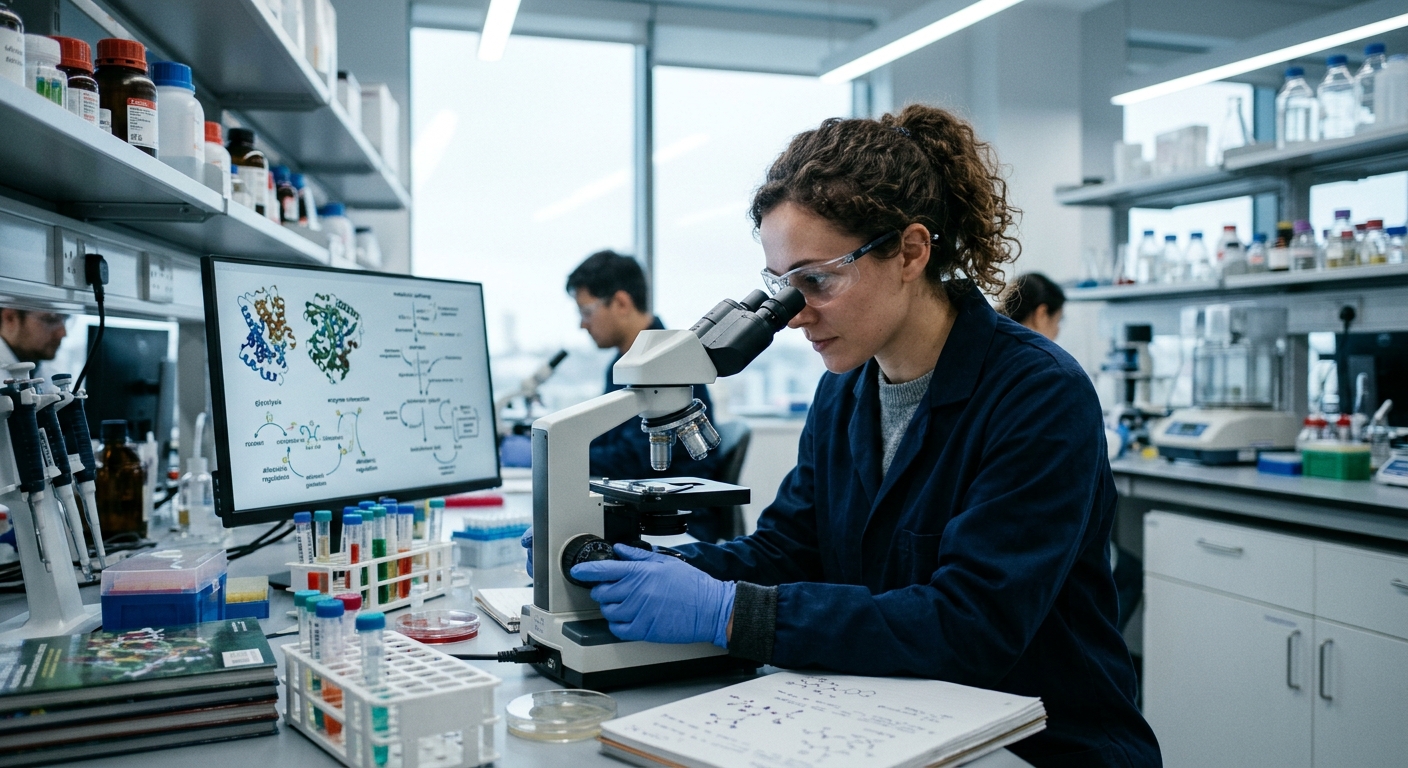
Understanding the Inner Knowledge of Biochemistry
The molecular architecture of life, chemical reactions, cellular intelligence, energy production and the biological systems that sustain living organisms
Beautifully Intricate Paintings of HIV, Ebola, and Other Molecules by Biologist David Goodsell
2.6: The Cytoplasm and Cellular Organelles – Medicine LibreTexts
Biochemistry Series Part 3: Amino Acids & Protein Structure – Wasil Zafar
9
Abstract
Biochemistry is one of the most important scientific disciplines for understanding how life operates at its deepest molecular level.
It investigates the chemical substances, molecular structures, energy transformations and biochemical reactions that occur inside living organisms.
Everything that happens in the human body depends on biochemical processes:
- The brain producing electrical and chemical signals.
- The heart generating the energy required for continuous contraction.
- Muscles converting chemical energy into movement.
- The digestive system converting food into usable nutrients.
- The immune system identifying and responding to biological threats.
- Cells producing proteins, repairing structures and maintaining themselves.
- DNA storing and transmitting biological information.
- Mitochondria producing much of the energy required by cells.
The central principle of biochemistry is that life depends on coordinated chemical reactions.
To understand the human body, we must understand the molecules that construct it, the reactions that connect them, and the energy systems that keep those reactions operating.
PART 1: THE FOUNDATIONS OF BIOCHEMISTRY
Chapter 1. What exactly is biochemistry?
Biochemistry combines two scientific disciplines:
- Biology: The study of living organisms and their systems.
- Chemistry: The study of matter, atoms, molecules and chemical reactions.
Biochemistry connects these disciplines to explain how chemical processes create and maintain life.
For example, when you eat a meal, several biochemical processes occur:
- Food enters the digestive system.
- Enzymes break large food molecules into smaller molecules.
- Nutrients are absorbed into the bloodstream.
- Cells receive glucose, fatty acids and amino acids.
- Cells process these substances through metabolic pathways.
- Chemical energy is transferred into ATP.
- ATP powers cellular activities.
This is an interconnected biochemical system.
Chapter 2. The four fundamental elements of life
Most biological molecules are constructed from six important chemical elements.
Elements of Life AP Biology: CHNOPS, Carbon, and Biological Molecules | APScore5
| Element | Symbol | Biological importance |
|---|---|---|
| Carbon | C | Molecular backbone of organic compounds |
| Hydrogen | H | Important in water, acids and energy transfer |
| Oxygen | O | Cellular respiration and water |
| Nitrogen | N | Amino acids, proteins and DNA |
| Phosphorus | P | ATP, DNA, RNA and cell membranes |
| Sulfur | S | Protein structure and enzyme activity |
These six elements are commonly called CHNOPS.
Other elements are also essential, including calcium, sodium, potassium, magnesium, iron, zinc and iodine.
Why is carbon so important?
Carbon is the central structural element of organic chemistry.
It can form four covalent bonds, allowing it to construct:
- Straight molecular chains.
- Branched structures.
- Rings.
- Complex three-dimensional molecules.
This makes carbon particularly suitable for constructing biological molecules.
Chapter 3. Atoms, molecules and chemical bonds
Biochemistry Series Part 1: Biological Chemistry Fundamentals – Wasil Zafar
Understanding biochemistry begins with understanding atoms.
An atom contains:
- Protons: positively charged particles.
- Neutrons: particles without electrical charge.
- Electrons: negatively charged particles.
Atoms combine through chemical bonds.
Three particularly important interactions in biochemistry are:
1. Covalent bonds
Atoms share electrons. These bonds construct the molecular structures of carbohydrates, proteins, fats and nucleic acids.
2. Ionic interactions
Oppositely charged particles attract one another. These interactions are important in protein structures and biological membranes.
3. Hydrogen bonds
Relatively weak attractions between molecular regions. They help stabilize DNA, proteins and the structure of water.
The combined effect of these chemical interactions allows biological molecules to maintain their structures and perform their functions.
PART 2: THE FOUR MAJOR BIOCHEMICAL MOLECULES
Chapter 4. Carbohydrates – the chemical energy and structural molecules
Carbohydrates are molecules composed mainly of carbon, hydrogen and oxygen.
Their functions include:
- Supplying glucose for energy metabolism.
- Storing energy as glycogen.
- Providing structural support in plants.
- Participating in cellular recognition and communication.
There are three major categories.
| Category | Examples | Function |
|---|---|---|
| Monosaccharides | Glucose, fructose | Basic sugar units |
| Disaccharides | Sucrose, lactose | Two linked sugar units |
| Polysaccharides | Glycogen, starch | Long chains of sugar units |
Understanding glucose
Glucose is particularly important because many human cells use it as a metabolic fuel.
Its chemical formula is:
\[ C_6H_{12}O_6 \]
Cells can break down glucose through glycolysis and subsequent metabolic pathways to transfer energy into ATP.
Chapter 5. Proteins – the molecular machinery of life
Biochemistry diagram show levels of protein structure from amino acid and polypeptide bond
Proteins are complex molecules constructed from amino acids.
There are 20 standard amino acids commonly used to construct human proteins.
Proteins perform many biological functions:
- Construct muscles and structural tissues.
- Form enzymes.
- Transport oxygen and other substances.
- Support immune defence.
- Regulate biological communication.
- Support cellular movement.
- Participate in DNA replication and repair.
The four levels of protein structure
| Level | Explanation |
|---|---|
| Primary | Sequence of amino acids |
| Secondary | Local folding into structures such as alpha helices and beta sheets |
| Tertiary | Overall three-dimensional protein structure |
| Quaternary | Association of multiple protein subunits |
The three-dimensional shape of a protein is closely connected to its biological function.
For example, haemoglobin is a protein that transports oxygen through the bloodstream.
Chapter 6. Lipids – biological membranes and energy storage
Lipids are a broad family of molecules that includes fats, oils, phospholipids and steroids.
Their functions include:
- Long-term energy storage.
- Constructing cell membranes.
- Supporting hormone production.
- Protecting organs.
- Helping absorb fat-soluble vitamins.
Understanding phospholipids
Phospholipids are particularly important because they construct the basic framework of cellular membranes.
A phospholipid has:
- A water-attracting head.
- Two water-repelling fatty-acid tails.
In water, these molecules naturally organize into a double layer called the phospholipid bilayer.
This creates a boundary separating the inside of a cell from its external environment.
Chapter 7. Nucleic acids – the information architecture of life
Two major nucleic acids are:
DNA – Deoxyribonucleic acid
DNA stores hereditary biological information.
RNA – Ribonucleic acid
RNA participates in using genetic information, particularly in protein production, and has several additional regulatory and structural roles.
DNA and RNA are constructed from nucleotides.
Each nucleotide contains:
- A sugar.
- A phosphate group.
- A nitrogen-containing base.
The four DNA bases are:
- Adenine (A).
- Thymine (T).
- Cytosine (C).
- Guanine (G).
DNA stores biological instructions that cells use to produce and regulate proteins and other functional molecules.
PART 3: THE INTERNAL CELLULAR BIOCHEMICAL SYSTEM
Chapter 8. The cell – the fundamental biochemical factory
Animal Cell Diagram Generator — Labeled & Unlabeled | SciFig
The cell is the fundamental structural and functional unit of human life.
The human body contains trillions of cells, organized into tissues, organs and interconnected biological systems.
Each cell contains specialized structures called organelles.
The major cellular organelles
| Organelle | Main biochemical responsibility |
|---|---|
| Nucleus | Stores most cellular DNA |
| Mitochondria | Produce much of the cell’s ATP |
| Ribosomes | Manufacture proteins |
| Endoplasmic reticulum | Produces and processes proteins and lipids |
| Golgi apparatus | Modifies, sorts and distributes molecules |
| Lysosomes | Break down and recycle cellular materials |
| Cell membrane | Regulates movement and communication |
| Cytoplasm | Supports many biochemical reactions |
| Peroxisomes | Participate in fatty-acid metabolism and chemical detoxification |
How the cellular factory operates
Consider a cell that needs to manufacture a particular protein.
- Genetic information is accessed in the nucleus.
- DNA information is copied into messenger RNA.
- Messenger RNA travels to a ribosome.
- The ribosome reads the genetic instructions.
- Amino acids are assembled into a protein.
- The protein is folded and may be modified.
- It is transported to the location where it is required.
This demonstrates how different cellular structures cooperate to perform one biochemical task.
Chapter 9. Enzymes – the biological catalysts
Enzymes | AP Bio Unit 3 Study Guide | PrepGo
Enzymes are biological catalysts, most of which are proteins.
Their primary function is to accelerate chemical reactions by lowering the activation energy required for those reactions.
Without enzymes, many essential biological reactions would occur too slowly to sustain life.
How enzymes work
An enzyme usually has a specialized region called an active site.
The process involves:
- A substrate approaches the enzyme.
- The substrate interacts with the active site.
- An enzyme-substrate complex forms.
- The enzyme facilitates the chemical reaction.
- Products are released.
- The enzyme can participate in another reaction.
Examples of important human enzymes
| Enzyme | Function |
|---|---|
| Amylase | Breaks down starch |
| Pepsin | Breaks down proteins in the stomach |
| Lipase | Breaks down fats |
| Lactase | Breaks down lactose |
| DNA polymerase | Helps replicate DNA |
| ATP synthase | Produces ATP using an electrochemical gradient |
What controls enzyme activity?
Enzyme activity is affected by:
- Temperature.
- Acidity and alkalinity (pH).
- Substrate concentration.
- Enzyme concentration.
- Availability of cofactors.
- Inhibitors and activators.
The body regulates enzyme activity to maintain balanced biochemical operations.
Chapter 10. ATP – the molecular energy currency
Exercise Pain Protocol: DOMS Recovery & Muscle Pain Relief – Bestmade Natural Products
ATP stands for adenosine triphosphate.
It is one of the most important molecules in cellular biochemistry because it transfers usable chemical energy to many cellular processes.
ATP contains:
- Adenine.
- Ribose sugar.
- Three phosphate groups.
When ATP is converted into ADP and inorganic phosphate, free energy is released.
\[ ATP + H_2O \rightarrow ADP + P_i \]
This reaction has a standard transformed free-energy change of approximately:
\[ \Delta G^{\circ’}=-30.5\ kJ/mol \]
The actual energy change inside a cell depends on the concentrations of ATP, ADP and phosphate.
What does ATP power?
ATP supports:
- Muscle contraction.
- Active transport across membranes.
- Protein synthesis.
- DNA and RNA synthesis.
- Cellular signalling.
- Maintenance of ion concentrations.
- Cellular repair and organization.
An important distinction: ATP is not a long-term energy storage system. It is a rapidly recycled energy-transfer molecule.
Chapter 11. Mitochondria – the cellular energy-processing system
Top Mitochondrial Health Supplements for Longevity in 2026
Mitochondria are specialized cellular organelles involved in energy metabolism.
They are particularly important in tissues with high energy requirements, such as:
- Heart muscle.
- Skeletal muscle.
- Brain tissue.
- Liver.
The internal architecture of mitochondria
A mitochondrion contains several important components.
1. Outer membrane
Forms the external boundary.
2. Intermembrane space
The region between the outer and inner membranes.
3. Inner membrane
Contains proteins involved in the electron transport chain and ATP production.
4. Cristae
Folds of the inner membrane that increase its surface area.
5. Matrix
The internal compartment containing enzymes, mitochondrial DNA and other molecules.
How mitochondria produce ATP
Mitochondrial energy production involves several interconnected stages.
Cellular Respiration Diagram | Quizlet
The main stages are:
- Glycolysis.
- Pyruvate oxidation.
- Citric acid cycle.
- Electron transport chain.
- Oxidative phosphorylation.
The electron transport chain transfers electrons through a series of protein complexes in the inner mitochondrial membrane.
This process helps establish a proton gradient.
ATP synthase uses the energy stored in that gradient to synthesize ATP.
This mechanism is called chemiosmosis.
Scientific significance: Mitochondria connect nutrient metabolism, oxygen utilization and ATP production.
PART 4: THE BIOCHEMISTRY OF ENERGY METABOLISM
Chapter 12. Metabolism – the total chemical economy of life
Metabolism refers to the complete network of chemical reactions taking place inside an organism.
There are two broad categories.
Energy Metabolism Tutorial | Sophia Learning
Anabolism
Builds larger molecules from smaller components. Often requires energy.
Catabolism
Breaks down molecules and captures some of their available energy.
Examples:
| Anabolic processes | Catabolic processes |
|---|---|
| Protein synthesis | Protein breakdown |
| Glycogen synthesis | Glycogen breakdown |
| Fatty-acid synthesis | Fatty-acid oxidation |
| DNA synthesis | Breakdown of certain nucleotides |
Both systems work together to maintain life.
Chapter 13. Glycolysis – the breakdown of glucose
Glycolysis is a metabolic pathway that occurs in the cytoplasm.
It converts one glucose molecule into two pyruvate molecules.
Its overall simplified reaction is:
\[ Glucose+2NAD^++2ADP+2P_i \]
\[ \rightarrow 2Pyruvate+2NADH+2H^+ +2ATP+2H_2O \]
The net energy gain is two ATP molecules per glucose molecule, together with two NADH molecules.
Why glycolysis matters
Glycolysis:
- Begins glucose metabolism.
- Produces ATP rapidly.
- Provides pyruvate for further metabolism.
- Can operate without oxygen directly.
- Supports cells that have limited or no mitochondrial capacity.
Red blood cells, for example, depend on glycolysis for their ATP because mature human red blood cells lack mitochondria.
Chapter 14. The citric acid cycle – the central metabolic pathway
Krebs Cycle – Infographic templates
The citric acid cycle is also known as:
- Krebs cycle.
- Tricarboxylic acid cycle.
- TCA cycle.
It occurs primarily in the mitochondrial matrix in human cells.
Its main purpose is to process acetyl-CoA and capture energy in electron-carrying molecules.
For each acetyl-CoA molecule entering the cycle, the process generates:
- Three NADH.
- One FADH₂.
- One GTP or ATP equivalent.
- Two carbon dioxide molecules.
These electron carriers supply the electron transport chain.
Chapter 15. The electron transport chain
The Electron Transport Chain | Oxidative Phosphorylation – Integrated Human Anatomy and Physiology
This is one of the most important systems in human bioenergetics.
The electron transport chain consists of protein complexes and mobile electron carriers embedded in the inner mitochondrial membrane.
The major complexes are:
| Component | Primary function |
|---|---|
| Complex I | Receives electrons from NADH |
| Complex II | Receives electrons from FADH₂ through succinate oxidation |
| Coenzyme Q | Transfers electrons to Complex III |
| Complex III | Transfers electrons to cytochrome c |
| Cytochrome c | Transfers electrons to Complex IV |
| Complex IV | Transfers electrons to oxygen |
| ATP synthase | Uses the proton gradient to produce ATP |
Oxygen acts as the final electron acceptor and combines with electrons and protons to form water.
Why oxygen is important
Oxygen allows the electron transport system to continue operating efficiently under normal aerobic conditions.
Without adequate oxygen, oxidative phosphorylation becomes impaired, and cells must rely more heavily on alternative pathways for ATP production.
Chapter 16. Fat metabolism
Fats are important energy-storage molecules.
Triglycerides contain:
- One glycerol molecule.
- Three fatty-acid chains.
Fatty acids can be broken down through a process called beta-oxidation.
Oxidation of fatty acids | PPSX
Beta-oxidation progressively converts fatty acids into acetyl-CoA units.
These enter the citric acid cycle or, in the liver, may contribute to ketone-body production.
Fat metabolism is important because it connects energy storage, cellular membranes and metabolic regulation.
Chapter 17. Protein metabolism
Proteins are continuously synthesized and broken down.
This is known as protein turnover.
Protein metabolism includes:
- Digestion of dietary proteins.
- Absorption of amino acids.
- Amino-acid transport.
- Protein synthesis.
- Protein degradation.
- Recycling of amino acids.
Amino acids are also used to produce other important molecules, including neurotransmitters, hormones and nitrogen-containing compounds.
The body cannot store excess amino acids in the same way that it stores glycogen or triglycerides.
PART 5: THE BIOCHEMISTRY OF GENETIC INFORMATION
Chapter 18. DNA – the biological information storage system
2.8: Nucleic Acids – Biology LibreTexts
DNA is the primary hereditary information-storage molecule in human cells.
It contains sequences of nucleotides that encode biological instructions.
These instructions influence:
- Protein production.
- Cellular development.
- Tissue formation.
- Metabolic regulation.
- Inheritance.
- Cellular responses to environmental conditions.
DNA replication
DNA replication allows genetic information to be copied before cell division.
The process uses specialized proteins and enzymes, including DNA polymerases.
Replication is semi-conservative: each new DNA molecule contains one original strand and one newly synthesized strand.
Chapter 19. RNA – the information-processing molecule
RNA performs multiple functions.
Important forms include:
| RNA type | Function |
|---|---|
| mRNA | Carries genetic instructions to ribosomes |
| tRNA | Delivers amino acids during translation |
| rRNA | Forms part of the ribosome’s structure and catalytic machinery |
| miRNA | Regulates gene expression |
| snRNA | Participates in RNA processing |
RNA is therefore not simply a messenger. It is also involved in gene regulation, molecular structure and catalysis.
Chapter 20. Protein synthesis – from genetic instructions to biological machinery
Central dogma, illustrated (with labels) | National Institute of General Medical Sciences
One of the fundamental concepts of molecular biology is the central dogma:
\[ DNA \rightarrow RNA \rightarrow Protein \]
This represents the main direction of genetic information transfer in protein production.
Stage 1: Transcription
A section of DNA is used as a template to produce RNA.
Stage 2: RNA processing
In human cells, newly produced messenger RNA is processed before it leaves the nucleus.
Stage 3: Translation
Ribosomes read the messenger RNA sequence and assemble amino acids into a polypeptide chain.
Stage 4: Protein folding
The polypeptide adopts a particular three-dimensional structure.
Stage 5: Protein modification
Some proteins undergo chemical modifications before becoming fully functional.
The result is the production of biological machinery that performs specific cellular tasks.
PART 6: BIOCHEMICAL COMMUNICATION AND REGULATION
Chapter 21. Hormones – the chemical communication network
Hormones are chemical messengers that coordinate activities across the body.
They are produced by endocrine glands and other specialized cells.
Examples include:
| Hormone | Main function |
|---|---|
| Insulin | Helps regulate blood glucose |
| Glucagon | Helps increase blood glucose |
| Thyroxine (T4) | Regulates aspects of metabolism and development |
| Cortisol | Participates in stress responses and metabolic regulation |
| Adrenaline | Supports rapid physiological responses |
| Growth hormone | Regulates growth and metabolism |
| Melatonin | Helps regulate sleep-wake timing |
Understanding insulin
Insulin is produced by beta cells in the pancreas.
After a meal, increased blood glucose normally stimulates insulin secretion.
Insulin helps regulate nutrient use and storage by influencing:
- Glucose uptake in responsive tissues.
- Glycogen synthesis.
- Fat metabolism.
- Protein metabolism.
Hormonal regulation connects the digestive system, liver, muscles, adipose tissue and other organs.
Chapter 22. Neurotransmitters – the chemistry of nervous-system communication
Генератор схем нейрона: с подписями и без подписей | SciDraw AI
Neurotransmitters are chemical messengers used by nerve cells to communicate across synapses.
Important examples include:
- Acetylcholine.
- Dopamine.
- Serotonin.
- Glutamate.
- GABA.
- Noradrenaline.
How a chemical synapse operates
- An electrical signal reaches the end of a neuron.
- Calcium channels open.
- Calcium enters the nerve terminal.
- Neurotransmitter-containing vesicles release their contents.
- Neurotransmitters interact with receptors.
- The receiving cell changes its activity.
- Neurotransmitters are removed, recycled or broken down.
This is an excellent example of how chemistry and electricity cooperate in biological systems.
Chapter 23. Cell signalling – the molecular communication architecture
Graphical Abstract Maker — AI Scientific Figures | SciFig
Cells continuously receive and interpret information.
They detect signals through specialized receptors located on their membranes or inside the cell.
Common signalling mechanisms include:
- G-protein-coupled receptors.
- Receptor tyrosine kinases.
- Ion-channel receptors.
- Intracellular nuclear receptors.
Some pathways use second messengers such as:
- Calcium ions.
- Cyclic AMP.
- Inositol trisphosphate.
- Diacylglycerol.
These systems allow a small external signal to produce a coordinated internal cellular response.
PART 7: WATER, MINERALS AND BIOCHEMICAL BALANCE
Chapter 24. Water – the essential biochemical environment
PPT – Water and the Fitness of the Environment PowerPoint Presentation – ID:5851335
Water is fundamental to almost every biochemical process in the human body.
Its molecular formula is:
\[ H_2O \]
Water has several important properties:
- It is polar.
- It dissolves many ionic and polar substances.
- It participates in chemical reactions.
- It transports dissolved nutrients and waste.
- It helps regulate temperature.
- It supports the three-dimensional structure of biological molecules.
Many biochemical reactions occur in aqueous environments.
Chapter 25. pH – controlling acidity and alkalinity
pH measures hydrogen-ion activity in a solution.
The simplified relationship is:
\[ pH=-\log_{10}[H^+] \]
A lower pH indicates greater acidity, while a higher pH indicates greater alkalinity.
Human blood is normally maintained within a narrow pH range of approximately 7.35–7.45.
The body uses three major systems to maintain acid-base balance:
- Chemical buffer systems.
- Respiratory regulation through carbon dioxide removal.
- Kidney regulation of hydrogen ions and bicarbonate.
Why pH matters
Changes in pH can affect:
- Enzyme activity.
- Protein structure.
- Oxygen transport.
- Cellular metabolism.
- Electrolyte balance.
This is why biological systems regulate pH very carefully.
Chapter 26. Minerals and electrolytes
Do Electrolytes Give You Energy? — Seeking Health
Minerals are inorganic substances required for normal biological functioning.
| Mineral | Biochemical importance |
|---|---|
| Sodium | Fluid balance and nerve signalling |
| Potassium | Electrical activity of cells |
| Calcium | Muscle contraction and cellular signalling |
| Magnesium | Enzyme function and ATP-related reactions |
| Iron | Oxygen transport and electron transfer |
| Zinc | Enzyme activity and gene regulation |
| Iodine | Thyroid hormone production |
| Phosphorus | ATP, DNA, RNA and bones |
Electrolytes are particularly important because their movement across cell membranes creates electrical and chemical gradients.
These gradients support nerve impulses, muscle contraction and cellular transport.
PART 8: THE BIOCHEMISTRY OF THE HUMAN IMMUNE SYSTEM
Chapter 27. Molecular defence and immune recognition
What is Immune Tolerance? – Anokion
The immune system is a sophisticated biological defence network.
It depends on biochemical communication between specialized cells and molecules.
Two broad branches are:
Innate immunity
Provides rapid, general defence through barriers, immune cells and chemical mediators.
Adaptive immunity
Provides more specialized recognition and immune responses involving B cells, T cells and antibodies.
Important biochemical components
| Component | Function |
|---|---|
| Antibodies | Recognize specific antigens |
| Cytokines | Coordinate immune communication |
| Complement proteins | Support immune defence |
| Interferons | Participate in antiviral responses |
| T-cell receptors | Recognize antigen-related signals |
| Major histocompatibility complex | Presents antigen fragments to T cells |
Why biochemistry is essential to immunity
Immune cells must:
- Recognize molecular patterns.
- Communicate through chemical messengers.
- Produce specialized proteins.
- Regulate inflammation.
- Distinguish appropriate immune targets.
- Coordinate cellular responses.
The immune system is therefore a biochemical information-processing network as well as a cellular defence system.
PART 9: BIOCHEMISTRY AND THE HUMAN BODY’S MAJOR SYSTEMS
Chapter 28. How biochemistry connects the entire human body
Fortius – Personal Trainer Dubai Blog: Fitness & Wellness Tips
Biochemistry does not operate independently inside isolated organs. It connects every major biological system.
| Body system | Major biochemical activities |
|---|---|
| Brain and nervous system | Neurotransmission and cellular energy metabolism |
| Cardiovascular system | Oxygen, nutrient and metabolite transport |
| Respiratory system | Oxygen delivery and carbon dioxide removal |
| Digestive system | Nutrient breakdown and absorption |
| Liver | Metabolism, protein synthesis and detoxification |
| Kidneys | Electrolyte, fluid and acid-base regulation |
| Muscular system | ATP-dependent contraction |
| Endocrine system | Hormonal regulation |
| Immune system | Antibody production and cellular signalling |
| Skeletal system | Mineral storage and bone remodelling |
The liver: the biochemical processing centre
The liver is particularly important because it participates in hundreds of metabolic processes.
Its functions include:
- Regulating blood glucose.
- Processing amino acids.
- Producing many blood proteins.
- Synthesizing cholesterol and other lipids.
- Producing bile.
- Processing various substances for elimination.
- Storing glycogen, iron and certain vitamins.
The kidneys: biochemical regulators
The kidneys regulate the composition of blood by controlling:
- Water balance.
- Sodium and potassium.
- Acid-base balance.
- Waste elimination.
- Certain hormone-related processes.
The kidneys and liver work together with other organs to maintain the body’s internal environment.
PART 10: ADVANCED BIOCHEMISTRY
Chapter 29. The human microbiome – the biochemical ecosystem inside the body
Gut Microbiota: Impact on Health, Digestion & Immunity
The human body contains communities of microorganisms, including bacteria, fungi and viruses.
The collection of microorganisms and their genetic material is called the microbiome.
The gut microbiome is particularly important in digestion and metabolism.
Its biochemical activities include:
- Fermentation of dietary fibre.
- Production of short-chain fatty acids.
- Modification of certain bile acids.
- Production of some vitamins.
- Interaction with immune-system development.
- Communication with the intestinal nervous system.
Some gut bacteria produce short-chain fatty acids, including:
- Acetate.
- Propionate.
- Butyrate.
These molecules can influence intestinal cells, metabolism and immune regulation.
The microbiome illustrates that human biochemistry also involves interactions with microorganisms living in and on the body.
Chapter 30. Oxidative stress and antioxidants
During normal metabolism, cells produce reactive oxygen species (ROS).
These molecules participate in biological signalling, but excessive levels can damage cellular components.
Potential targets include:
- DNA.
- Proteins.
- Lipids.
- Cellular membranes.
The body has antioxidant defence systems that help control oxidative reactions.
Examples include:
| Antioxidant defence | Function |
|---|---|
| Glutathione | Helps maintain cellular redox balance |
| Catalase | Breaks down hydrogen peroxide |
| Superoxide dismutase | Converts superoxide into hydrogen peroxide |
| Glutathione peroxidase | Helps reduce peroxides |
| Thioredoxin system | Maintains proteins in appropriate redox states |
Oxidative stress occurs when the production of reactive species exceeds the capacity of antioxidant and repair systems.
An important scientific distinction is that reactive oxygen species are not exclusively harmful. They also perform essential signalling functions.
Chapter 31. Epigenetics – how cells regulate genetic activity
Epigenetics investigates changes in gene activity that do not require changes to the underlying DNA sequence.
Important mechanisms include:
1. DNA methylation
Chemical methyl groups are added to DNA, potentially influencing gene activity.
2. Histone modification
Chemical modifications to histone proteins affect how DNA is packaged and accessed.
3. Non-coding RNA
Certain RNA molecules regulate gene expression.
Epigenetic regulation is important in:
- Cellular differentiation.
- Development.
- Tissue maintenance.
- Age-related biological changes.
- Responses to environmental conditions.
It explains how cells containing broadly similar DNA can develop into very different types of cells.
For example, a liver cell and a neuron have substantially different functions despite sharing most of their genetic information.
PART 11: THE SCIENCE OF MEASURING BIOCHEMISTRY
Chapter 32. How scientists investigate biochemical reactions
Understanding biochemistry requires scientific measurement.
Scientists use laboratory technologies to identify molecules, measure their concentrations and investigate biological reactions.
Man scientist dripping chemicals to test tubes, biochemist conducting experiments to discover drugs
Vg2 kjemiprosess- og laboratoriefag (KPL02‑01)
4
Major biochemical research technologies
| Technology | Scientific application |
|---|---|
| Spectrophotometry | Measures light absorption by substances |
| Chromatography | Separates components of mixtures |
| Mass spectrometry | Identifies and measures molecules |
| Electrophoresis | Separates molecules based on physical properties |
| X-ray crystallography | Determines molecular structures |
| Nuclear magnetic resonance | Investigates molecular structure and dynamics |
| DNA sequencing | Determines nucleotide sequences |
| Cryo-electron microscopy | Studies biological structures at high resolution |
| Enzyme assays | Measures enzyme activity |
Example: Measuring glucose
A laboratory can measure glucose concentration in a blood sample using an enzymatic method.
One commonly used approach involves glucose oxidase or hexokinase.
The chemical reaction produces a measurable signal that can be used to estimate glucose concentration.
Example: Investigating proteins
Scientists can use mass spectrometry to identify proteins and investigate their chemical modifications.
This contributes to research into:
- Cellular metabolism.
- Disease mechanisms.
- Drug development.
- Protein structure.
- Molecular biology.
PART 12: BIOCHEMISTRY IN OUR MODERN ECONOMY
Chapter 33. The economic and technological significance of biochemistry
Biochemistry is not restricted to hospitals and medical laboratories. It is a foundation of several major modern industries.
Enhancing bioprocess efficiency in the Life Sciences industry | Endress+Hauser
Singapore biotech firm Mirxes launches IPO in Hong Kong to raise HK$1 billion – The Business Times
12
1. Pharmaceutical industry
Biochemistry helps researchers understand how medicines interact with biological molecules.
Applications include:
- Drug discovery.
- Enzyme-targeted medicines.
- Vaccine development.
- Antibody-based therapies.
- Molecular diagnostics.
2. Biotechnology
Biotechnology uses living organisms, cells or biological molecules to develop useful products and processes.
Examples include:
- Recombinant proteins.
- Industrial enzymes.
- Biopharmaceutical manufacturing.
- Genetic engineering.
- Biological research platforms.
3. Agriculture
Biochemistry supports agricultural productivity by helping scientists understand:
- Plant nutrient metabolism.
- Photosynthesis.
- Soil microorganisms.
- Nitrogen fixation.
- Plant hormones.
- Crop stress responses.
For example, understanding the biochemical requirements of ginger plants can help agricultural researchers investigate nutrient absorption, root development, disease resistance and plant growth.
4. Food manufacturing
Food biochemistry contributes to:
- Fermentation.
- Food preservation.
- Nutritional analysis.
- Food quality control.
- Enzyme-assisted processing.
- Food safety.
5. Environmental technology
Biochemical processes can support:
- Wastewater treatment.
- Bioremediation.
- Biofuel production.
- Biological waste processing.
- Environmental monitoring.
6. Artificial intelligence and biochemistry
AlphaFold 3 and the biological singularity
Artificial intelligence is increasingly important in biochemical research.
AI can assist researchers with:
- Protein structure prediction.
- Molecular interaction analysis.
- Drug discovery.
- Genomic data analysis.
- Metabolic pathway modelling.
- Laboratory data interpretation.
- Biological image analysis.
An important example is AlphaFold.
It demonstrated how machine learning can contribute to predicting protein structures from amino-acid sequences.
The combination of biochemistry, computer science, mathematics and AI is creating a major new scientific research environment.
PART 13: THE COMPLETE BIOCHEMICAL ARCHITECTURE OF LIFE
Chapter 34. How all the biochemical systems connect
The following diagram summarizes the relationships between the major biochemical systems.
Humanitas University: Tutti i corsi | Humanitas University
The entire biological process can be understood through this simplified framework:
1. Nutrient supply
Carbohydrates, proteins, fats, vitamins, minerals and water
2. Digestion and absorption
Conversion into absorbable nutrients
3. Cellular metabolism
Glycolysis, fatty-acid oxidation and amino-acid metabolism
4. Mitochondrial energy processing
Citric acid cycle, electron transport and oxidative phosphorylation
5. ATP availability
Usable chemical energy for cellular activities
6. Biological activities
Movement, communication, growth, repair, transport and regulation
This is a simplified overview: biological energy metabolism, genetic regulation, signalling and cellular maintenance operate simultaneously and influence one another.
PART 14: THE 20 MOST IMPORTANT BIOCHEMICAL CONCEPTS TO MASTER
The following concepts provide a strong foundation for advanced study.
| No. | Concept | What you should understand |
|---|---|---|
| 1 | Atomic chemistry | How atoms form molecules |
| 2 | Molecular bonding | How biological structures are held together |
| 3 | Water chemistry | Why water supports life |
| 4 | Carbohydrates | Glucose and energy metabolism |
| 5 | Proteins | Amino acids and protein structure |
| 6 | Lipids | Membranes and energy storage |
| 7 | DNA | Biological information storage |
| 8 | RNA | Genetic information processing |
| 9 | Enzymes | Biological reaction catalysts |
| 10 | ATP | Cellular energy transfer |
| 11 | Mitochondria | Cellular energy metabolism |
| 12 | Glycolysis | Glucose breakdown |
| 13 | Krebs cycle | Acetyl-CoA oxidation |
| 14 | Electron transport | Electron transfer and proton gradients |
| 15 | Hormones | Chemical regulation |
| 16 | Neurotransmitters | Nervous-system communication |
| 17 | Cell signalling | Molecular information processing |
| 18 | Immunochemistry | Molecular immune defence |
| 19 | Epigenetics | Regulation of gene activity |
| 20 | Metabolic regulation | Coordination of biochemical pathways |
PART 15: A SCIENTIFIC LEARNING FRAMEWORK
Chapter 35. How to develop advanced knowledge of biochemistry
To become knowledgeable in biochemistry, study it progressively, from basic chemistry to complex biological systems.
I recommend the following educational progression.
Biochemistry mastery curriculum
- Foundation: General chemistryAtoms, molecules, chemical bonds, water, pH and chemical reactions.
- Molecular biochemistryCarbohydrates, proteins, lipids, nucleic acids and enzymes.
- Cellular biochemistryCell membranes, organelles, DNA, RNA and protein synthesis.
- Metabolic biochemistryGlycolysis, Krebs cycle, oxidative phosphorylation and fat metabolism.
- Human physiological biochemistryBrain chemistry, hormones, immunity, digestion and organ function.
- Advanced molecular biologyGene regulation, epigenetics, molecular genetics and protein structure.
- Computational biochemistryBioinformatics, molecular modelling, AI and biological data analysis.
- Applied biotechnologyPharmaceutical research, agriculture, industrial biotechnology and environmental science.
Important scientific disciplines to study alongside biochemistry
| Discipline | Why it matters |
|---|---|
| Organic chemistry | Explains carbon-based biological molecules |
| Physical chemistry | Explains molecular energy and reaction behaviour |
| Cell biology | Explains cellular structures and functions |
| Molecular biology | Explains DNA, RNA and proteins |
| Genetics | Explains inheritance and gene regulation |
| Physiology | Connects biochemical processes to organs |
| Mathematics | Supports quantitative biological analysis |
| Statistics | Supports scientific research |
| Computer science | Supports computational biology |
| Physics | Explains molecular interactions and energy |
PART 16: GLOSSARY OF ESSENTIAL BIOCHEMICAL TERMS
| Term | Simple scientific meaning |
|---|---|
| Molecule | Two or more atoms chemically bonded |
| Metabolism | All chemical reactions in an organism |
| Substrate | Substance acted upon by an enzyme |
| Enzyme | Biological catalyst |
| ATP | Cellular energy-transfer molecule |
| Amino acid | Building block of proteins |
| Nucleotide | Building block of DNA and RNA |
| Glucose | Important cellular fuel |
| Glycogen | Stored form of glucose in animals |
| Mitochondrion | Organelle involved in cellular energy metabolism |
| Oxidation | Loss of electrons |
| Reduction | Gain of electrons |
| Catalyst | Substance that increases reaction rate |
| Hormone | Chemical messenger |
| Receptor | Molecule that recognizes a particular signal |
| Homeostasis | Maintenance of internal stability |
| Protein synthesis | Cellular production of proteins |
| Gene expression | Use of genetic information to produce functional products |
| Phosphorylation | Addition of a phosphate group |
| Biosynthesis | Construction of biological molecules |
CONCLUSION: UNDERSTANDING THE INNER CHEMISTRY OF LIFE
Biochemistry provides one of the deepest scientific explanations of how living organisms function.
It connects the smallest chemical components to the largest biological systems.
Consider the complete hierarchy:
Atom Molecule Macromolecule Organelle Cell Zdarma
- Atoms construct molecules.
- Molecules construct biological structures.
- Macromolecules perform specialized functions.
- Organelles organize biochemical activities.
- Cells coordinate molecular processes.
- Tissues organize specialized cells.
- Organs integrate different tissues.
- Organ systems coordinate major physiological functions.
- The organism operates as an interconnected living system.
The most important scientific lesson is that biological life is not one isolated chemical reaction. It is a highly coordinated network of thousands of interconnected biochemical reactions.
Understanding biochemistry means understanding how matter, energy, information and chemical communication work together to sustain life.
The deeper we investigate biochemistry, the better we understand the molecular foundations of human biology, medicine, agriculture, biotechnology and the future of scientific innovation.
Recommended scientific textbooks and research resources
These are established references for taking this subject further:
- Lehninger Principles of Biochemistry – comprehensive foundations of molecular and metabolic biochemistry.
- Harper’s Illustrated Biochemistry – connects biochemistry with human physiology and medicine.
- Molecular Biology of the Cell – detailed cellular and molecular architecture.
- Biochemistry – molecular structures, enzymes and metabolism.
- NCBI Bookshelf – free scientific books and biomedical literature. Explore NCBI Bookshelf.
- PubMed – scientific research papers. Explore PubMed.

Be First to Comment