
Molecular Architecture, Physiology, Electrical Signalling, Fluid Balance and Human Survival
Comprehensive Thesis
Transport of Solutes and Water – Clinical Tree
Natalie’s Nutrition Blog — Natalie Ledesma, MS, RDN, CSO, CLT
5.3 Active Transport | Texas Gateway
7
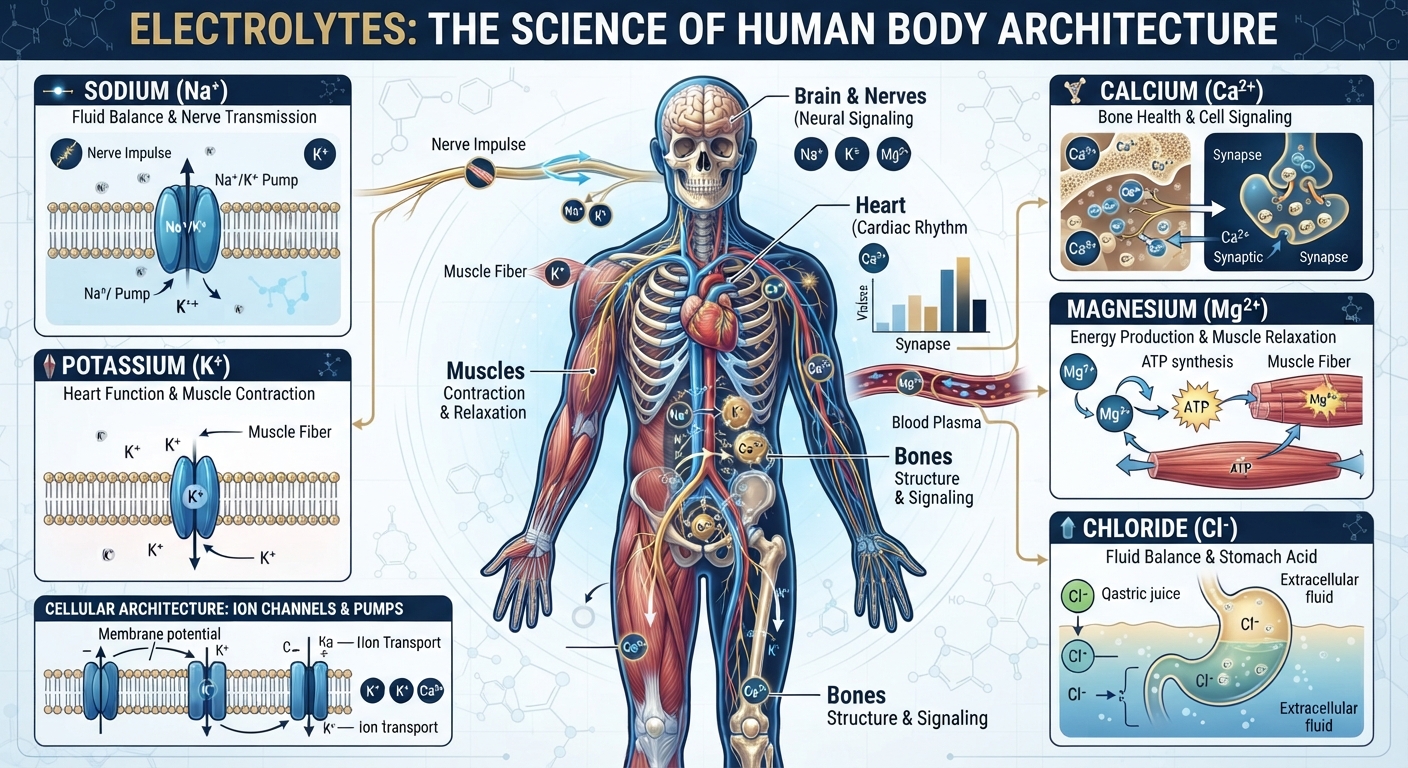
Electrolytes are among the most fundamental chemical systems that allow the human body to function. They regulate electrical signals, nerve communication, muscle movement, heartbeat coordination, fluid distribution, blood chemistry, cellular metabolism, and the chemical reactions necessary for life.
The human body is not simply a collection of organs. It is a highly interconnected electrochemical, biological, fluid-regulating and molecular network.
Electrolytes form a major part of this network.
Chapter 1: What are electrolytes?
An electrolyte is a substance that, when dissolved in water, separates into electrically charged particles called ions.
These ions carry electrical charge and allow electrical currents to flow through biological fluids.
For example:
| Chemical | Electrolyte ion | Electrical charge |
|---|---|---|
| Sodium chloride | Sodium (Na⁺) | Positive |
| Sodium chloride | Chloride (Cl⁻) | Negative |
| Potassium salts | Potassium (K⁺) | Positive |
| Calcium salts | Calcium (Ca²⁺) | Positive |
| Magnesium salts | Magnesium (Mg²⁺) | Positive |
| Phosphate | Phosphate species | Negative |
| Bicarbonate | HCO₃⁻ | Negative |
The electrical charges are important because they influence:
- Electrical potential across cell membranes
- Nervous-system communication
- Muscle contraction
- Heart rhythm
- Fluid movement
- Acid-base balance
- Enzyme activity
- Cellular energy production
The human body contains a large amount of water, and electrolytes dissolve in this water to create electrically conductive biological environments.
Chapter 2: The architecture of electrolyte distribution
Body fluid compartments, daily water intake and | PPT
Glycogen, Cellular Hydration, and Endurance Physiology
Nerve Physiology: Action Potentials, Conduction, and Synapses Flashcards | Quizlet
9
The human body’s electrolytes are not evenly distributed.
They are organized into different fluid compartments.
2.1 The two primary compartments
A. Intracellular fluid (ICF)
Intracellular fluid is the water contained inside cells.
It represents approximately two-thirds of total body water in a typical adult.
Its major ions include:
- Potassium
- Magnesium
- Phosphate
- Proteins
- Various negatively charged molecules
Potassium is the dominant positive ion inside most cells.
B. Extracellular fluid (ECF)
Extracellular fluid is the water outside cells.
It includes:
- Blood plasma
- Interstitial fluid surrounding cells
- Smaller specialized fluid compartments
Sodium is the dominant positive ion in extracellular fluid.
The extracellular environment provides the chemical surroundings in which cells operate.
2.2 Distribution model
This arrangement is not accidental. Cells maintain different concentrations of ions on each side of their membranes.
These differences create the chemical gradients that power biological electrical activity.
Chapter 3: The six major electrolyte systems
3.1 Sodium — Na⁺
Renal physiology | Abdominal Key
PPT – Neural Signaling PowerPoint Presentation, free download – ID:7076617
7
Sodium is the primary positive ion in extracellular fluid.
Main functions
- Controls extracellular fluid volume
- Influences blood volume and pressure
- Regulates water distribution
- Supports nerve impulses
- Participates in muscle function
- Contributes to nutrient transport across cell membranes
Sodium concentration is closely connected to water balance.
When the body changes its water balance, sodium concentration in the blood can change even if the total sodium content of the body has not changed proportionally.
Sodium and water
Water moves between compartments in response to differences in the concentration of dissolved particles.
This process is called osmosis.
Sodium is a major determinant of extracellular osmotic concentration.
The kidneys, thirst mechanism, and hormones work together to regulate sodium and water.
3.2 Potassium — K⁺
Distribution of cations in body fluid compartments | Deranged Physiology
Resting Membrane And Action Potential – pediagenosis
Electrical Activity of the Heart – Modular Anatomy & Physiology
10
Potassium is the dominant positive ion inside most cells.
Main functions
- Establishes electrical properties of cell membranes
- Helps maintain resting membrane potential
- Supports nerve-cell activity
- Supports muscle contraction and relaxation
- Helps regulate cardiac electrical activity
- Participates in cellular metabolism
The difference between potassium concentrations inside and outside cells is particularly important.
Cells maintain high intracellular potassium and relatively low extracellular potassium.
This gradient contributes strongly to the electrical potential across the cell membrane.
Even relatively small changes in extracellular potassium can influence electrical excitability.
3.3 Calcium — Ca²⁺
Biochemistry Series Part 11: Heart & Muscle Biochemistry – Wasil Zafar
PPT – Seven-Transmembrane Receptor Signaling PowerPoint Presentation, free download – ID:4596949
PPT – The Skeletal System PowerPoint Presentation, free download – ID:2425231
9
Calcium has both structural and signalling functions.
Main functions
- Bone and teeth structure
- Muscle contraction
- Nerve transmitter release
- Cellular communication
- Blood clotting
- Enzyme regulation
- Intracellular signalling
Most of the body’s calcium is stored in bones and teeth.
A much smaller fraction circulates in the blood or exists inside cells.
However, that smaller fraction is biologically crucial.
Calcium is used as an intracellular signalling molecule. Cells can temporarily change calcium concentrations in specific areas to trigger biological events.
For example, in muscle cells, calcium signals allow contractile proteins to interact.
3.4 Magnesium — Mg²⁺
8
Magnesium is a major intracellular mineral.
It is involved in hundreds of biochemical processes.
Main functions
- ATP-dependent reactions
- Enzyme activation
- Protein synthesis
- DNA and RNA processes
- Muscle and nerve function
- Regulation of cellular electrical activity
- Bone structure
A particularly important concept is that many biological reactions use ATP in association with magnesium.
ATP is frequently handled by enzymes as a magnesium-associated complex, often represented as MgATP.
This makes magnesium a fundamental component of cellular energy metabolism.
3.5 Chloride — Cl⁻
Chloride is the principal negative ion in extracellular fluid.
Main functions
- Electrical neutrality
- Fluid balance
- Osmotic regulation
- Acid-base regulation
- Gastric acid production
- Electrical activity in certain cells
Chloride often moves in relation to sodium, but it also has independent physiological roles.
In the stomach, chloride contributes to hydrochloric acid production.
In certain nervous-system cells, chloride gradients influence inhibitory signalling.
3.6 Bicarbonate — HCO₃⁻
An introduction to Stewart acid–base – The Physiological Society
PPT – Blood pH Regulation Mechanism Explained PowerPoint Presentation, free download – ID:9135536
PPT – Reactions in Aqueous Solution PowerPoint Presentation, free download – ID:4566823
11
Bicarbonate is one of the body’s major chemical buffering systems.
Main functions
- Maintains acid-base balance
- Helps stabilize blood pH
- Carries part of the carbon dioxide transport system
- Participates in kidney regulation of acid and base
- Supports chemical stability of extracellular fluids
The bicarbonate system works together with the lungs and kidneys.
The lungs regulate carbon dioxide removal.
The kidneys regulate bicarbonate conservation and acid excretion.
Together, they maintain a stable internal chemical environment.
Chapter 4: The cell membrane — the electrolyte control boundary
6.4 ATP: Adenosine Triphosphate – Biology 2e | OpenStax
8
The cell membrane is one of the most important structures in electrolyte physiology.
It separates the intracellular environment from the extracellular environment.
The membrane consists primarily of a phospholipid bilayer containing proteins.
Some proteins function as:
- Ion channels
- Transporters
- Pumps
- Receptors
- Electrical signalling structures
The membrane is selectively permeable.
Some substances cross easily, while others require specialized transport systems.
This allows the cell to control its internal chemistry.
Membrane architecture
The cell membrane is therefore not merely a protective wall.
It is a chemical control interface and electrical communication platform.
Chapter 5: The sodium-potassium pump
The sodium-potassium pump, also known as Na⁺/K⁺-ATPase, is a fundamental cellular transport protein.
It uses energy from ATP to maintain differences in sodium and potassium concentrations across the membrane.
For each ATP molecule used, it typically transports:
- Three sodium ions outward
- Two potassium ions inward
This transport is against their respective concentration gradients.
Why is this important?
The pump helps maintain:
- Low intracellular sodium
- High intracellular potassium
- Cellular electrical gradients
- Cell-volume regulation
- Conditions necessary for secondary transport
The pump consumes energy.
This means electrolyte balance is connected directly to cellular energy production.
The mitochondria produce ATP, while membrane transport proteins use that ATP to maintain the chemical architecture of the cell.
Chapter 6: Electrochemical architecture and membrane potential
Electrolytes are not only chemicals. They create the electrical conditions required for cells to operate.
A cell membrane separates ions with different concentrations, and the membrane’s selective permeability allows an electrical potential to develop.
This is called the membrane potential.
6.1 Why electrical potential develops
Three major conditions contribute:
- Different ion concentrations exist on either side of the membrane.
- The membrane allows some ions to cross more easily than others.
- Active transport systems maintain the concentration differences.
The inside of many resting cells is electrically negative relative to the outside.
The exact voltage varies by cell type.
| Cell type | Electrical importance |
|---|---|
| Neurons | Rapid communication |
| Skeletal muscle | Contraction |
| Cardiac muscle | Coordinated heartbeat |
| Smooth muscle | Blood vessels and organs |
| Secretory cells | Regulated secretion |
| Sensory cells | Detection and signal conversion |
6.2 Chemical gradient versus electrical gradient
Two forces influence the movement of an ion.
Chemical gradient: the tendency of an ion to move from a region of higher concentration toward a region of lower concentration.
Electrical gradient: the tendency of an ion to move toward a region with an opposite electrical charge.
Together, they form the ion’s electrochemical gradient.
Electrochemical gradient
\[ \text{Electrochemical force}=\text{Chemical force}+\text{Electrical force} \]
The direction of ion movement depends on both concentration differences and electrical attraction or repulsion.
This concept is central to understanding the entire nervous system, heart, muscles and cellular transport.
Chapter 7: Electrolytes and the human nervous system
Brain Diagram Generator – Create Neuroscience Illustrations with AI – ConceptViz
Physiology Series Part 2: Neurophysiology & Action Potentials – Wasil Zafar
Scientists unveil how general anesthesia works
7
The nervous system depends on electrochemical communication.
A neuron receives information, integrates it, and may transmit an electrical signal along its axon.
7.1 Neuron architecture
A typical neuron contains:
- Dendrites — receive incoming signals
- Cell body — integrates cellular information
- Axon — transmits electrical signals
- Axon terminals — communicate with other cells
- Synapses — communication junctions
7.2 The action potential
An action potential is a rapid change in membrane voltage.
In many neurons, the process involves sequential changes in sodium and potassium permeability.
A simplified sequence:
- A neuron receives incoming stimulation.
- Membrane voltage changes.
- Voltage-gated sodium channels open.
- Sodium movement contributes to rapid depolarization.
- Sodium-channel activity changes.
- Potassium channels contribute to repolarization.
- Membrane voltage returns toward its resting condition.
- The cell recovers its capacity to signal again.
This electrical signal travels along the neuron.
The nervous system therefore relies upon controlled ion movement rather than electricity in the same way that copper wires carry electrical current.
Biological electrical activity is generated by ionic movement through membranes.
Chapter 8: Electrolytes and muscle architecture
Biochemistry Series Part 11: Heart & Muscle Biochemistry – Wasil Zafar
PPT – Muscle Overview PowerPoint Presentation, free download – ID:3008709
8
Muscles are electrochemical-mechanical systems.
They transform electrical and chemical signals into mechanical force.
8.1 The muscle contraction system
The process involves several coordinated components:
- Electrical stimulation
- Calcium release
- Contractile proteins
- ATP
- Membrane transport
- Calcium removal and storage
The muscle contains microscopic structures called sarcomeres.
Within these structures, actin and myosin proteins interact to generate contraction.
Calcium is a critical signal that allows the contractile machinery to become activated.
ATP provides the energy required for multiple steps of the contraction and relaxation cycle.
8.2 Calcium’s role
Calcium functions as a signal that connects electrical excitation to mechanical activity.
In skeletal muscle:
- Electrical excitation travels along the muscle membrane.
- The signal is transmitted into the muscle fibre.
- Calcium is released from internal storage structures.
- Calcium interacts with regulatory proteins.
- The contractile machinery becomes activated.
- Calcium is subsequently returned to storage or removed from the cytoplasm.
Muscle relaxation is also an active biological process.
The body does not simply switch off contraction; it must regulate calcium concentrations and restore cellular conditions.
Chapter 9: Electrolytes and the heart
PPT – Cardiac Muscle Contraction PowerPoint Presentation, free download – ID:5417394
10
The heart is a specialized electrical and mechanical organ.
Its cells coordinate electrical signals to ensure that chambers contract in an organized sequence.
9.1 Electrical conduction architecture
The major components include:
- Sinoatrial node
- Atrial conduction pathways
- Atrioventricular node
- Bundle of His
- Right and left bundle branches
- Purkinje fibres
The electrical signal coordinates the timing of contraction.
Electrolytes are essential to the electrical behaviour of cardiac cells.
Sodium
Contributes to rapid electrical depolarization in many cardiac cells.
Potassium
Contributes to electrical repolarization and resting electrical properties.
Calcium
Contributes to electrical activity and contraction of cardiac muscle.
Magnesium
Supports multiple biochemical and electrical processes, including regulation of ion transport.
The heart therefore requires carefully regulated electrolyte concentrations to maintain its electrical stability.
Chapter 10: Electrolytes and water balance
File:Kidney nephron molar transport diagram.svg – Wikimedia Commons
Biochemistry Series Part 13: Kidney Biochemistry & Acid–Base Control – Wasil Zafar
Water Composition of the Human Body Water Makes
7
Electrolytes and water are inseparable physiological systems.
The kidneys regulate the volume and composition of fluids by filtering blood and selectively reabsorbing or excreting substances.
10.1 The nephron
The nephron is the functional unit of the kidney.
Its architecture includes:
- Glomerulus
- Bowman’s capsule
- Proximal tubule
- Loop of Henle
- Distal tubule
- Collecting duct
Each section has specialized functions in water and electrolyte regulation.
The kidneys help regulate:
- Sodium
- Potassium
- Chloride
- Calcium
- Magnesium
- Phosphate
- Bicarbonate
- Water
- Hydrogen ions
10.2 Kidney control system
The kidneys continuously adjust the chemical composition of the body.
They are not simply waste-removal organs.
They are sophisticated chemical regulation systems.
Chapter 11: Hormonal control of electrolytes
Electrolyte regulation is controlled by hormones and feedback systems.
11.1 Aldosterone
Aldosterone is produced by the adrenal cortex.
It helps regulate sodium retention and potassium excretion by acting on the kidneys.
Its influence contributes to:
- Sodium balance
- Potassium balance
- Extracellular fluid volume
- Blood pressure regulation
11.2 Antidiuretic hormone (ADH)
ADH is also known as vasopressin.
It primarily regulates the body’s water conservation.
It acts on the kidneys to influence how much water is reabsorbed.
This is important because blood sodium concentration is strongly affected by the relationship between sodium and water.
11.3 Parathyroid hormone (PTH)
PTH is produced by the parathyroid glands.
Its major role is calcium regulation.
It influences:
- Bone calcium movement
- Kidney calcium handling
- Phosphate regulation
- Vitamin D activation
11.4 Vitamin D
Vitamin D helps regulate calcium and phosphate absorption, particularly through the digestive system.
It contributes to bone mineralization and broader mineral balance.
11.5 Hormonal network
Chapter 12: Electrolytes and acid-base chemistry
The human body must maintain a narrow range of chemical conditions for proteins, enzymes, organs and cells to function properly.
Blood pH is normally maintained within a narrow range, approximately 7.35–7.45.
The major acid-base regulatory systems include:
- Chemical buffers
- Respiratory system
- Kidneys
12.1 The bicarbonate buffer
The bicarbonate system is commonly represented as:
\[ \mathrm{CO_2+H_2O \rightleftharpoons H_2CO_3 \rightleftharpoons H^+ + HCO_3^-} \]
This reaction connects carbon dioxide, hydrogen ions and bicarbonate.
The lungs regulate carbon dioxide removal.
The kidneys regulate bicarbonate conservation and the removal of acids.
12.2 The three levels of regulation
| System | Main function |
|---|---|
| Chemical buffers | Rapidly limit changes in pH |
| Lungs | Regulate carbon dioxide |
| Kidneys | Regulate bicarbonate and acid excretion |
These systems cooperate to maintain a stable chemical environment.
Chapter 13: Electrolytes and the digestive system
File:Cotransporter intest en.jpg – Wikimedia Commons
7
The digestive system is a major gateway through which electrolytes and water enter the body.
Electrolytes are obtained from food and beverages, and their absorption is regulated by specialized intestinal transport mechanisms.
13.1 The stomach
The stomach produces gastric acid containing hydrogen and chloride ions.
This acidic environment contributes to:
- Food digestion
- Protein processing
- Activation of digestive enzymes
- Protection against many ingested microorganisms
13.2 The small intestine
The small intestine is the major site for absorption of many nutrients, water and electrolytes.
Its architecture includes:
- Circular folds
- Villi
- Microvilli
- Intestinal epithelial cells
- Transport proteins
- Blood vessels
- Lymphatic vessels
The enormous surface area allows efficient absorption.
13.3 Sodium and glucose transport
Some intestinal transport systems allow sodium and glucose to be absorbed together.
This illustrates an important principle of physiology:
Electrolyte gradients can provide energy for the transport of other molecules.
Sodium gradients are established by cellular transport systems, and these gradients help drive nutrient absorption.
This connects electrolyte physiology with nutrition, metabolism and energy systems.
Chapter 14: Electrolytes and cellular energy
File:Cellular respiration EN.svg – Wikimedia Commons
Protect Against Cardiovascular Disease With Elektra Magnesium
Chemiosmotic Theory and ATP Synthesis | Biochemistry Class Notes | Fiveable
7
The human body is an energy-dependent chemical network.
Electrolytes participate in maintaining the conditions needed for energy production and utilization.
14.1 ATP
ATP is the principal energy-transfer molecule used by cells.
ATP supports:
- Ion transport
- Muscle activity
- Protein synthesis
- Cellular movement
- Metabolic reactions
- Membrane maintenance
14.2 Mitochondria
Mitochondria generate much of the ATP used by many human cells.
Their inner membrane contains machinery that establishes proton gradients used in ATP production.
This is another example of biological electrochemical architecture.
The mitochondria use gradients to support energy conversion, while the cell membrane uses ion gradients to support electrical signalling and transport.
These are related principles operating in different biological structures.
14.3 The energy-electrolyte relationship
This is why electrolytes cannot be understood separately from cellular energy metabolism.
Chapter 15: Electrolytes and the blood
Blood is a transport medium connecting the body’s organs and tissues.
It carries:
- Water
- Electrolytes
- Nutrients
- Hormones
- Oxygen
- Carbon dioxide
- Waste products
Blood plasma contains dissolved electrolytes that help regulate its chemical and physical properties.
The concentration of electrolytes in blood is important, but blood is only one compartment of the body’s electrolyte system.
For example, most potassium is located inside cells rather than circulating in the blood.
Therefore, a blood measurement does not represent the total quantity of an electrolyte in the body.
This distinction is fundamental in physiology and medicine.
Chapter 16: Electrolyte architecture — comparative table
The following table summarizes major ions, their principal locations and functions.
| Electrolyte | Main distribution | Primary biological functions |
|---|---|---|
| Sodium (Na⁺) | Extracellular | Water balance, electrical signalling, transport |
| Potassium (K⁺) | Intracellular | Membrane potential, nerve and muscle function |
| Calcium (Ca²⁺) | Bone; regulated extracellular and intracellular pools | Bone, contraction, signalling, clotting |
| Magnesium (Mg²⁺) | Intracellular and bone | Enzymes, ATP reactions, neuromuscular regulation |
| Chloride (Cl⁻) | Extracellular | Electrical neutrality, fluid balance, acid-base physiology |
| Bicarbonate (HCO₃⁻) | Extracellular | Buffering, acid-base balance |
| Phosphate | Intracellular and bone | ATP, DNA, RNA, membranes, bone |
Chapter 17: Electrolyte concentration and physiological reference values
Laboratories commonly measure electrolytes in blood serum or plasma.
Typical adult reference intervals may include the following. Exact ranges differ by laboratory, age, testing method and clinical context.
| Measurement | Illustrative adult reference interval |
|---|---|
| Sodium | 135–145 mmol/L |
| Potassium | 3.5–5.0 mmol/L |
| Chloride | 98–106 mmol/L |
| Bicarbonate | 22–29 mmol/L |
| Total calcium | 2.1–2.6 mmol/L |
| Magnesium | 0.70–1.05 mmol/L |
| Phosphate | Approximately 0.8–1.5 mmol/L |
These are educational reference ranges, not targets for self-treatment.
Electrolyte interpretation depends on several factors, including:
- Age
- Kidney function
- Fluid balance
- Medication
- Hormonal activity
- Medical conditions
- Laboratory reference intervals
A concentration can be abnormal even when the body’s total quantity of that electrolyte is not simply too low or too high.
Chapter 18: What happens when electrolyte balance changes?
Electrolyte disturbances affect different systems depending on the ion involved, the degree of change, how quickly the change develops and the underlying cause.
Sodium disturbances
Sodium abnormalities can affect water distribution and brain function.
Changes may be associated with symptoms such as:
- Headache
- Nausea
- Confusion
- Weakness
- Changes in alertness
Severe abnormalities can become medical emergencies.
Potassium disturbances
Potassium abnormalities can affect electrical activity in:
- Muscles
- Nerves
- The heart
They may be associated with weakness or disturbances in heart rhythm.
Calcium disturbances
Calcium abnormalities can affect:
- Muscle activity
- Nerve function
- Bone metabolism
- Cellular signalling
Magnesium disturbances
Magnesium abnormalities may influence:
- Muscle function
- Nerve function
- Cellular enzyme reactions
- Heart electrical activity
Chloride and bicarbonate disturbances
These may relate to changes in:
- Fluid balance
- Acid-base regulation
- Kidney function
- Respiratory function
- Digestive-system losses
If someone has concerning symptoms or a laboratory result showing a significant electrolyte abnormality, medical assessment is important. Electrolytes should not be corrected rapidly or with concentrated supplements without appropriate medical guidance.
Chapter 19: The human body’s electrolyte homeostasis control architecture
Homeostasis is the ability of the body to maintain relatively stable internal conditions despite changes in the external environment.
Electrolyte homeostasis is not controlled by one organ. It is coordinated by multiple organs, cellular systems and feedback mechanisms.
Physiology Series Part 1: Homeostasis & Feedback Mechanisms – Wasil Zafar
Osmoregulation and Excretion – ppt download
Urinary System | EduovisualUrinary SystemFree water clearance
7
The major control centres
| System | Contribution |
|---|---|
| Brain and hypothalamus | Detects aspects of fluid balance and coordinates thirst and hormonal responses |
| Kidneys | Regulate water and electrolyte excretion and conservation |
| Heart and circulation | Transport fluids and influence renal regulation |
| Lungs | Regulate carbon dioxide and contribute to acid-base balance |
| Adrenal glands | Produce hormones involved in sodium and potassium regulation |
| Parathyroid glands | Regulate calcium and phosphate |
| Digestive system | Absorbs water, electrolytes and nutrients |
| Bones | Major mineral storage system, particularly calcium and phosphate |
| Cells | Maintain ion gradients and regulate their internal chemistry |
The feedback loop
The body is continuously monitoring, adjusting and stabilizing.
It operates through interconnected feedback loops rather than a single central controller.
Chapter 20: The architecture of the complete electrolyte network
The electrolyte system can be understood as seven connected layers.
Layer 1 — Inputs
Food, water, digestion, absorption
Layer 2 — Distribution
Blood plasma, interstitial fluid, intracellular fluid
Layer 3 — Cellular boundaries
Membranes, ion channels, transporters and pumps
Layer 4 — Electrical function
Membrane potential, neurons, heart and muscle
Layer 5 — Chemical metabolism
ATP, enzymes, proteins, cellular reactions
Layer 6 — Regulatory systems
Kidneys, brain, hormones, lungs and bones
Layer 7 — Whole-body stability
Homeostasis, survival and organ coordination
These layers are interconnected. The flow is not simply downward; feedback constantly moves information between the organs, cells and regulatory systems.
Chapter 21: Electrolytes from a physics perspective
Electrolytes connect the human body with several fundamental principles of physics.
21.1 Electrical charge
Ions possess electrical charge.
- Sodium: +1
- Potassium: +1
- Calcium: +2
- Magnesium: +2
- Chloride: −1
These charges contribute to electrical interactions across cell membranes.
21.2 Electrical conductivity
Biological fluids conduct electricity because they contain mobile ions.
Unlike a metallic wire, where electrical conduction mainly involves electrons moving through the material, biological electrical conduction involves ions moving in aqueous environments and across membranes.
21.3 Osmotic pressure
Dissolved particles influence the movement of water.
Water movement is connected to differences in effective particle concentration across membranes.
This is essential for:
- Cell volume
- Tissue fluid
- Blood volume
- Kidney function
21.4 Diffusion
Particles naturally spread through regions of concentration differences.
Diffusion is one of the fundamental mechanisms behind biological transport.
21.5 Active transport
Cells use energy to move ions in directions that would not occur spontaneously from their concentration gradients.
This process is fundamental to maintaining the internal environment.
Chapter 22: Electrolytes from a chemistry perspective
Electrolyte physiology also involves fundamental chemistry.
Atomic structure
Atoms contain protons, neutrons and electrons.
The loss or gain of electrons creates ions.
Chemical bonds
Electrolytes participate in chemical interactions, including ionic interactions and interactions with proteins, water and other molecules.
Chemical reactions
Electrolytes participate in enzyme reactions, buffer systems, cellular signalling and metabolism.
Chemical equilibrium
Many biological reactions are reversible.
The body regulates concentrations and conditions that influence reaction equilibrium.
pH
The acidity or alkalinity of biological fluids influences protein structure and enzyme activity.
Therefore, electrolyte regulation supports the chemical stability of life.
Chapter 23: Electrolytes from a biological systems-engineering perspective
The human body can be compared to an advanced self-regulating technological system.
| Human physiology | Systems engineering analogy |
|---|---|
| Electrolytes | Operating chemical resources |
| Cell membranes | Selective interfaces |
| Ion channels | Controlled communication pathways |
| Sodium-potassium pump | Energy-powered regulator |
| Neurons | Signal-processing networks |
| Kidneys | Chemical filtering and control system |
| Hormones | Distributed control signals |
| Heart | Central circulation pump |
| Blood | Transport network |
| Homeostasis | Feedback-controlled stability |
| ATP | Energy currency |
The analogy is useful for understanding system organization, but biological systems are more complex than engineered machines because they grow, repair themselves, adapt and regulate multiple overlapping processes.
Chapter 24: Tutorial — how to understand electrolyte physiology step by step
The following learning sequence provides a foundation for understanding electrolytes.
Study sequence
- Learn atoms and ions — understand proton, electron, charge and ion formation.
- Learn water chemistry — understand dissolution, polarity and osmosis.
- Study the cell membrane — understand lipid bilayers, channels and transport proteins.
- Study sodium and potassium — understand concentration gradients and membrane voltage.
- Study calcium — understand signalling and muscle contraction.
- Study magnesium and phosphate — understand ATP and cellular metabolism.
- Study chloride and bicarbonate — understand electrical balance and pH regulation.
- Study kidneys — understand filtration, reabsorption and excretion.
- Study hormones — understand feedback and homeostasis.
- Integrate the systems — understand the relationship between circulation, nervous system, heart, muscles and metabolism.
Chapter 25: The fundamental scientific principles
The most important principles to remember are:
- Electrolytes are charged particles. They enable electrical activity in biological fluids.
- Electrolytes are distributed unevenly. Sodium is predominantly extracellular, while potassium is predominantly intracellular.
- Cell membranes control ion movement. Channels, transporters and pumps maintain the cellular chemical environment.
- Electrical gradients create biological signalling. Nervous-system and muscle activity depend on ion gradients.
- Electrolytes regulate fluid balance. Water moves in response to osmotic differences.
- Electrolytes participate in metabolism. Magnesium, phosphate and other ions support ATP and enzyme systems.
- The kidneys are major regulatory organs. They continuously adjust electrolyte and water handling.
- Hormones coordinate electrolyte regulation. Aldosterone, ADH, PTH and vitamin D influence different aspects of the system.
- Electrolytes support the heart’s electrical function. Cardiac cells require carefully regulated ionic environments.
- Homeostasis is a coordinated network. No single electrolyte or organ operates independently.
Chapter 26: Scientific glossary
| Term | Meaning |
|---|---|
| Electrolyte | Substance that forms electrically charged ions in solution |
| Ion | Atom or molecule carrying an electrical charge |
| Cation | Positively charged ion |
| Anion | Negatively charged ion |
| Intracellular | Inside cells |
| Extracellular | Outside cells |
| Osmosis | Water movement across a selectively permeable membrane due to differences in effective solute concentration |
| Diffusion | Net movement of particles down a concentration gradient |
| Electrochemical gradient | Combined chemical and electrical driving forces |
| Membrane potential | Voltage difference across a cell membrane |
| Action potential | Rapid electrical change used by excitable cells to communicate |
| ATP | Molecule used to transfer energy in cellular processes |
| Homeostasis | Regulation of internal conditions within functional ranges |
| Buffer | Chemical system that limits changes in pH |
| Nephron | Functional unit of the kidney |
| Ion channel | Membrane protein pathway that permits particular ions to cross |
| Transporter | Protein that facilitates movement of substances across membranes |
| Na⁺/K⁺-ATPase | Energy-dependent membrane pump maintaining sodium and potassium gradients |
Final conclusion
Electrolytes are the invisible chemical infrastructure of human physiology.
They create the conditions for electrical communication, regulate water distribution, support muscle activity, coordinate heart function, enable metabolism, assist cellular signalling, and maintain the internal chemical stability of the body.
Their architecture extends from atoms and molecules to cell membranes, tissues, organs and the entire human organism.
The deepest understanding of electrolytes emerges when five scientific disciplines are connected:
Ion Exchange Chromatography – What is it & How does it work? | AbbVie CMO
ChemistryAtoms, ions, reactions and pH
Bioelectricity Science | Bioelectricity Research
BiologyCells, membranes and transport
Checking your browser – reCAPTCHA
PhysicsCharge, voltage and gradients
Kidney Anatomy & Nephron Filtration Diagram | Carlson Stock Art
PhysiologyOrgans, regulation and homeostasis
The human body is a living electrochemical network. Electrolytes are among the essential components that allow this network to operate, coordinate, adapt and sustain life.
Understanding electrolytes is therefore a gateway to understanding the deeper architecture of the human body—from microscopic molecular mechanisms to the functioning of the complete organism.




Be First to Comment