
1. Executive Summary
Modern civilisation is fundamentally a materials civilisation.
Buildings require concrete and steel. Electrical grids require copper, aluminium and specialised materials. Vehicles require steel, aluminium, polymers, glass, batteries and electronic materials. Semiconductor manufacturing depends on extraordinarily pure materials. Telecommunications requires optical fibre, metals, ceramics and semiconductor compounds. Renewable-energy systems require large quantities of metals, minerals, polymers, glass and advanced functional materials.
Consequently, economic growth has historically been associated with increasing extraction, processing and consumption of physical resources.
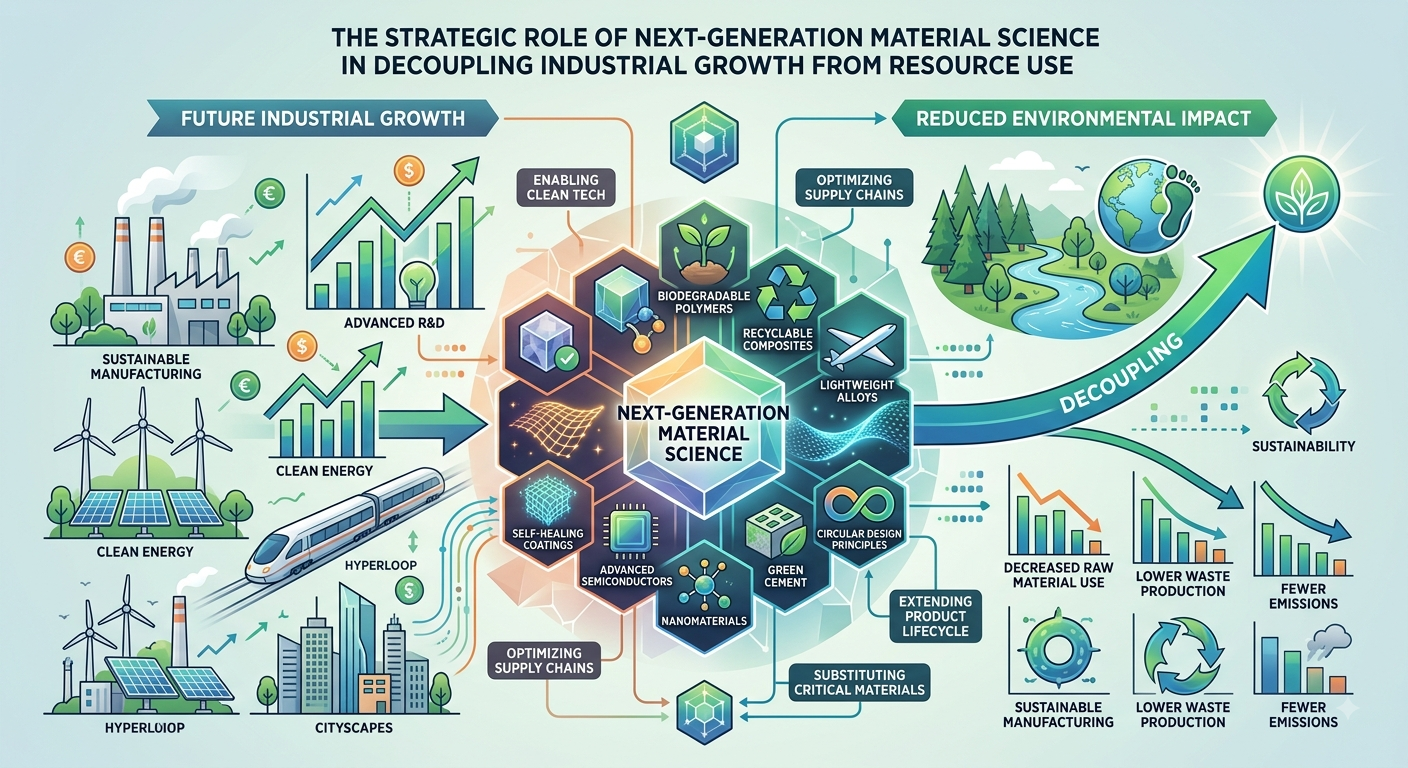
The central challenge of the coming decades is therefore not to stop industrial development, but to increase the amount of economic and social value produced from every kilogram of material entering the economy.
This is the strategic purpose of next-generation materials science.
Advanced materials can enable:
- lighter structures;
- longer-lasting products;
- higher-strength materials;
- lower-temperature manufacturing;
- reduced material losses;
- greater recycled content;
- easier repair and disassembly;
- substitution of scarce materials;
- more efficient energy conversion;
- higher-performance batteries;
- low-carbon cement and steel;
- recyclable polymers;
- advanced semiconductor materials;
- bio-based materials;
- intelligent materials;
- additive manufacturing;
- materials designed specifically for circularity.
The International Energy Agency identifies material-efficiency opportunities across entire value chains, including lightweighting, longer product life, reduced manufacturing losses, reuse, recycling and more intensive utilisation.
The strategic objective can therefore be expressed as:
More economic value + more technological capability + longer product lifetimes − less virgin material consumption − less waste − less energy intensity.
This is not a single technological invention. It is a new industrial architecture.
2. The Fundamental Problem: The Linear Industrial Economy
The conventional industrial model can be represented as:
Extraction → Processing → Manufacturing → Consumption → Disposal
This is commonly described as the linear economy.
A mine extracts ore. The ore is concentrated and refined. Refined materials are converted into components. Components become products. Products are sold and used. Eventually they become waste.
The weakness of this model is that valuable atoms frequently leave the productive economy after only one useful life.
A circular industrial system attempts to replace this with:
Extraction → Processing → Manufacturing → Use → Maintenance → Reuse → Remanufacturing → Recycling → Recovery → Manufacturing
The objective is not necessarily to eliminate extraction completely.
Some virgin resources will remain necessary because:
- populations grow;
- new infrastructure must be constructed;
- some materials are dissipated during use;
- some materials become contaminated;
- some materials are technically difficult to recover;
- material stocks require continual replenishment.
The strategic objective is therefore resource productivity, rather than the unrealistic assumption that all industrial activity can operate without physical resources.
3. What Does “Decoupling” Actually Mean?
Decoupling should be understood carefully.
Suppose an economy grows by 5% while material consumption grows by only 1%.
The economy has achieved:
Relative decoupling.
If the economy grows by 5% while material consumption falls by 2%, it has achieved:
Absolute decoupling.
This distinction is important because simply improving efficiency is not automatically sufficient.
If a new product becomes 30% more material-efficient but demand for that product increases by 100%, total material consumption could still increase.
Therefore, serious decoupling requires consideration of:
Efficiency + durability + utilisation + substitution + circularity + demand + system design.
OECD research specifically identifies resource efficiency and circular-economy policies as mechanisms capable of reducing the relationship between economic growth and primary material consumption.
4. Why Materials Science Is Strategically Important
Materials science sits between fundamental science and industrial production.
It studies the relationship between:
Structure → Properties → Processing → Performance.
For example, changing the atomic structure, grain structure, composition or processing conditions of a metal can dramatically alter:
- strength;
- hardness;
- conductivity;
- corrosion resistance;
- temperature resistance;
- weight;
- fatigue life;
- manufacturability.
This creates an enormous opportunity.
Instead of asking:
How can society obtain more raw materials?
engineers can increasingly ask:
How can the same quantity of material perform more work for longer?
That is a profound change in industrial thinking.
5. The Materials Efficiency Equation
A useful conceptual equation is:
Material Productivity = Economic Value / Material Input
Another useful measure is:
Material Intensity = Material Input / Economic Output
The objective of advanced materials engineering is to increase material productivity and decrease material intensity.
This can happen through several pathways.
Pathway 1: Lightweighting
Use less material to perform the same structural function.
Pathway 2: Strengthening
Make a smaller quantity of material perform the work of a larger quantity.
Pathway 3: Durability
Make products last longer.
Pathway 4: Repairability
Extend useful life through maintenance.
Pathway 5: Reuse
Keep components in productive circulation.
Pathway 6: Remanufacturing
Restore used components to functional condition.
Pathway 7: Recycling
Recover materials from products at end of life.
Pathway 8: Substitution
Replace scarce or environmentally intensive materials with more abundant alternatives.
Pathway 9: Process efficiency
Reduce material losses during production.
Pathway 10: Functional integration
Make one component perform multiple functions.
6. Advanced High-Strength Materials
High-strength materials are among the most direct mechanisms for reducing resource intensity.
Consider structural engineering.
If a stronger material can safely support the same load using less mass, the quantity of raw material required can fall.
Important classes include:
- advanced high-strength steels;
- ultra-high-strength steels;
- aluminium alloys;
- titanium alloys;
- magnesium alloys;
- fibre-reinforced polymers;
- carbon-fibre composites;
- glass-fibre composites;
- ceramic composites;
- high-performance concrete.
The objective is not simply “stronger is better.”
Engineers must optimise:
Strength + weight + cost + durability + manufacturability + recyclability + safety.
A theoretically superior material that is prohibitively expensive or impossible to recycle may not be the best industrial solution.
7. Lightweighting
Lightweighting is particularly important in transportation.
Reducing vehicle mass can influence:
- energy consumption;
- battery requirements;
- structural material demand;
- tyre wear;
- braking requirements;
- logistics costs.
The same principle applies to:
- aircraft;
- trains;
- ships;
- satellites;
- industrial machinery;
- robotics.
However, lightweighting must be assessed at the whole-system level.
Replacing steel with another material may reduce mass but increase energy requirements during production or complicate recycling.
Therefore:
Material substitution ≠ automatic sustainability.
A complete lifecycle assessment is required.
8. Advanced Steel
Steel remains one of civilisation’s most important materials.
The future of steel therefore matters enormously.
Next-generation steel strategies include:
- higher-strength steels;
- corrosion-resistant alloys;
- improved manufacturing efficiency;
- increased scrap utilisation;
- electrification of production;
- hydrogen-based reduction pathways;
- improved furnace technologies;
- better sorting of steel scrap;
- design for disassembly.
The long-term objective is to make each tonne of steel deliver more useful service while reducing the environmental burden associated with its production.
9. Cement and Concrete
Concrete represents another enormous materials challenge.
Modern infrastructure requires vast quantities of concrete for:
- roads;
- bridges;
- dams;
- ports;
- buildings;
- foundations;
- tunnels;
- water systems.
Materials science can contribute through:
- supplementary cementitious materials;
- alternative binders;
- improved aggregate utilisation;
- higher-performance concrete;
- longer service life;
- self-healing materials;
- better structural modelling;
- reduced cement content;
- improved construction precision.
The strategic principle is:
Do not merely produce more concrete; produce more infrastructure service from each tonne of concrete.
10. Aluminium
Aluminium is strategically valuable because it combines relatively low density with useful mechanical and corrosion properties.
Advanced aluminium research focuses on:
- stronger alloys;
- improved fatigue resistance;
- improved casting;
- additive manufacturing;
- improved recycling;
- contamination control;
- closed-loop manufacturing.
Recycling aluminium can be particularly valuable because the metal remains physically useful through repeated material cycles, although collection, sorting, alloy separation and remelting still require infrastructure and energy.
11. Next-Generation Polymers
Plastics demonstrate both the strengths and weaknesses of modern materials engineering.
Polymers can provide:
- low weight;
- corrosion resistance;
- insulation;
- flexibility;
- low manufacturing cost;
- medical functionality;
- packaging efficiency.
But many polymer systems are difficult to recycle because products can contain:
- multiple polymer types;
- additives;
- pigments;
- adhesives;
- multilayer structures;
- contaminants.
Future polymer science therefore needs to move beyond simply creating cheaper plastics.
The goal should increasingly be:
high performance + long life + repairability + recoverability + recyclability.
12. Bio-Based Materials
Biomaterials can provide alternatives to some fossil-derived material systems.
Potential areas include:
- cellulose;
- lignin;
- natural fibres;
- biopolymers;
- engineered wood;
- agricultural residues;
- mycelium-based materials;
- bio-derived chemicals.
However, bio-based does not automatically mean environmentally superior.
A responsible assessment must consider:
- land use;
- water;
- biodiversity;
- fertiliser;
- processing energy;
- transport;
- durability;
- end-of-life pathways.
The correct question is therefore:
What is the complete lifecycle footprint?
13. Nanomaterials
Nanotechnology changes materials behaviour at extremely small scales.
Materials can exhibit substantially different:
- electrical;
- optical;
- thermal;
- mechanical;
- chemical
properties when engineered at nanoscale dimensions.
Applications include:
- advanced coatings;
- batteries;
- catalysts;
- sensors;
- electronics;
- membranes;
- filtration;
- solar technologies;
- medical technologies.
The strategic importance of nanomaterials is that relatively small quantities of highly engineered material can produce disproportionately large functional effects.
But nanoscale materials also require careful assessment of manufacturing cost, toxicity, environmental behaviour and end-of-life management.
14. Two-Dimensional Materials
Two-dimensional materials such as graphene and transition-metal dichalcogenides represent an emerging class of materials with unusual properties.
Potential applications include:
- sensors;
- electronics;
- energy storage;
- coatings;
- membranes;
- composites.
The broader strategic lesson is more important than any individual material:
Materials engineering can create entirely new functional possibilities rather than merely improving existing materials.
15. Semiconductor Materials
The digital economy is also fundamentally a materials economy.
Modern semiconductor manufacturing depends on extremely sophisticated materials and processes.
These include:
- silicon;
- silicon carbide;
- gallium nitride;
- high-purity metals;
- photoresists;
- dielectric materials;
- semiconductor compounds;
- packaging materials;
- specialised gases;
- advanced ceramics.
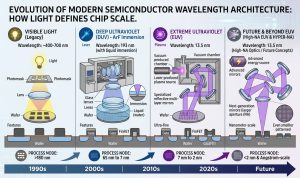
The semiconductor industry’s progression toward smaller transistors increases the importance of materials engineering.
Future computing architectures will increasingly depend on:
Materials + lithography + device physics + packaging + thermal engineering + manufacturing precision.
Recent discussion of semiconductor industrial development also highlights the importance of advanced materials, recycling and refining alongside fabrication capacity.
16. Battery Materials
Energy storage represents another major materials frontier.
Modern batteries depend on complex combinations of:
- lithium;
- nickel;
- manganese;
- cobalt in some chemistries;
- graphite;
- copper;
- aluminium;
- electrolyte materials;
- polymers;
- ceramics.
Materials science is working toward:
- higher energy density;
- longer cycle life;
- faster charging;
- safer chemistries;
- reduced critical-mineral dependence;
- improved recyclability;
- lower-cost materials.
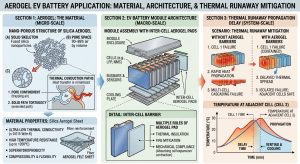
Alternative battery chemistries are strategically important because material substitution can reduce dependence on geographically concentrated resources.
The long-term objective is not merely:
more batteries
but:
more energy-storage service per unit of material.
17. Critical Minerals and Material Substitution
Critical minerals create a strategic problem.
If a technology depends heavily on a small number of geographically concentrated resources, rapid deployment can create supply-chain vulnerabilities.
Materials science can respond through:
Substitution
Replace scarce materials.
Reduction
Use smaller quantities.
Recycling
Recover materials from existing stocks.
Design optimisation
Make products less dependent on vulnerable materials.
Diversification
Develop multiple material pathways.
Recovery
Extract valuable elements from industrial waste.
This creates a new strategic discipline:
Critical-materials engineering.
18. Urban Mining
One of the most important ideas for the future is that cities themselves contain enormous material stocks.
Buildings, vehicles, electrical equipment, appliances, telecommunications systems and infrastructure collectively represent accumulated inventories of:
- steel;
- copper;
- aluminium;
- plastics;
- glass;
- precious metals;
- electronic materials.
Instead of viewing cities solely as consumers of resources, future economies can increasingly view them as material reservoirs.
This creates the concept of:
Urban mining.
The mine of the future is therefore not necessarily only beneath the ground.
It can also exist:
inside buildings, vehicles, infrastructure, electronics and discarded products.
19. Design for Disassembly
A major weakness of conventional product design is that products are frequently optimised for assembly but not for disassembly.
Future products should increasingly be designed so that components can be:
- identified;
- removed;
- repaired;
- upgraded;
- reused;
- remanufactured;
- recycled.
This requires changes in engineering architecture.
A product should increasingly be thought of as a material system with future recovery pathways, rather than a disposable object.
20. Digital Product Passports
Digital technologies can support materials circularity.
A digital product record could contain information about:
- material composition;
- component identity;
- manufacturing date;
- repair history;
- maintenance;
- hazardous substances;
- recycled content;
- disassembly instructions;
- remaining useful life.
This creates a bridge between:
materials science + manufacturing + software + supply chains + recycling.
The result is a digitally traceable material economy.
21. Artificial Intelligence and Materials Discovery
AI is becoming increasingly relevant to materials research.
Traditional materials discovery can involve:
Hypothesis → synthesis → testing → analysis → iteration.
AI can help accelerate parts of this process through:
- materials databases;
- property prediction;
- simulation;
- optimisation;
- automated experimentation;
- generative design;
- literature analysis;
- process optimisation.
A future materials laboratory could combine:
AI + robotics + simulation + advanced microscopy + automated synthesis.
This could substantially shorten the time required to discover and optimise new materials.
22. Additive Manufacturing
Additive manufacturing changes the relationship between design and material consumption.
Conventional manufacturing often involves removing material from a larger block.
Additive manufacturing builds material more selectively.
Potential advantages include:
- reduced machining waste;
- complex geometries;
- lightweight structures;
- customised products;
- local production;
- rapid prototyping;
- spare-parts production.
However, additive manufacturing also has limitations involving:
- energy consumption;
- feedstock;
- production speed;
- quality control;
- material compatibility;
- recycling.
Its value therefore depends on the application.
23. Materials for Renewable Energy
The energy transition itself is a materials transition.
Solar systems require:
- silicon;
- glass;
- aluminium;
- copper;
- polymers;
- electrical materials.
Wind systems require:
- steel;
- concrete;
- copper;
- composites;
- specialised materials.
Energy storage requires additional material systems.
Consequently, the transition to cleaner energy does not eliminate resource demand.
Instead, it changes the composition of material demand.
This makes materials efficiency strategically important.
Recent experience with solar deployment illustrates this challenge: rapid expansion creates a future end-of-life materials stream requiring better recycling, reuse and design-for-recovery systems.
24. The Circular Materials Hierarchy
A sophisticated circular economy should not treat recycling as the first option.
A useful hierarchy is:
1. Avoid unnecessary material use
↓
2. Reduce material intensity
↓
3. Extend product life
↓
4. Repair
↓
5. Reuse
↓
6. Refurbish
↓
7. Remanufacture
↓
8. Recycle
↓
9. Recover energy/material value
↓
10. Dispose only as a last resort
This hierarchy preserves the greatest amount of economic value for the longest period.
25. Recycling Is Necessary but Not Sufficient
Recycling is often presented as the solution to resource scarcity.
It is extremely important, but it has physical limitations.
Some materials are:
- dispersed;
- contaminated;
- chemically transformed;
- difficult to separate;
- economically expensive to recover;
- degraded during repeated processing.
Therefore:
Circular economy ≠ recycling economy.
A truly circular industrial system combines:
better materials + better design + longer life + reuse + remanufacturing + recycling.
OECD analysis similarly emphasises the broader resource-efficiency and circular-economy system rather than recycling alone.
26. The Role of Durability
One of the simplest ways to reduce material consumption is to make products last longer.
If a product lasts twice as long, the annualised material requirement associated with replacement can potentially fall substantially, assuming comparable utilisation.
Durability therefore has strategic value.
Important technologies include:
- corrosion-resistant coatings;
- fatigue-resistant alloys;
- self-healing materials;
- protective surfaces;
- improved joining technologies;
- predictive maintenance;
- structural health monitoring.
The future factory should therefore optimise not simply for:
lowest manufacturing cost
but increasingly for:
lowest lifecycle resource requirement.
27. Self-Healing Materials
Self-healing materials attempt to repair damage automatically or with minimal intervention.
Research areas include:
- self-healing polymers;
- self-healing coatings;
- cementitious materials;
- microcapsule systems;
- reversible chemical networks.
Potential applications include:
- infrastructure;
- aerospace;
- automotive;
- electronics;
- protective coatings.
The strategic principle is powerful:
Preventing material failure is often more resource-efficient than replacing failed material.
28. Smart Materials
Smart materials can respond to environmental conditions.
They may react to:
- temperature;
- pressure;
- electrical fields;
- magnetic fields;
- light;
- chemical environments;
- mechanical stress.
Examples include:
- shape-memory alloys;
- piezoelectric materials;
- electrochromic materials;
- magnetostrictive materials.
Such materials can reduce the number of separate mechanical or electronic components required to perform certain functions.
This represents another pathway toward material efficiency:
functional integration.
29. Materials and Water Efficiency
Materials science is also central to water security.
Advanced membranes and materials can improve:
- desalination;
- wastewater treatment;
- industrial filtration;
- water purification;
- selective separation.
Membrane technology can potentially reduce energy and material requirements associated with separation processes.
This is particularly important because industrial civilisation is not dependent only on minerals.
It depends simultaneously on:
water + energy + materials + land + information.
30. Materials and Energy Efficiency
Materials determine the efficiency of many energy systems.
Examples include:
- thermoelectric materials;
- battery materials;
- photovoltaic materials;
- catalyst materials;
- insulation;
- magnetic materials;
- power semiconductors.
Improved materials can therefore create a multiplier effect.
A material improvement may reduce:
energy use → emissions → infrastructure requirement → operating cost → material demand.
This is why materials science should be considered a foundational industrial technology rather than merely a laboratory discipline.
31. Catalysts: Doing More With Less
Catalysts can dramatically increase the efficiency of chemical reactions.
They are important in:
- chemical manufacturing;
- petroleum refining;
- hydrogen production;
- pollution control;
- fuel cells;
- pharmaceuticals;
- industrial synthesis.
Advanced catalyst research seeks to increase:
reaction efficiency + selectivity + lifetime
while reducing dependence on scarce or expensive elements.
Catalysis demonstrates an important principle:
Sometimes the most important resource-saving technology is not a stronger bulk material, but a tiny quantity of highly functional material.
32. Materials Engineering and the Supply Chain
Materials science cannot be separated from supply-chain strategy.
A material may be technically excellent but strategically vulnerable if:
- production is geographically concentrated;
- refining capacity is limited;
- transportation is vulnerable;
- substitutes are unavailable;
- recycling infrastructure is weak.
Future industrial strategy therefore needs a materials supply-chain map.
Such a map should track:
Resource → Mine → Concentrate → Refining → Material → Component → Product → Use → Collection → Recovery → Secondary Material.
The objective is to identify vulnerabilities at every stage.
33. The Material Passport of an Economy
A future advanced economy could maintain a comprehensive inventory of material stocks.
For example:
Copper stock
- buildings;
- power networks;
- telecommunications;
- vehicles;
- electronics;
- industrial equipment.
Steel stock
- buildings;
- bridges;
- railways;
- vehicles;
- machinery;
- pipelines.
Aluminium stock
- aircraft;
- buildings;
- transport;
- packaging;
- electrical systems.
Such inventories would allow governments and businesses to understand where future secondary resources are located.
34. South Africa and the Strategic Materials Opportunity
For South Africa, advanced materials science has particular strategic importance because the country possesses substantial mineral resources while also facing the challenge of moving beyond a predominantly extractive economic model.
The opportunity is to develop a stronger progression:
Mining → Beneficiation → Refining → Advanced Materials → Components → Manufacturing → Technology Products → Export
rather than stopping predominantly at:
Mining → Raw-material export.
A materials-centred industrial strategy could connect South Africa’s mineral endowment with:
- battery materials;
- advanced alloys;
- catalysts;
- electrical materials;
- renewable-energy components;
- industrial machinery;
- electronics;
- automotive manufacturing;
- infrastructure materials.
The strategic objective should be greater value addition per tonne of extracted resource.
35. Africa’s Materials Opportunity
Africa possesses significant mineral resources while many African economies have relatively limited downstream manufacturing capacity.
The next industrial stage should therefore focus on:
resource ownership + processing + scientific capability + manufacturing + technology.
This requires:
- materials laboratories;
- engineering universities;
- industrial research centres;
- pilot plants;
- testing facilities;
- standards laboratories;
- skilled technicians;
- advanced manufacturing;
- reliable electricity;
- logistics;
- digital infrastructure;
- investment capital.
Mining alone cannot create the full industrial ecosystem.
The strategic opportunity is to turn geological resources into scientific and industrial capability.
36. The Materials Science Workforce
A next-generation materials economy requires interdisciplinary talent.
Important disciplines include:
- chemistry;
- physics;
- mechanical engineering;
- chemical engineering;
- electrical engineering;
- metallurgy;
- nanotechnology;
- computational science;
- data science;
- AI;
- robotics;
- environmental science;
- manufacturing engineering.
The future materials scientist may therefore work alongside:
AI engineers + roboticists + manufacturing engineers + economists + environmental scientists.
This represents a major transformation from traditional materials research.
37. The Materials Innovation Stack
A useful architecture is:
Layer 1 — Fundamental science
Atoms, molecules, electrons, bonding and thermodynamics.
Layer 2 — Materials chemistry
Composition and chemical behaviour.
Layer 3 — Structure
Grains, phases, defects, interfaces and microstructure.
Layer 4 — Processing
Casting, forging, sintering, deposition, printing and forming.
Layer 5 — Components
Parts and engineered structures.
Layer 6 — Products
Vehicles, machines, electronics and infrastructure.
Layer 7 — Systems
Energy, transport, cities, communications and industry.
Layer 8 — Circularity
Repair, reuse, remanufacturing and recycling.
Layer 9 — Intelligence
Sensors, AI, digital twins and predictive maintenance.
Layer 10 — Industrial strategy
Supply chains, investment, standards and policy.
The greatest economic value emerges when all ten layers are connected.
38. Digital Twins and Materials
Digital twins can represent:
- buildings;
- bridges;
- machines;
- vehicles;
- factories;
- energy systems.
When material information is integrated into these digital models, organisations can estimate:
- remaining useful life;
- fatigue;
- corrosion;
- maintenance requirements;
- material composition;
- replacement timing;
- recovery value.
This transforms materials management from reactive replacement to predictive management.
39. Robotics and Circular Materials
Robotics can improve:
- sorting;
- disassembly;
- inspection;
- component recovery;
- remanufacturing;
- material handling.
This is particularly important because many circular processes are labour-intensive and difficult to automate.
A future recycling facility could therefore combine:
computer vision + spectroscopy + robotics + AI + automated sorting + chemical recovery.
The result would be a more intelligent material-recovery infrastructure.
40. The AI-Materials-Robotics Triangle
A particularly powerful future industrial combination is:
AI
for prediction and optimisation.
Materials science
for creating and understanding advanced materials.
Robotics
for automated experimentation and manufacturing.
Together:
AI → discovers/optimises
Materials science → creates functional matter
Robotics → manufactures/tests/recover materials
This could create a highly automated materials innovation cycle.
41. Economic Transformation
Decoupling resource consumption from economic growth does not necessarily mean reducing economic activity.
Instead, economic value can increasingly shift toward:
- knowledge;
- software;
- services;
- design;
- engineering;
- intellectual property;
- automation;
- data;
- maintenance;
- optimisation;
- high-value manufacturing.
Physical materials remain essential, but a larger proportion of value can be generated through information and intelligence embedded within materials and products.
A modern semiconductor is an excellent example.
A tiny physical device can contain enormous amounts of economic value because its functionality depends on decades of accumulated:
science + engineering + software + manufacturing knowledge.
42. The Service Economy and Material Productivity
Another pathway is selling functionality rather than simply selling physical products.
Instead of:
Sell machine → customer owns machine → machine eventually discarded
a company can potentially provide:
Machine-as-a-service → maintenance → upgrades → refurbishment → component recovery.
This creates an incentive for manufacturers to build durable products.
The business model becomes:
Revenue over lifetime
rather than:
Revenue at initial sale.
This can align commercial incentives with resource efficiency.
43. Measuring Success
A future materials strategy should not rely on GDP alone.
Useful indicators include:
Material productivity
Economic output per unit of material.
Material intensity
Material consumed per unit of economic output.
Product lifetime
Average useful life.
Repair rate
Percentage of products repaired rather than replaced.
Reuse rate
Percentage of products/components reused.
Remanufacturing rate
Percentage restored to productive service.
Recycling rate
Percentage of material recovered.
Secondary-material share
Proportion of manufacturing inputs supplied by recovered material.
Critical-material dependence
Exposure to strategically vulnerable materials.
Energy intensity
Energy consumed per unit of material/product.
Lifecycle carbon intensity
Total emissions over the product lifecycle.
These indicators provide a more complete picture of industrial sustainability.
44. The Major Obstacles
Next-generation materials science faces significant challenges.
Technical obstacles
- complex material behaviour;
- manufacturing scale-up;
- durability uncertainty;
- recycling difficulty;
- contamination;
- quality control.
Economic obstacles
- high research costs;
- expensive pilot facilities;
- uncertain markets;
- capital requirements;
- competition with established materials.
Infrastructure obstacles
- insufficient recycling systems;
- limited refining capacity;
- weak collection systems;
- inadequate testing facilities.
Skills obstacles
- shortage of specialised scientists;
- shortage of technicians;
- weak industry-university collaboration.
Policy obstacles
- inconsistent standards;
- poor incentives;
- fragmented regulations;
- insufficient lifecycle requirements.
45. The Rebound Effect
Efficiency can sometimes create unintended consequences.
If a technology becomes cheaper because it uses fewer resources, demand may increase.
For example:
Efficiency → lower cost → greater consumption → some efficiency gains offset.
Therefore, efficiency must be evaluated at the system level.
The objective should be:
resource-efficient prosperity, not simply resource-efficient products.
46. The Danger of Technological Substitution Without Lifecycle Analysis
Replacing one material with another can transfer environmental pressure rather than eliminate it.
For example, a new material may require:
- more energy;
- rarer minerals;
- more complex processing;
- more difficult recycling.
Therefore, materials decisions should use:
Life-Cycle Assessment (LCA).
A proper LCA considers:
Raw materials → manufacturing → transport → use → maintenance → end of life.
This prevents sustainability claims based only on one stage of a product’s life.
47. A New Industrial Philosophy
The traditional industrial philosophy was:
Extract more → manufacture more → sell more.
The emerging philosophy should become:
Extract intelligently → design efficiently → manufacture precisely → use longer → maintain continuously → recover systematically → manufacture again.
This is not anti-industrial.
It is post-linear industrialism.
48. The 21st-Century Materials Strategy
A national materials strategy should contain at least ten pillars:
- Materials research
- Critical-mineral security
- Advanced manufacturing
- Recycling infrastructure
- Product durability
- Industrial digitisation
- AI-assisted materials discovery
- Skills development
- Circular-economy markets
- International research collaboration
Countries that master these capabilities will have greater control over future industrial value chains.
49. The 2030–2050–2100 Perspective
2030
The priority should be:
- scaling proven material-efficiency technologies;
- strengthening recycling;
- improving critical-mineral security;
- expanding advanced manufacturing;
- developing digital material tracking.
2050
The objective should become:
- highly circular industrial systems;
- widespread advanced materials;
- automated material recovery;
- substantially improved material productivity;
- large-scale substitution of vulnerable resources.
2100
The long-term vision is an industrial civilisation in which:
materials continuously circulate through engineered systems while economic value increasingly comes from intelligence, functionality and knowledge.
50. The Millennium 3001 Perspective
From a long-term technological perspective, materials science may become one of the defining disciplines of civilisation.
A mature civilisation cannot simply continue expanding by extracting increasing quantities of finite resources.
Instead, it must learn to control matter with increasing precision.
The progression can be represented as:
Stone Age
Control of basic natural materials.
↓
Bronze Age
Alloy engineering.
↓
Iron Age
Large-scale metallurgical civilisation.
↓
Industrial Age
Mass production of steel, cement, chemicals and polymers.
↓
Electronic Age
Semiconductors and functional materials.
↓
Nanotechnology Age
Engineering matter at molecular and nanoscale dimensions.
↓
AI-Materials Age
AI-assisted discovery and autonomous manufacturing.
↓
Circular Materials Age
Materials continuously recovered and recirculated.
↓
Molecular Engineering Age
Precise control over material composition and structure.
↓
Millennium 3001
Potentially an economy in which the primary scarce resource is no longer simply raw material, but energy, information, scientific capability and organisational intelligence.
51. Strategic Thesis
The central thesis can therefore be stated as follows:
The future of industrial civilisation will depend not merely on obtaining more resources, but on increasing the amount of economic, technological and social value generated from every unit of matter.
Next-generation materials science provides one of the principal technological mechanisms for achieving this transformation.
It enables civilisation to move from:
quantity → quality
extraction → productivity
disposal → circulation
replacement → longevity
scarcity → substitution
waste → recovery
manual discovery → AI-assisted discovery
linear manufacturing → circular manufacturing
52. Final Conclusion
The strategic role of next-generation materials science extends far beyond developing stronger metals, lighter composites or better batteries.
It represents a fundamental redesign of the relationship between:
Nature → Resources → Industry → Technology → Society → Environment.
The objective is not to stop economic growth.
The objective is to change what economic growth means.
A successful future economy should generate increasing quantities of:
- knowledge;
- health;
- mobility;
- connectivity;
- computing;
- infrastructure;
- energy services;
- productivity;
- technological capability;
while requiring proportionally less virgin material input.
That is the essence of resource decoupling.
The OECD identifies this decoupling of material use from economic activity as a central resource-efficiency challenge, while the IEA highlights material efficiency across design, manufacturing, construction, transport, reuse and recycling.
The transformation will therefore require much more than recycling bins.
It requires a complete materials intelligence ecosystem:
Advanced science
↓
AI-assisted discovery
↓
New materials
↓
Precision manufacturing
↓
Durable products
↓
Digital tracking
↓
Predictive maintenance
↓
Reuse
↓
Remanufacturing
↓
Automated disassembly
↓
Advanced recycling
↓
Secondary materials
↓
New manufacturing
The ultimate objective is a civilisation where materials remain productive for as long as technically and economically possible.
In this model, the mine, factory, product, city, recycling plant, laboratory, data centre and supply chain become interconnected components of one continuous material system.
That is the deeper strategic significance of next-generation materials science: it can help civilisation increase prosperity without requiring prosperity to remain mechanically tied to ever-increasing consumption of virgin resources.




Be First to Comment