
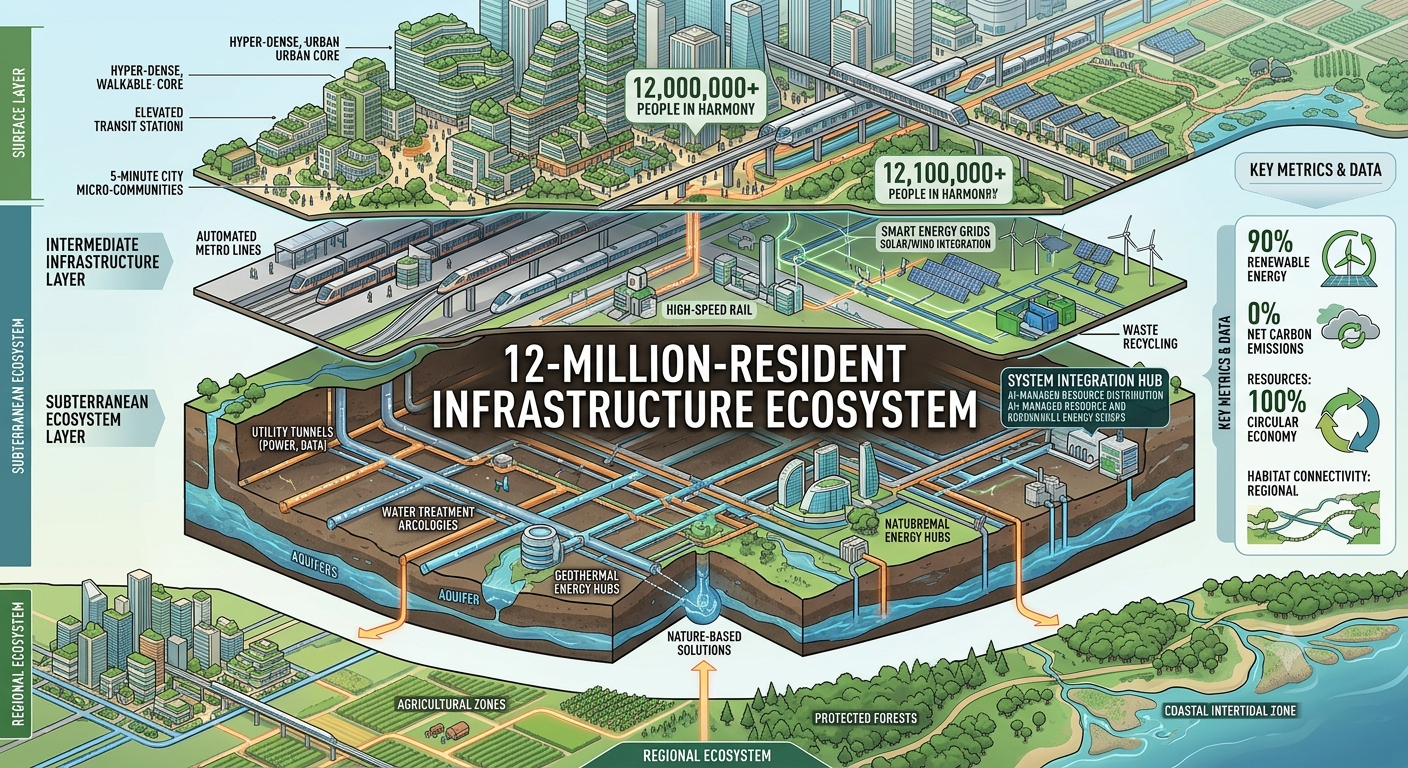
A 12-million-resident infrastructure ecosystem is an interconnected system of physical infrastructure, digital infrastructure, institutions, businesses, and human capital that enables a metropolitan region or large province to function efficiently. The key concept is sequence: infrastructure is most effective when it is developed in the correct order so that each layer supports the next.
1. Foundation: Geography and Strategic Vision
Every successful infrastructure ecosystem begins with a clear understanding of:
- Population distribution
- Climate and environmental conditions
- Economic strengths
- Natural resources
- Future population growth
- Industrial priorities
- Risk management
For a population of 12 million residents, planning often looks 30–50 years ahead rather than only addressing current needs.
Layer 1: Natural Resource Network
Everything begins with natural resources.
These include:
- Water catchments
- Rivers
- Dams
- Agricultural land
- Forests
- Mining areas
- Renewable energy resources
- Biodiversity reserves
Without this layer, no higher infrastructure can function.
Layer 2: Energy Infrastructure
Modern civilization depends on reliable electricity.
Components include:
- Power stations
- Solar farms
- Wind farms
- Hydropower
- Battery storage
- Transmission lines
- Distribution substations
- Smart electrical grids
Energy powers every other infrastructure layer.
Layer 3: Water Infrastructure
Water systems include:
- Dams
- Treatment plants
- Pump stations
- Reservoirs
- Pipelines
- Household connections
- Irrigation systems
- Stormwater drainage
Every home, hospital, school, and factory depends on reliable water.
Layer 4: Wastewater and Sanitation
Healthy cities require systems for:
- Sewer networks
- Wastewater treatment
- Recycled water
- Industrial wastewater management
- Septic systems where necessary
Proper sanitation reduces disease and protects rivers.
Layer 5: Transportation Network
Transportation connects people and goods.
Components include:
Roads
- National highways
- Regional roads
- Urban streets
Rail
- Passenger rail
- Freight rail
- High-speed rail where feasible
Airports
- International airport
- Regional airports
- Cargo terminals
Ports (where applicable)
- Container terminals
- Bulk cargo facilities
- Logistics centers
Layer 6: Digital Infrastructure
A modern economy requires robust connectivity.
Infrastructure includes:
- Fiber-optic networks
- Mobile towers
- Data centers
- Satellite links
- Internet exchange points
- Cloud infrastructure
- Cybersecurity systems
Digital networks connect government, businesses, and households.
Layer 7: Housing Ecosystem
A city of 12 million requires diverse housing:
- High-density apartments
- Suburban neighborhoods
- Affordable housing
- Student accommodation
- Retirement communities
- Mixed-use developments
Housing should be integrated with transport and employment.
Layer 8: Healthcare Network
Healthcare infrastructure includes:
- Primary clinics
- Community health centers
- District hospitals
- Specialized hospitals
- Emergency medical services
- Laboratories
- Pharmacies
- Public health surveillance
An integrated referral system ensures efficient care.
Layer 9: Education Ecosystem
Education develops the workforce.
The network includes:
- Early childhood centers
- Primary schools
- Secondary schools
- Technical colleges
- Universities
- Research institutes
- Vocational training centers
- Lifelong learning programs
Layer 10: Industrial and Commercial Network
Economic activity depends on:
- Industrial parks
- Manufacturing zones
- Warehouses
- Logistics hubs
- Commercial districts
- Business incubators
- Research and innovation parks
- Export processing zones
These create employment and attract investment.
Layer 11: Food Supply Network
Food security requires coordinated systems:
- Farms
- Storage silos
- Cold-chain logistics
- Food processing plants
- Wholesale markets
- Retail distribution
- Restaurants and catering
Efficient supply chains reduce waste and improve resilience.
Layer 12: Public Safety Network
Safety infrastructure includes:
- Police stations
- Fire stations
- Emergency operations centers
- Disaster management agencies
- Flood monitoring
- Public warning systems
- Community safety initiatives
Preparedness reduces the impact of emergencies.
Layer 13: Government and Administration
Institutions coordinate the entire ecosystem.
Functions include:
- Urban planning
- Infrastructure investment
- Budgeting
- Regulation
- Public procurement
- Tax administration
- Environmental management
- Performance monitoring
Effective governance ensures accountability and long-term planning.
Layer 14: Financial Network
Infrastructure projects require sustainable financing.
Sources include:
- Government budgets
- Municipal bonds
- Development finance
- Public-private partnerships
- Pension funds
- Commercial banks
- Infrastructure investment funds
Stable financing supports maintenance as well as expansion.
Layer 15: Environmental Sustainability
Long-term resilience depends on:
- Green spaces
- Wetland protection
- Air quality monitoring
- Carbon reduction
- Renewable energy integration
- Recycling systems
- Circular economy initiatives
- Climate adaptation planning
Healthy ecosystems support healthy communities.
Layer 16: Artificial Intelligence and Smart Infrastructure
Advanced metropolitan regions increasingly use AI to optimize operations:
- Smart traffic management
- Predictive maintenance of roads and bridges
- Smart electricity grids
- Intelligent water leak detection
- Emergency response coordination
- Healthcare analytics
- Public transport optimization
- Digital government services
AI improves efficiency, reduces costs, and enhances service delivery.
Sequence of Infrastructure Development
A practical sequence for building or expanding an infrastructure ecosystem is:
- Strategic planning and governance
- Environmental and resource assessment
- Energy infrastructure
- Water supply and sanitation
- Transportation networks
- Digital communications
- Housing development
- Healthcare facilities
- Educational institutions
- Industrial and commercial zones
- Food production and logistics
- Public safety systems
- Financial and investment mechanisms
- Environmental restoration and resilience
- Smart city technologies and AI integration
Each stage reinforces the next, creating a coordinated system rather than isolated projects.
Systems Perspective
A metropolitan region of 12 million residents functions as a network of networks. Electricity powers water treatment plants and data centers. Transportation enables workers and goods to reach industries and markets. Digital infrastructure supports finance, healthcare, education, and public administration. Governance coordinates investments across all sectors, while environmental systems provide the natural resources that sustain the entire economy.
The success of such an ecosystem depends not only on constructing infrastructure, but also on maintaining it, integrating it across sectors, and using reliable data for long-term planning. When these networks are developed in the proper sequence and managed cohesively, they create a resilient, productive, and sustainable urban economy capable of supporting millions of residents over decades.



Be First to Comment