
Abstract
Nicotine is one of the most addictive naturally occurring psychoactive chemicals known to science. It is primarily found in tobacco plants and is delivered to the body through cigarettes, cigars, pipes, chewing tobacco, nicotine pouches, and many electronic cigarettes (vapes). Although nicotine itself is not the main cause of tobacco-related cancers, it profoundly affects nearly every organ system by altering nervous system function, increasing cardiovascular stress, changing brain chemistry, and reinforcing addiction. When nicotine is consumed through combustible tobacco products, it is accompanied by thousands of additional chemicals, many of which are toxic or carcinogenic.
This article provides a comprehensive examination of nicotine’s effects on neurons, the brain, cardiovascular system, lungs, liver, kidneys, reproductive organs, immune system, and other tissues.
1. Introduction
The human body contains approximately:
- About 37 trillion cells
- Around 86 billion neurons in the brain
- Hundreds of trillions of synapses connecting neurons
- Thousands of kilometers of blood vessels
Nicotine rapidly reaches almost every organ.
Within approximately:
- 7–20 seconds after inhalation, nicotine reaches the brain.
- It immediately begins altering neuronal communication.
Unlike nutrients, nicotine has no essential biological function.
2. Understanding Nicotine
Nicotine is a plant alkaloid that evolved as a defense mechanism against insects.
Characteristics include:
- Colorless to pale yellow liquid
- Highly lipid soluble
- Rapidly crosses the blood-brain barrier
- Strong stimulant
- Extremely addictive
3. Sources of Nicotine
Nicotine enters the body through:
- Cigarettes
- Cigars
- Pipes
- Vapes
- Smokeless tobacco
- Nicotine pouches
- Some nicotine replacement therapies
4. Journey Through the Human Body
Step 1
Nicotine enters through:
- lungs
- mouth
- nasal tissues
- skin (patches)
↓
Step 2
Absorbed into blood
↓
Step 3
Transported by circulation
↓
Step 4
Crosses the blood-brain barrier
↓
Step 5
Binds neuronal receptors
↓
Step 6
Changes neurotransmitter release
↓
Step 7
Creates addiction
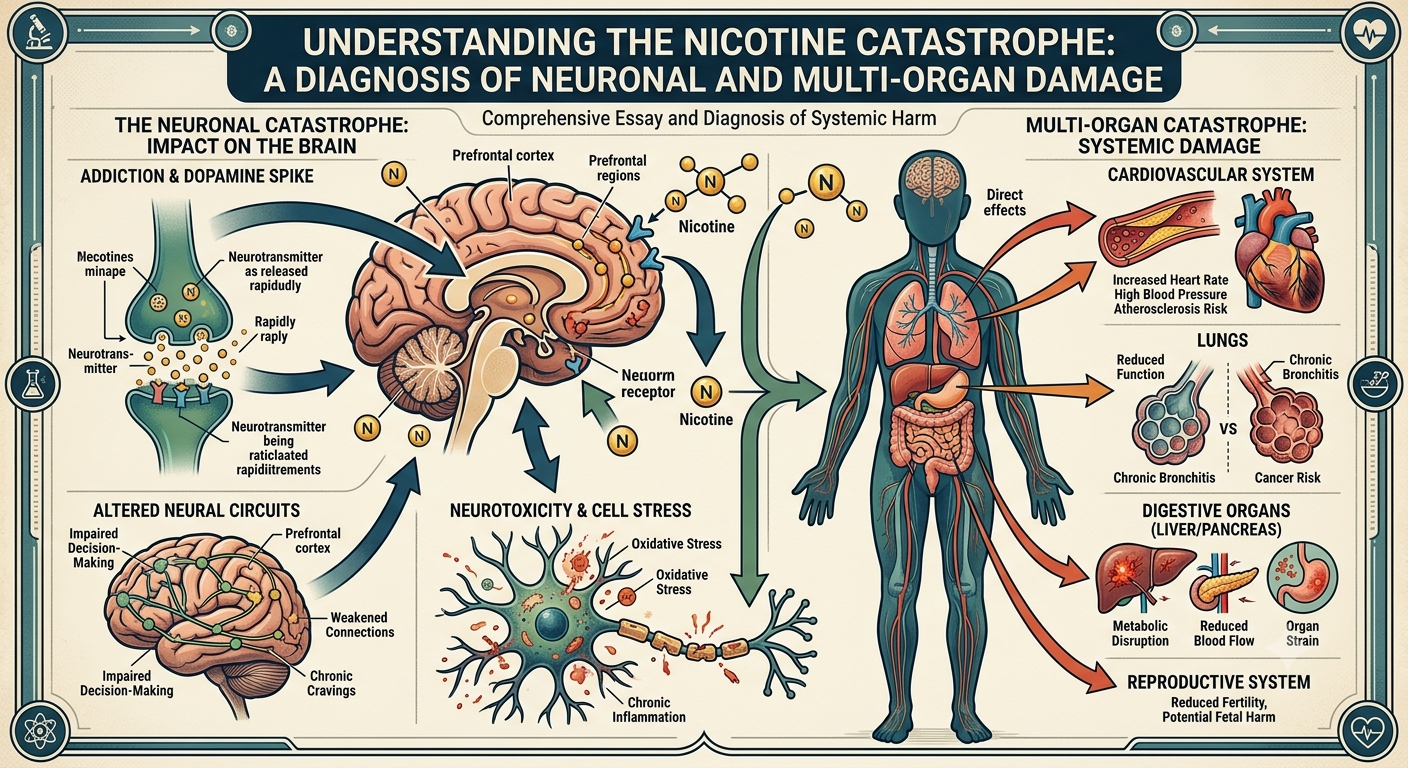
5. Catastrophic Effects on Neurons
Neurons communicate using neurotransmitters.
Nicotine hijacks this communication.
Instead of normal signaling:
Healthy neuron
Electrical signal
↓
Balanced neurotransmitter release
↓
Normal thinking
↓
Healthy memory
Nicotine exposure
↓
Artificial receptor stimulation
↓
Abnormal neurotransmitter release
↓
Addiction
↓
Reduced normal responsiveness over time
Repeated exposure can lead neurons to adapt by changing the number and sensitivity of receptors, contributing to dependence and withdrawal symptoms when nicotine is absent.
6. Nicotinic Acetylcholine Receptors
Nicotine primarily binds to:
- α4β2 receptors
- α7 receptors
These receptors normally respond to the neurotransmitter acetylcholine.
Nicotine overstimulates them.
Consequences include:
- abnormal firing
- receptor desensitization
- receptor upregulation with chronic exposure
- altered learning
- altered attention
- dependence
7. Dopamine Hijacking
One major consequence is excessive release of dopamine.
Normally:
Achievement
↓
Moderate dopamine
↓
Healthy motivation
Nicotine
↓
Rapid dopamine surge
↓
Pleasure
↓
Brain learns
“I need nicotine.”
Over time:
Natural rewards become less satisfying.
8. Effects on Major Brain Regions
Prefrontal Cortex
Responsible for:
- planning
- reasoning
- judgment
- self-control
Nicotine may temporarily improve alertness in some users but long-term dependence is associated with impaired executive control and reduced ability to resist cravings.
Hippocampus
Functions:
- learning
- memory
Long-term nicotine exposure can alter synaptic plasticity and memory processes.
Amygdala
Controls:
- fear
- anxiety
- emotions
Withdrawal often increases anxiety and irritability.
Reward Circuit
Repeated nicotine exposure strengthens addiction pathways.
9. Synaptic Changes
Healthy synapse
↓
Balanced neurotransmission
↓
Learning
Nicotine
↓
Repeated overstimulation
↓
Neuroadaptation
↓
Dependence
↓
Withdrawal symptoms when nicotine is absent
10. Withdrawal
When nicotine levels fall:
Common symptoms include:
- irritability
- anxiety
- depressed mood
- cravings
- difficulty concentrating
- increased appetite
- sleep disturbances
These symptoms often peak during the first week after quitting and gradually improve over time.
11. Cardiovascular Catastrophe
Nicotine stimulates the release of stress hormones such as adrenaline.
Effects include:
- increased heart rate
- elevated blood pressure
- narrowed blood vessels
- increased workload on the heart
These effects raise the risk of cardiovascular disease, especially when nicotine is used with combustible tobacco.
12. Blood Vessels
Blood vessels become more constricted.
Consequences:
- reduced blood flow
- impaired oxygen delivery
- greater strain on the cardiovascular system
13. Brain Blood Supply
Reduced vascular function increases the risk of:
- stroke
- vascular injury
- impaired cognitive function
14. Effects on the Lungs
Nicotine itself is not the primary cause of smoking-related lung disease, but smoking exposes the lungs to thousands of harmful chemicals.
These contribute to:
- chronic inflammation
- airway damage
- reduced lung function
- Chronic Obstructive Pulmonary Disease
- Lung cancer
15. Effects on the Liver
The liver metabolizes nicotine.
Chronic exposure may:
- increase metabolic workload
- influence drug metabolism
- contribute indirectly to oxidative stress
16. Kidney Effects
Possible effects include:
- reduced blood flow
- increased blood pressure burden
- higher risk of kidney damage over time, particularly in people with other conditions such as diabetes or hypertension
17. Digestive System
Nicotine can:
- increase stomach acid
- alter gut motility
- contribute to reflux symptoms
- affect appetite regulation
18. Immune System
Long-term nicotine and tobacco exposure can:
- impair immune responses
- delay wound healing
- increase susceptibility to some infections
19. Reproductive System
Nicotine may:
Men
- reduce sperm quality
- reduce fertility
- contribute to erectile dysfunction through vascular effects
Women
- reduce fertility
- increase pregnancy complications
- impair fetal development if used during pregnancy
20. Pregnancy
Nicotine crosses the placenta.
Potential risks include:
- restricted fetal growth
- premature birth
- low birth weight
- adverse effects on fetal brain and lung development
21. Effects on Adolescents
The adolescent brain is still developing.
Nicotine exposure during this period is associated with:
- stronger addiction
- altered brain development
- attention and learning difficulties
- increased vulnerability to future substance dependence
22. Nicotine and Aging
Long-term exposure accelerates:
- vascular aging
- endothelial dysfunction
- cumulative cardiovascular risk
23. Oxidative Stress
Nicotine contributes to increased production of reactive oxygen species.
Consequences include:
- cellular stress
- inflammation
- DNA damage
- accelerated aging processes
24. Addiction Cycle
Stress
↓
Nicotine use
↓
Temporary relief
↓
Nicotine levels fall
↓
Withdrawal
↓
Craving
↓
Nicotine use again
This cycle reinforces dependence.
25. Diagnosis of Nicotine Dependence
Healthcare professionals may evaluate:
- frequency of nicotine use
- time to first nicotine use after waking
- intensity of cravings
- withdrawal symptoms
- unsuccessful quit attempts
- impact on daily functioning
26. Can the Brain Recover?
Recovery begins soon after nicotine exposure stops.
Research shows that:
- heart rate and blood pressure improve within hours to days after quitting.
- cravings and withdrawal lessen over weeks.
- brain receptor activity gradually moves toward normal over weeks to months.
- cardiovascular risk declines substantially over years.
- lung function and overall health improve after quitting smoking, although the degree of recovery depends on the duration and extent of prior damage.
27. Prevention
Effective strategies include:
- avoiding initiation, especially during adolescence
- using evidence-based smoking cessation programs
- behavioral counseling
- appropriate use of nicotine replacement therapy or prescribed medications under medical guidance
- supportive family and community environments
Conclusion
Nicotine is a powerful psychoactive substance that rapidly alters communication between neurons by activating nicotinic acetylcholine receptors and increasing dopamine release. These effects make it highly addictive. Chronic nicotine exposure contributes to changes in brain function, cardiovascular strain, and adverse effects across multiple organ systems. When nicotine is delivered through tobacco smoke, the risks increase dramatically because users are also exposed to numerous toxic and cancer-causing chemicals.
The encouraging finding from decades of medical research is that many of the harmful effects begin to improve after quitting. Although some damage may be permanent—particularly after prolonged smoking—the brain, heart, blood vessels, lungs, and other organs can recover to varying degrees over time. Early cessation provides the greatest health benefit, reducing the risk of disease and improving both lifespan and quality of life.





Be First to Comment