

This paper aims to examine the performance of the selected state-owned enterprise (SOE) Eskom. After the democratic era of 1994, there were concentrated efforts in both the public and private sectors in South Africa to restructure the economy to reflect more democracy and inclusiveness in the economy. These efforts have led to the government’s recognition of SOEs as essential to economic development, particularly in the provision of services such as electricity, transportation, and telecommunications. However, there seems to be a consensus that there is still a long way to go to meet service delivery targets and achieve the expected excellence of SOEs in Eskom. The major SOEs in South Africa have come under criticism, and the media has highlighted their shortcomings. Restructuring, unbundling, and the establishment of ministerial roles in electricity are some of the perfect evidence of challenges by this SOE. Poor governance, mismanagement, allegations of fraud and corruption, and lack of financial sustainability seem to characterize this SOE. This paper is purely theoretical and relies on a literature review to support its arguments. The paper takes note of the goal-setting theory and its ideals to extract and explain the arguments. The study draws on journal articles, books, websites, financial reports, government and performance management reports, and other available materials to support the study’s question. As remedies, the paper suggests establishing and enforcing accountability systems and penalties for loss of property or money, further restructuring of boards, reviewing appointment processes, and enforcing performance management systems to improve SOE performance. 
SOCIAL SCIENCES AND EDUCATION RESEARCH REVIEW
RESEARCH ARTICLE
EXAMINATION OF THE PERFORMANCE OF THE SELECTED STATE-OWNED ENTITY IN
SOUTH AFRICA: ISSUES AND CHALLENGES SURROUNDING ESKOM
MAGATANE TSHWARELO MASHILO
Department of Business Management (HRM), University of Limpopo, South Africa,
FRANCE KHUTSO LAVHELANI KGOBE
Institute for Social Development, University of Western Cape, South Africa
Abstract
This paper aims to examine the performance of the selected state-owned enterprise (SOE) Eskom. After the
democratic era of 1994, there were concentrated efforts in both the public and private sectors in South Africa to
restructure the economy to reflect more democracy and inclusiveness in the economy. These efforts have led to
the government’s recognition of SOEs as essential to economic development, particularly in the provision of
services such as electricity, transportation, and telecommunications. However, there seems to be a consensus that
there is still a long way to go to meet service delivery targets and achieve the expected excellence of SOEs in Eskom.
The major SOEs in South Africa have come under criticism and the media has highlighted their shortcomings.
Restructuring, Unbundling, and establishment of ministerial roles in electricity are amongst some of the perfect
evidence of challenges by this SOE. Poor governance, mismanagement, allegations of fraud and corruption, and
lack of financial sustainability seem to characterize this SOE. This paper is purely theoretical and relies on a
literature review to support its arguments. The paper takes note of the goal-setting theory and its ideals to extract
and explain the arguments. The study draws on journal articles, books, websites, financial reports, government
and performance management reports, and other available materials to support the study’s question. As
remedies, the paper suggests establishing and enforcing accountability systems and penalties for loss of property
or money, further restructuring of boards, reviewing appointment processes, and enforcing performance
management systems to improve SOE performance.
INTRODUCTION
According to the Constitution of the Republic of South Africa in 1996, the allocation of specific public goods and
services to state-owned enterprises (SOEs) is mandated to benefit citizens, contingent upon the availability of
financial resources. Tleane (2020), avers that the implementation of state-owned enterprises is a strategic
approach employed by the government to stimulate economic expansion, bolster the government’s capacity to
provide public services and facilitate the advancement of the nation. Following the period, democracy
encountered the predicament of assuming ownership of numerous underperforming State-Owned Enterprises
from the apartheid era. To address this issue, the government under former President Nelson Mandela
endeavoured to divest these entities through the process of privatization. Currently, there exists a multitude of
divergent viewpoints regarding the efficacy of the nation’s publicly owned.
Additionally, some persist in advocating for the nationalization of all strategically significant enterprises to benefit
the impoverished population.
SOCIAL SCIENCES AND EDUCATION RESEARCH REVIEW, VOL.10, ISSUE 2 – 2023
Nevertheless, SOEs in South Africa after 1994 have exhibited a lack of satisfactory performance. Accordingly,
Ting and Byrne (2020) support the view that there appears to be a general agreement among stakeholders that
there remains a significant distance to be covered to meet service delivery objectives and to attain the high level
of performance that is anticipated by SOEs. The large SOEs in South Africa have faced significant criticism, with
the media drawing attention to their deficiencies. The SOEs in question appear to exhibit
traits such as inadequate governance, mismanagement, accusations of fraudulent activities, and corruption, as
well as a deficiency in achieving financial stability. Considering this context, the present study
endeavours to initiate a discourse on the efficacy and ineptitude of SOEs, to enhance comprehension regarding
the current standing of such entity.
PROBLEM STATEMENT
Numerous SOEs in Africa, particularly those operating within the infrastructure sector, have exhibited a
prolonged track record of subpar operational outcomes. Historically, the financial and economic performance of
SOEs has often fallen short of the initial expectations set by their founders and donors (Marimuthu, 2020).
Towards the end of the 1970s, the situation became increasingly concerning, and by the beginning of the 1980s,
it reached a state of utmost urgency. The subpar fiscal outcomes of SOEs exerted significant pressure on the
financial resources of governments, prompting the scrutiny of international financial institutions (IFIs). Historically,
SOEs have consistently exhibited subpar performance since their establishment. According to a study conducted
by Kessides (2020), Eskom has faced increasing plant breakdowns and severely limited reserve margins since the
early 2000s. This has resulted in a significant risk to the adequacy and reliability of its electricity supply.
Furthermore, the utility company facing difficulties has encountered challenges in fulfilling the required level of
electricity supply, leading to a series of severe power outages experienced in South Africa from 2007 to 2023.
The electricity crisis has had significant adverse effects on the economy. The insufficiency, unreliability, and
unpredictability of the electricity supply has hindered the country’s economic growth (Eskom, 2022).
The primary factors contributing to the Eskom crisis are characterized by indecisiveness and
governmental policy paralysis, state capture, governance deficiencies, and corruption, as well as artificially low
prices, insufficient investment, and inadequate maintenance practices. Eskom, the state-owned monopoly energy
provider in South Africa, is currently facing significant challenges
Eskom has encountered
significant challenges in managing its substantial debt, amounting to over 440 billion rand ($30 billion) as of
October 2019. This debt has primarily accumulated due to escalating primary energy expenses, heightened
obligations for debt servicing, rising labour expenditures, and notably, severe mismanagement and corruption.
THEORETICAL UNDERPINNINGS
A well-conducted study should be firmly based on theoretical
foundations. Theory plays a crucial role in providing a framework through which a phenomenon can be examined
and analysed. a theory is considered a guiding
framework that researchers utilize in their quest to address intricate research problems. This implies that when a
researcher presents a well-supported argument regarding a phenomenon such as the performance of SOEs,
backed by a theoretical framework, the researcher’s argument is more likely to be valid and credible. However, it
is important to note that this paper will be based on and enhanced by the concept of goal setting. Lunenburg
(2011) defines Goal-setting theory as the systematic approach to overseeing employee performance through the
establishment of specific goals that are willingly accepted and pursued by employees.
The concept highlights the crucial connection between objectives and achievement. The existing body of research provides evidence that aligns with the notion that the utilization of
comprehensive and stringent goalsfor performance evaluation and feedback, along with the establishment of
commitment and acceptance, tends to result in the most optimal performance outcomes. The selection of
terminology is contingent upon the researcher’s assessment of its pertinence in terms of its definition and
suitability for the study. Furthermore, considering the evident lack of satisfactory performance exhibited by SOEs
at present, it becomes imperative to prioritize the involvement of SOE directors and staff in the pursuit of
organizational objectives, thereby enhancing their motivation to attain said goals.
SOCIAL SCIENCES AND EDUCATION RESEARCH REVIEW
The impact of goals on employee behaviour and performance within organizations is comprehensive. Most contemporary organizations prioritize the pursuit of specific objectives. Goal setting
encompasses various programs and practices that are commonly employed in organizations. These include goal
management, which is also known as management by objectives (MBO), high-performance work practices
(HPWP), information systems management (MIS), benchmarking, stretch goals, as well as systems thinking and
strategic planning. In the contemporary era, it is a prevailing objective for all organizations to attain the highest
level of service provision to their respective beneficiaries.
Additionally, it is highlighted that by implementing performance management, organizations can effectively
position themselves and make necessary preparations to attain their strategic objectives, such as delivering
services to their customers. The researcher deemed the theory to be suitable as it places employees at the
forefront of enhancing overall performance. Additionally, it is asserted that these objectives should possess a level
of difficulty and feasibility to function as a catalyst for motivation. Employees who are motivated are more likely
to exhibit exceptional performance. Parentheses indicate that employees will work diligently and without rest to
accomplish objectives that they have actively contributed to establishing.
CRITICAL ANALYSIS OF LITERATURE
The role of SOEs towards development in South Africa
SOEs hold a significant role within the South African economy. Since 1994, SOEs have played a substantial role
in facilitating sustainable development, economic growth, and alleviating poverty. Public goods
play a crucial role in mitigating market inefficiencies and delivering essential infrastructure services, such as
energy, transportation, and water, which are vital for fostering economic development. Moreover,
they also contribute to promoting fairness by ensuring universal access to and maintaining high standards of social
services for all members of society. Enhancing the role and performance of actors is a crucial element within the
framework of the Developmental State Agenda.
This program aims to address major problems that South Africa is currently facing, including the pervasive
problems of unemployment and poverty, the uneven circulation and maintenance of infrastructure, the unequal
distribution of land and capital, and the growing gaps between the wealthy and the less fortunate sections of
society. By 2020, the government’s projected New Growth
Path (NGP) hopes to create an extra five million job opportunities. It specifically highlights how important state-
owned businesses are to the growth process. Additional policies that emphasise the relevance of SOEs as key
players in infrastructural development and economic transformation include the National Development Plan
(NDP), the Medium-Term Strategic Framework (MTSF), and the Industrial Policy Action Plan. In addition, the
government’s Nine-Point Plan, which outlines its goals, includes programs intended to address problems with the
electrical supply and facilitate SOE changes. The government’s objective with these
initiatives is to guarantee that SOEs effectively contribute to broader development objectives and facilitate the
transformation and competitiveness of the economy.
In 2014, the establishment of a Presidential Review Commission (PRC) for SOEs aimed to assess the
performance of SOEs and their alignment with the developmental state agenda. The PRC offers
a comprehensive examination of significant SOE matters, shedding light on the challenges faced in integrating and
enhancing the role of SOEs within the economy. These efforts have been impeded by a dearth of
well-defined policies and overarching apprehensions regarding the governance of SOEs. The report presents a
comprehensive evaluation of the challenges encountered by SOEs.
These issues include a high degree of politicisation, the existence of multiple and competing goals, inadequate
funding policies and frameworks, a dearth of efficient oversight and accountability mechanisms, serious flaws in
board composition and operation, and a lack of transparency and accountability measures. A total of thirty-one recommendations have been put forth to enhance the performance of
SOEs. By established principles, the approach centers on several key aspects: delineating and justifying the extent
and magnitude of the SOE sector; formulating a comprehensive and contemporary legal framework dedicated to
SOEs; enhancing the expertise and professionalism of SOE boards; ensuring adherence to financial and fiscal
prudence; and enhancing performance evaluation mechanisms to foster greater transparency and accountability.
A crucial overarching suggestion is to formulate a cohesive plan and strategy for the SOE, firmly rooted in the
developmental state agenda.
SOCIAL SCIENCES AND EDUCATION RESEARCH
The NDP asserts that SOEs
are integral to, or at the very least, essential for driving development and facilitating transformation. However,
the NDP does not explicitly state the method by which SOEs are intended to carry out their transformational and
developmental role, resulting in the required developments in infrastructure.
Development for Eskom will include, among other things, ensuring that families, particularly in formerly
underdeveloped countries, are electrified and upgrading the energy grid, which is now under stress.
Legislative frameworks regulating State-Owned Enterprises
The regulatory framework is partially influenced by the characteristics of the institution. Legal structures refer
to the formal frameworks or entities that are recognized and regulated by the law. These entities function within
the legal parameters that delineate their distinct public objectives (Bronstein & Olivier, 2011). There exist several
laws that govern corporations, including but not limited to the following. This section exclusively pertains to the
legal procedures that regulate the ethical conduct of officials within governmental entities.
Electricity regulation Act 4 of 2006
The Act aims to establish licencing and registration as a means of regulating electricity generation,
transmission, distribution, trading, import, and export as well as to address related issues. It also names the
National Energy Regulator as its custodian and enforcer. The objectives of this Act are to ensure that South Africa’s
electricity supply infrastructure is developed and operated in a way that is efficient, sustainable, and orderly, as
well as to protect and meet the interests and needs of present and future electricity customers and end users
while taking into account the industry’s governance, efficiency, effectiveness, and long-term sustainability within
the framework of the nation’s overall economic energy regulation.
The constitution of the Republic of South Africa
The Constitution of the Republic of South Africa (1996) affirms the entitlement of all South Africans to equality
and outlines specific remedial actions that can be implemented to address historical disparities. The constitutional
imperative is addressed by policies and laws that are prescribed (Bronstein & Olivier, 2011). The primary objective
of the constitution is to dismantle the institutional framework of apartheid and effectuate a comprehensive
societal transformation in key domains such as education, arts, justice, and health care, affirmative action policies, gender equality, and black economic empowerment initiatives can be
attributed to the fundamental values and principles enshrined in the Constitution. The principles and values
possess an intrinsic impact on the formulation of legislation and policies that have implications for state-owned
enterprises.
Public Finance Management Act
The Public Finance Management Act plays a crucial role in establishing uniformity
within SOEs. The Public Finance Management Act (PFMA) establishes the fiduciary obligations and overarching
responsibilities, while also providing provisions for individual liability in cases where there may be a potential
violation of legal obligations by supervisors, committee chairs, commissions, financial officers, board members,
employees, or accounting authorities. The primary objective of the Public Finance Management Act (PFMA) is to
oversee and govern the financial management practices within the government and its affiliated entities, such as
state-owned enterprises. This legislation aims to promote the efficient and effective handling of government
revenues, expenditures, assets, and liabilities. Additionally, it seeks to define the obligations and duties of
individuals entrusted with the responsibility of financial management.
Nevertheless, it should be noted that the existing SEO incorporation laws fail to address several significant
matters, including the formation of State-Owned Enterprises (SOEs), the appointment of directors and officers,
the designation of government representatives on boards, and the handling of growth mandates and targets
The primary goals of the Public Finance
Management Act (PFMA) encompass the modernization of financial management within the public sector,
facilitating managerial accountability for public sector administrators, ensuring the prompt provision of high-
quality information, and mitigating inefficiency and corruption in the utilization of public assets.
Reports of Corporate Governance
The fisrt protocol was established in 1997, marking a significant milestone as the inaugural
corporate governance framework. The second Protocol on Corporate Governance was introduced in 2002,
while the third Protocol was published in 2009. The publication of the fourth occurred in the year
2017. The reports were directed toward the board members and directors of publicly traded companies, financial
institutions, specific government entities, as well as other corporate, private, and regulatory entities.
SOCIAL SCIENCES AND EDUCATION RESEARCH REVIEW
advocated for an integrated approach that considers all parties involved, including the companies themselves. The
objective was to offer direction regarding corporate governance and propose that SOEs conform to a well-defined
set of principles. Despite the limited legislative impact of the findings, they still established a protocol for
enhancing corporate and public governance.
Issues and challenges surrounding Eskom
The electricity crisis has had a substantial adverse impact on the economy. The country’s capacity has been
negatively impacted by the inadequate, unreliable, and unpredictable electricity supply (Eskom, 2022). Moreover,
the annual report of Eskom for the fiscal year 2022 underscores the persistent issue of non-compliant
municipalities that are unable to fulfil their outstanding financial obligations, leading to an unsustainable debt load
and substantial expenses related to debt servicing. This section will thoroughly examine the challenges and issues
related to Eskom in a systematic and organized manner. The primary areas of concern to be addressed include
financial mismanagement, state capture, governance failure, corruption, indecision, paralysis in government
policy, political interference, restructuring, and, unbundling, as well as the establishment of a Ministerial role to
oversee Eskom.
Financial Mismanagement
SOEs like Eskom encounter significant challenges in terms of their
financial stability and ability to provide services. The authors also argue that the underperformance of SOEs
hampers productivity and economic growth. The financial losses experienced by these companies in previous
years can be attributed to both corruption and mismanagement
Eskom is currently facing severe financial challenges. It is worth
noting that in 2008, Eskom maintained an A1 credit rating, indicating a high level of investment grade. In late 2018,
the rating agency Standard & Poor reaffirmed Eskom’s rating at CCC+, which indicates significantly low
creditworthiness and places it several levels below investment grade. Additionally, the rating was
accompanied by a negative outlook, further highlighting the financial challenges faced by Eskom. The potential for
a prompt recovery of this rating appears to be low, thereby exacerbating Eskom’s debt crisis. In pursuit of this
objective, Eskom engages in borrowing activities to fulfil its debt obligations.
State Capture, governance failure, and corruption
The National Institute for Democracy and Electoral Assistance (IDEA), headquartered
in Stockholm, conducted an observation in 2007 which revealed that a significant proportion of African governing
political parties continue to rely extensively on the direct or indirect utilization or exploitation of government
resources. In numerous instances, incumbent political parties depend on state resources to administer patronage
to sustain the organization and governance of the party. Therefore, politics is transformed into a mere instrument
for achieving goals, without any consideration for safeguarding the public’s interests about personal profit. SOEs
in South Africa are well acquainted with this phenomenon.South Africa has
experienced an unparalleled surge in corruption, particularly during the tenure of President Jacob G. Zuma, who
held simultaneous leadership positions in both the government and the party from 2009 to 2018. The book titled
“Licence to Loot” by Stephan Hofstatter.
The adverse impact of the misappropriation of funds from Eskom and other state-owned enterprises on the
economic stability of South Africa in 2018. Hofstatter is a renowned investigative journalist who has collaborated
with various esteemed publications such as Business Day, the Financial Mail, the Sunday Times, and the Mail &
Guardian, earning him multiple accolades. The book provides a comprehensive analysis of the strategies employed
by associates of President Zuma to illicitly obtain substantial financial resources from the National Electricity
Supply Commission (Eskom), an entity that has been operational since 1922. In light of the projected future coal
supplies under the leadership of CEO Brian Molefe, Eskom has provided an upfront payment of $40 million to the
Gupta family to facilitate their acquisition of the Optimum coal mine.
Near this particular transaction, Duduzane Zuma, the son of Zuma, had recently acquired a stake in Tegeta, a
mining enterprise owned by the Gupta family. Hofstatter additionally demonstrates how, before the plundering
of Eskom, Transnet – the state-owned enterprise responsible for managing the nation’s ports, railways, and
pipelines – had served as a model for refining the practice of channelling substantial sums of money to offshore
accounts. This was achieved through the utilization of consulting firms, which guided the optimal methods for
orchestrating the process of state capture.
The case of Eskom within the state capture saga holds significant symbolic value, representing the deteriorated
state of the economy and the ANC’s inability to effectively provide essential services to most economically
disadvantaged citizens. In recent times, there has been a prevalent occurrence of accusations about state capture,
corruption, and inadequate governance at Eskom, thereby undermining its capacity to fulfil its designated
objectives. Over time, a significant number of Eskom’s governance structures and procedures have been rendered
SOCIAL SCIENCES AND EDUCATION RESEARCH REVIEW
ineffective, compromised, or undermined. The most evident manifestation of this corruption has been the
mismanagement of finances, characterized by a sequence of dubious and irregular procurement choices and
practices. Additionally, the utility’s capital expenditure program and operational expenses have experienced a
significant increase in costs.
Indecision and paralysis in government policy
In recent times, the electricity sector has been plagued by a lack of decisive action, a state of inactivity, and
inflexible policies within the realm of government policy. The constraints and failures of these
state-owned enterprises (SOEs) have been attributed by Kanyane and Sausi (2015) and Mathebula and Masiya
(2022) not solely to the National Development Plan (NDP), but also to the fragmentation observed in the policy
and legislative frameworks that form the basis of state company governance. In 1998, the Department of Minerals
and Energy published a White Paper that highlighted the imminent electricity shortages and outlined a set of
crucial objectives.
These objectives encompassed the augmentation of the system’s generating capacity, facilitating private
investment in the sector, promoting supplier competition, and fostering energy supply diversification. In the
absence of an immediate crisis, the government exhibited a lack of urgency and failed to undertake any substantial
measures. The White Paper’s proposed policies, which had the potential to bring about significant
changes, were not put into practice.
• Political interference
Political intervention, competing agendas, incompetence, free riding, soft budget constraints, and agency
issues are identified as challenges faced by state-owned enterprises (SOEs) like Eskom. The
effectiveness of the State-Owned Enterprises (SOE) reform was compromised due to ideological divergences both
within and beyond the governing African National Congress (ANC) tripartite coalition. In
the state capture commission of inquiry, Koko Matshela and Brian Molefe, the former Chief Executive of Eskom,
disclosed the involvement of major corporations, including Glencore, in exerting influence over politicians to
secure deals within the state-owned entity Eskom.
Restructuring and unbundling
In the year 2019, after the endorsement of a team designated by President Cyril Ramaphosa in the preceding
year, an announcement was made regarding the unbundling of Eskom. The proposed
organizational structure entails the establishment of three distinct subsidiaries, each responsible for the
generation, transmission, and distribution aspects of the operations. Each subsidiary would operate under its
dedicated management team, while a holding company would be responsible for overseeing the overall
functioning of these subsidiaries. Furthermore, it was officially declared that Eskom would receive financial
assistance in the form of a yearly allocation of R23 billion for the subsequent ten years. The process of restructuring had been anticipated for a significant duration. The proposition and
formalization of the decision occurred two decades prior in the 1998 White Paper. However, the motivation
behind the 2019 decision stemmed from the financial distress experienced by the utility, characterized by
persistent financial losses and escalating debt. Additionally, public apprehension regarding the substantial load
shedding played a role in shaping this decision.
In October 2019, a comprehensive plan for the reorganization of Eskom was unveiled, providing a detailed
framework for the phased implementation of an unbundled transmission system. This process commenced with
the selection of a Chief Restructuring Officer (CRO) in July 2020. The Department of Public Enterprises released a
Roadmap for Eskom in a reformed electricity supply industry in 2019. The roadmap suggests that formally dividing
Eskom into separate entities with independent management and financial autonomy has the potential to achieve
cost containment, enhanced management practices, better identification of existing issues, and increased
attractiveness to private investors.
• Establishment of a Ministerial role to oversee Eskom
Eskom holds the position of being the primary electricity producer in
South Africa, accounting for approximately 95% of the country’s electricity generation. Furthermore, it also holds
a significant presence in Africa, contributing to approximately 45% of the continent’s electricity generation. The
company ranks among the top 20 largest utilities globally in terms of its power generation capacity. In February
2019, following the government’s announcement of its intention to dissolve the company, Eskom commenced a
subsequent episode of emergency load shedding.
According to Eskom, the occurrence of load shedding in 2019 was attributed to power station outages as well
as the depletion of water and diesel resources. Additional factors that were mentioned include the persisting
consequences of governmental corruption, the limited accessibility of coal resources, and the delayed
commissioning of new power plants like Kusile and Medupi. The occurrence of corruption during the Zuma
SOCIAL SCIENCES AND EDUCATION RESEARCH REVIEW
administration has been identified as a significant contributing factor to the cost overruns and extensive delays
experienced in the construction of the Medupi and Kusile power plants.
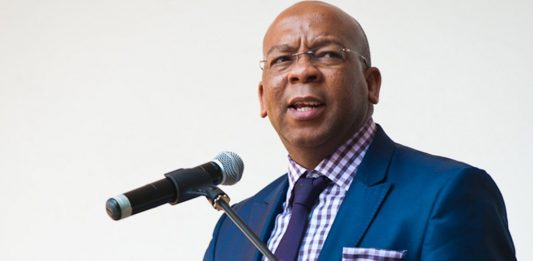
In an effort to end the ongoing electricity crisis in South Africa, the president of the country, the Honourable
Matamela Cyril Ramaphosa, established a ministerial role by designating Dr. Kgosientsho Ramokgopa as the
minister of electricity in accordance with Section 97 of the Constitution of the Republic of South Africa. This
proclamation transfers Dr. Kgosientsho Ramokgopa certain powers and functions outlined by the electricity
regulation Act. Additionally, the president delegated to the minister of electricity the relevant authority and duties
outlined in section 34(2) of the Electricity Regulation Act. According to the president, the minister of electricity
would oversee all elements of the response to an electrical crisis. This will provide the government’s efforts to fill
the electrical supply gap a single point of command. The minister is anticipated to collaborate fully with the Eskom
board and management to halt load shedding and make sure that the president’s energy action plan is
implemented. Announcing the plan to designate a minister of electricity in February 2023, the position was filled
in March.
However, the establishmentof this ministerial role has met criticisms from the public, scholars, businesses
leaders as another flop in government. This is criticised on the basis that the president seems to be running a
nanny cabinet, he harbours challenges and incompetence into his cabinet wing to the fact that minster of
electricity exists in the presidency. This was also criticised as a mechanism to loot state resources and cadre
deployment of the ANC.
RESEARCH METHODS AND MATERIALS
This study utilizes a qualitative research methodology and relies on descriptive secondary sources to examine
the difficulties encountered by State-owned enterprises, with a specific focus on Eskom. The literature review
plays a vital role in this process by facilitating the examination of diverse ideas, theories, policies, and practices,
establishing linkages among them to address research inquiries and attain the study’s objectives.
Furthermore, conducting a comprehensive review of the existing literature facilitated the collection of relevant
data to be utilized for subsequent analysis.
Thematic data analysis was employed to analyse the collected data, encompassing the processes of identifying,
analysing, and representing patterns within the dataset. The selection of thematic analysis as the chosen method
was based on its versatile nature, straightforwardness, and ability to operate independently from particular
theoretical frameworks. This methodology facilitates a thorough and
detailed elucidation of research data.The process of thematic analysis
encompasses six distinct stages. These stages include becoming acquainted with the data, coding the data,
identifying potential themes, reviewing, and refining the themes, defining and labelling the themes, and finally,
documenting the identified themes.
The present study employs an inductive approach, specifically utilizing thematic analysis as a method to derive
themes. This approach enables the emergence of research findings from the common or notable themes found in
the raw data, without being limited by the constraints imposed by structured approaches.
In general, the study’s methodologies offer a methodical and rigorous framework for examining the
comprehension of a theme or the significance of an idea about the performance of SOEs and their economic
significance to the nation.
RESULTS AND DISCUSSION
The issue of the performance of SOEs in South Africa has long been a subject of concern.
There was a concerted effort by policymakers, donors, and international institutions to enhance
the performance of SOEs while upholding public ownership during the initial phase of reforms in the 1970s and
1980s. However, these endeavors were largely unsuccessful. There is a prevailing belief among economists and
the general public that SOEs contribute to an increased fiscal burden on the government.
This argument is primarily grounded in the premise that SOEs lack the requisite incentives to effectively
motivate their management teams. According to Miyamoto and Yu (2000), SOEs are susceptible to what they refer
to as “soft budget constraints.” The task of holding managers accountable poses challenges, as there is a lack of
punitive measures for losses incurred under government ownership. However, it is worth noting that the
government provides substantial subsidies to underperforming SOEs using bank loans, as highlighted by Miyamoto
and Yu (2000). Additionally, this factor contributes to suboptimal management decisions and ineffective allocation
of resources. According to Liu and Gao (1998), there has been a global decline in the financial performance of SOEs
in recent years. The landscape of SOEs in the South African economy has been altered by several regulatory and
structural reforms.
SOCIAL SCIENCES AND EDUCATION RESEARCH REVIEW
Nhleko and Inambao (2021) avers that scholars argue that SOEs impose an avoidable fiscal strain on the
government through their contribution to tax escalation. According to a study conducted in 2012 by the South
African Institute of Race Relations, it was found that approximately 50% of SOEs recorded positive financial gains
in the fiscal period of 2009-2010. As posited by Snyman (2012), a primary apprehension associated with these
losses pertains to the necessity of government support for financially struggling companies, which ultimately
burdens taxpayers.
Furthermore, in the absence of government assistance, there is an augmented urgency to identify alternative
avenues for capital investments. In the fiscal year 2015/16, Denel pursued recapitalization funds, while South
African Airways incurred substantial financial losses. One of the primary
obstacles lies in the fact that SOEs are increasingly appropriating a larger share of domestic credit and overall
investment, thereby displacing private investment and exacerbating inefficiencies within the economy. Furthermore, the presence of SOEs poses a significant financial burden on the financial and
banking system, thereby posing a potential risk of inflationary pressures, and endangering macroeconomic
stability. This risk is further exacerbated by the volatility of the rand in foreign exchange markets.
CONCLUSION AND RECOMMENDATIONS
This paper analysed the performance of SOEs and investigated the challenges surrounding Eskom and its
impacts on sustainable development in South Africa. The significance of SOEs in South Africa for the government’s
development objectives has been acknowledged. The performance of SOE has been below expectations in the last
decade. Eskom’s financial performance has been consistently negative, resulting in a lack of sufficient capital. As
a result, they heavily depend on government assistance, specifically bailouts, to maintain their business
operations. Based on the information provided SOEs Eskom to be specific, encounter a range of challenges in their
day-to-day activities. Loadshedding, blackouts, and failure to provide electricity have been the major characteristic
of Eskom.
Based on a significant number of studies, it is evident that SOEs generally exhibit inferior performance
compared to privately owned companies. In view of this, the following recommendations are made.
• The state must implement a mutual performance management system, which acts as a baseline for how
Eskom must operate, as recommended by the presidential review committee.
• Eskom has to create a long-term plan that adheres to the NDP’s goals for a stronger legal system. To do
this, the state should be a knowledgeable and involved creator of policy that ensures that governance is carried
out in an open and accountable manner.
• Eskom’s management should be depoliticised for effective governance; this will allow managers to
operate independently and be held to the corporate code of good governance and market discipline guidelines. It
will also ensure that employees bear the brunt of management failures and impose sanctions for corrupt behavior.
SOCIAL SCIENCES AND EDUCATION RESEARCH REVIEW
Kgosientsho Ramokgopa gets green light for minister of electricity





Be First to Comment