
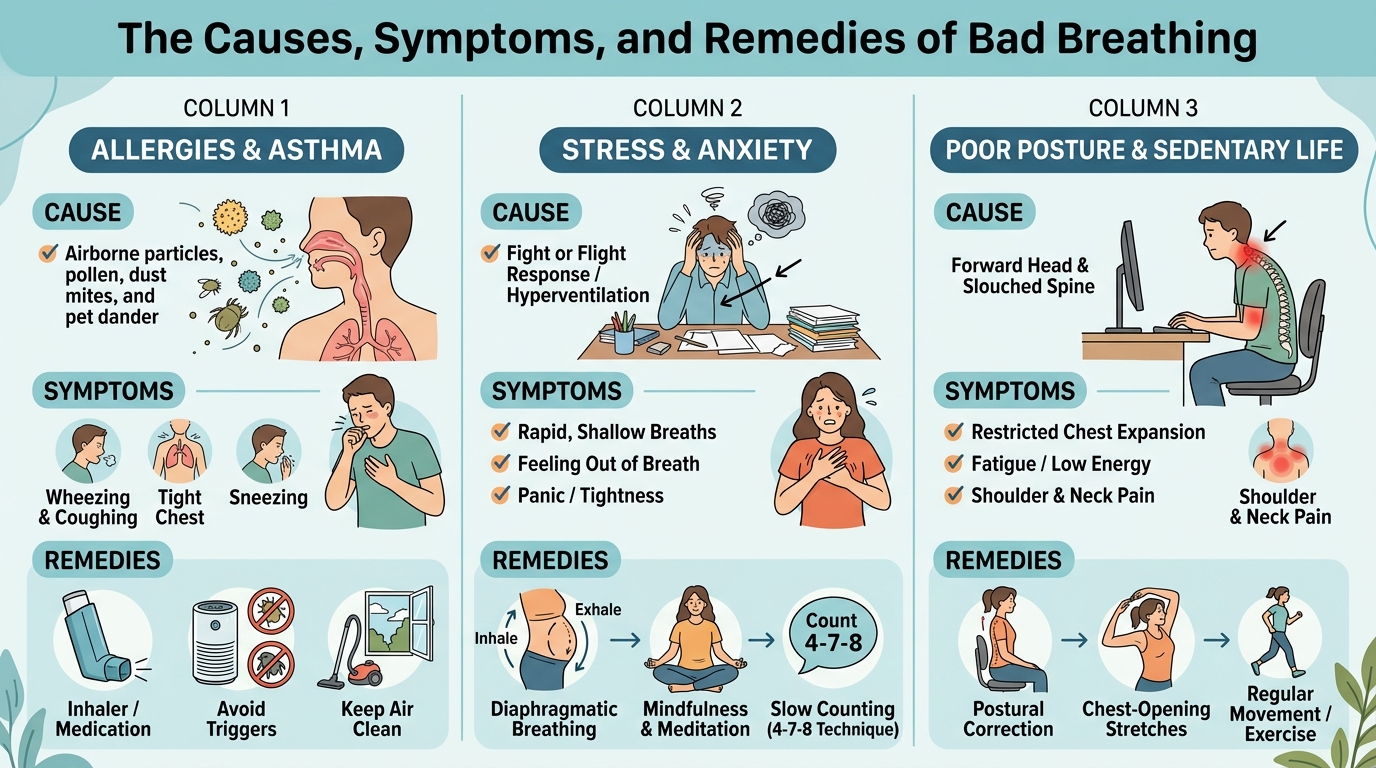
Breathing is one of the body’s most important automatic functions. Every breath brings oxygen into the lungs and removes carbon dioxide. When breathing becomes unusually fast, slow, shallow, difficult, noisy, interrupted, or uncomfortable, it can indicate anything from a temporary problem to a condition requiring urgent medical attention.
Importantly, “bad breathing” is not one disease. It is a general description of abnormal breathing, and the correct remedy depends on the underlying cause. Shortness of breath, for example, can occur with asthma, chest infections, anxiety, heart or lung problems, and several other conditions. (MedlinePlus)
1. The normal breathing system
A simplified pathway is:
Nose/mouth → throat → trachea → bronchi → bronchioles → alveoli → blood → body cells
During inhalation:
Oxygen (O₂) → lungs → bloodstream → cells
During exhalation:
Cells produce CO₂ → bloodstream → lungs → outside air
Breathing is controlled by the brain and involves the:
- brainstem
- spinal nerves
- diaphragm
- chest muscles
- lungs
- airways
- heart and blood circulation
Therefore, abnormal breathing can originate from the airways, lungs, heart, blood, nervous system, muscles, or metabolic system. (MedlinePlus)
2. Major forms of abnormal breathing
| Type | What it means | Common symptoms | Possible causes | General approach |
|---|---|---|---|---|
| Dyspnea | Difficult or uncomfortable breathing | Feeling unable to get enough air | Asthma, infection, heart/lung disease, anxiety | Medical assessment to identify cause |
| Tachypnea | Breathing unusually fast | Rapid breathing, sometimes anxiety/lightheadedness | Fever, infection, asthma, metabolic problems | Treat underlying cause |
| Bradypnea | Breathing unusually slowly | Sleepiness, confusion, inadequate breathing | Neurological or metabolic problems, certain medicines | Urgent medical assessment when significant |
| Hyperventilation | Breathing more than the body requires | Dizziness, tingling, chest discomfort, air hunger | Anxiety/panic, but also medical illness | Identify cause; controlled breathing only after serious causes are excluded |
| Apnea | Breathing temporarily stops | Pauses in breathing, sometimes waking suddenly | Sleep apnea, neurological or airway problems | Medical evaluation |
| Shallow breathing | Breaths do not move much air | Weak breaths, fatigue, feeling short of breath | Pain, muscle/nerve problems, lung disease | Treat underlying cause |
| Wheezing | Whistling breathing sound | Wheeze, cough, chest tightness | Asthma and other airway narrowing | Medical assessment and prescribed treatment |
| Stridor | Harsh/high-pitched upper-airway sound | Noisy breathing, difficulty breathing | Upper-airway obstruction | Potential emergency |
| Orthopnea | Difficulty breathing when lying flat | Needs to sit or prop up to breathe | Heart/lung conditions, sleep apnea | Medical assessment |
| Nocturnal breathlessness | Breathing difficulty during sleep/night | Waking short of breath | Sleep apnea, heart/lung disease | Medical evaluation |
These categories overlap. A person can have more than one pattern at the same time. (MedlinePlus)
3. Shortness of breath — Dyspnea
What is it?
Dyspnea is the sensation that breathing is difficult or that you cannot obtain enough air.
Symptoms
A person may experience:
- feeling out of breath
- rapid breathing
- difficulty taking a deep breath
- chest tightness
- difficulty speaking normally
- fatigue
- dizziness
- anxiety associated with the sensation
Possible causes include asthma, respiratory infections, COPD, heart conditions, anemia and other disorders. (MedlinePlus)
Appropriate remedy
There is no single remedy for dyspnea.
For example:
Asthma → medical asthma treatment
Chest infection → assessment and treatment of the infection
Anemia → investigation and treatment of the underlying cause
Heart-related breathing difficulty → medical cardiac assessment
Anxiety-related hyperventilation → calming and breathing techniques after medical causes have been considered
Unexplained or persistent shortness of breath should be medically assessed rather than self-diagnosed. (nhs.uk)
4. Asthma-related breathing
Asthma causes narrowing and inflammation of the airways.
Typical symptoms
- wheezing
- coughing
- shortness of breath
- chest tightness
- difficulty breathing out
Symptoms can become worse during an asthma attack. (MedlinePlus)
Management
If someone has diagnosed asthma, they should follow their prescribed asthma action plan and use prescribed medication as directed.
Possible triggers can include:
- smoke
- respiratory infections
- allergens
- exercise
- cold air
- environmental irritants
Severe difficulty breathing requires emergency medical attention.
5. Hyperventilation
Hyperventilation occurs when someone breathes faster or deeper than the body needs.
It can occur during anxiety or panic, but hyperventilation can also have physical medical causes, including infection, asthma, heart problems, metabolic disturbances and other illnesses. (MedlinePlus)
Symptoms
- rapid breathing
- feeling unable to catch one’s breath
- dizziness
- lightheadedness
- tingling around the mouth or hands
- chest discomfort
- pounding heartbeat
- weakness
- difficulty thinking clearly
Appropriate response
If a doctor has established that anxiety or panic is responsible, slow, controlled breathing and relaxation techniques may help.
A useful technique is pursed-lip breathing:
- Breathe gently through the nose.
- Relax the shoulders.
- Purse the lips as though gently blowing out a candle.
- Exhale slowly.
- Repeat comfortably.
However, new or unexplained rapid breathing should not simply be assumed to be anxiety. (MedlinePlus)
6. Wheezing
Wheezing is a whistling sound produced when air moves through narrowed airways.
It commonly occurs with asthma but can have other causes.
Symptoms
- whistling sound
- coughing
- chest tightness
- shortness of breath
Remedy
The cause must be identified. A healthcare professional may use:
- physical examination
- oxygen measurement
- lung-function testing
- chest imaging when appropriate
Severe wheezing accompanied by severe breathing difficulty requires emergency care. (MedlinePlus)
7. Stridor and upper-airway obstruction
Stridor is a harsh or high-pitched breathing sound caused by narrowing of the upper airway.
It can occur with:
- swelling of the airway
- allergic reactions
- infections
- foreign-body obstruction
- other airway problems
Warning signs
- noisy breathing
- gasping
- choking
- difficulty speaking
- bluish coloration
- increasing difficulty breathing
Airway obstruction can become life-threatening and requires urgent medical attention. (MedlinePlus)
8. Very rapid breathing — Tachypnea
Tachypnea means breathing faster than normal.
It can occur because the body is trying to compensate for a problem.
Possible causes include:
- fever
- infection
- asthma
- metabolic disturbances
- pain
- low oxygen
- heart or lung disease
Remedy
The important principle is:
Do not simply try to slow the breathing without finding the cause.
If infection causes rapid breathing, the infection needs appropriate treatment. If asthma causes it, asthma treatment is required. If another medical problem causes it, that problem needs evaluation.
9. Very slow breathing — Bradypnea
Bradypnea means breathing more slowly than expected.
It can become dangerous if breathing is insufficient to supply oxygen and remove carbon dioxide.
Possible causes include problems affecting:
- the brain
- nerves
- breathing muscles
- metabolism
- the respiratory system
Severe slowing, especially when accompanied by unusual sleepiness, confusion, unconsciousness or blue/grey coloration, requires emergency assistance. (MedlinePlus)
10. Apnea — temporary stopping of breathing
Apnea means breathing stops temporarily.
One important example is obstructive sleep apnea, where breathing repeatedly stops or becomes severely restricted during sleep.
Possible warning signs include:
- breathing pauses during sleep
- loud snoring
- waking suddenly
- daytime tiredness
- morning headaches
- difficulty concentrating
Repeated breathing interruptions during sleep should be discussed with a healthcare professional.
If someone has stopped breathing and is unresponsive, this is an emergency. Emergency services should be contacted immediately and CPR performed by someone trained to do so. (MedlinePlus)
11. Orthopnea — difficulty breathing while lying down
Orthopnea means breathing becomes difficult when lying flat and improves when sitting or standing.
It can occur with certain heart and lung conditions and sometimes sleep-related breathing disorders. (MedlinePlus)
Symptoms
A person may:
- need to sit upright to breathe comfortably
- sleep propped up
- wake during the night feeling short of breath
- experience coughing or breathing discomfort
Remedy
The correct treatment depends on the underlying condition. Unexplained difficulty breathing while lying down deserves medical assessment. (MedlinePlus)
12. Breathing caused by chest infection
Respiratory infections can interfere with normal breathing.
Examples include:
- bronchitis
- pneumonia
- influenza and other respiratory infections
Possible symptoms include:
- cough
- fever
- mucus
- chest discomfort
- rapid breathing
- shortness of breath
- weakness
Pneumonia in particular can become serious, especially when breathing becomes difficult.
Treatment depends on the specific infection and may require professional evaluation.
13. Breathing associated with anemia
Anemia means the blood has reduced oxygen-carrying capacity.
A person may experience:
- tiredness
- weakness
- dizziness
- shortness of breath, particularly during activity
- rapid heartbeat
The remedy is not simply to breathe harder. The underlying cause of the anemia must be identified and treated by a healthcare professional.
14. Breathing problems associated with the heart
The lungs and heart operate as one oxygen-delivery system.
When the heart cannot circulate blood effectively, a person may develop:
- shortness of breath
- reduced exercise tolerance
- difficulty breathing when lying down
- waking at night short of breath
- swelling of the legs or feet
Heart failure is one of the conditions associated with breathing difficulty. (MedlinePlus)
This requires medical evaluation rather than home treatment.
15. Breathing problems associated with anxiety and panic
Strong anxiety can change breathing patterns.
A person may breathe rapidly and experience:
Rapid breathing → reduced CO₂ → dizziness/tingling → frightening sensations → greater anxiety → even faster breathing
This can create a feedback loop.
If anxiety is confirmed as the cause, useful approaches can include:
- slow breathing
- relaxation
- talking to a trusted person
- regular physical activity appropriate for the person
- psychological support when needed
But because several physical illnesses can produce similar symptoms, new or severe breathing problems should not automatically be attributed to anxiety. (MedlinePlus)
16. The “remedy ladder”
A useful way to understand treatment is:
Level 1 — Immediate environment
Move away from smoke, fumes or obvious irritants and rest.
Level 2 — Position
If someone is having difficulty breathing, sitting upright may be more comfortable than lying flat.
Level 3 — Prescribed treatment
If the person has a diagnosed condition such as asthma, follow the healthcare professional’s prescribed plan.
Level 4 — Medical investigation
Persistent, recurrent or unexplained breathing problems need professional evaluation.
Possible investigations include:
- oxygen saturation
- heart examination
- lung examination
- blood tests
- chest X-ray
- ECG
- pulmonary-function testing
The appropriate tests depend on the symptoms and suspected cause. (MedlinePlus)
17. What NOT to do
It is important not to assume that every breathing problem can be corrected with a breathing exercise.
Avoid:
- ignoring severe breathlessness
- assuming unexplained symptoms are anxiety
- taking someone else’s medication
- delaying emergency treatment
- experimenting with extreme breathing techniques
- trying to diagnose serious lung or heart disease at home
18. Emergency warning signs
Breathing difficulty can sometimes be a medical emergency.
Seek emergency medical help immediately if there is:
- severe difficulty breathing
- gasping or choking
- inability to speak normally because of breathlessness
- blue, grey or very pale lips/skin
- sudden confusion
- loss of consciousness
- severe chest pressure or pain
- coughing up blood
- severe allergic swelling of the face, tongue or throat
- breathing that stops
- rapidly worsening breathing difficulty
These are recognized emergency warning signs. (MedlinePlus)
In South Africa, use the appropriate local emergency service or have a responsible adult get emergency medical assistance immediately.
19. The central scientific principle
The most important lesson is:
Abnormal breathing is a symptom, not necessarily a disease.
The same symptom can have completely different causes.
For example:
Shortness of breath
→ asthma
→ infection
→ anemia
→ anxiety/hyperventilation
→ heart disease
→ lung disease
→ airway obstruction
→ other medical conditions
Therefore:
Symptom → identify pattern → investigate cause → treat cause → monitor response
rather than:
Symptom → automatically choose a home remedy.
Conclusion
Human breathing is a sophisticated biological control system involving the brain, nerves, diaphragm, respiratory muscles, airways, lungs, heart, blood and cellular metabolism.
The major abnormal patterns include shortness of breath, rapid breathing, slow breathing, hyperventilation, apnea, shallow breathing, wheezing, stridor and difficulty breathing while lying down.
Some forms can be temporary and relatively mild, while others can indicate serious problems involving the lungs, heart, blood, nervous system or airway. (MedlinePlus)
The safest principle is therefore cause-specific treatment: understand what is producing the abnormal breathing before deciding on a remedy. If breathing is severely difficult, suddenly worsening, or accompanied by blue/grey coloration, confusion, unconsciousness or severe chest symptoms, emergency medical assistance is needed. (nhs.uk)
If you’re asking because you or someone with you is currently having difficulty breathing, tell a trusted adult immediately and seek medical help rather than trying to treat it from this article.





Be First to Comment