
Abstract
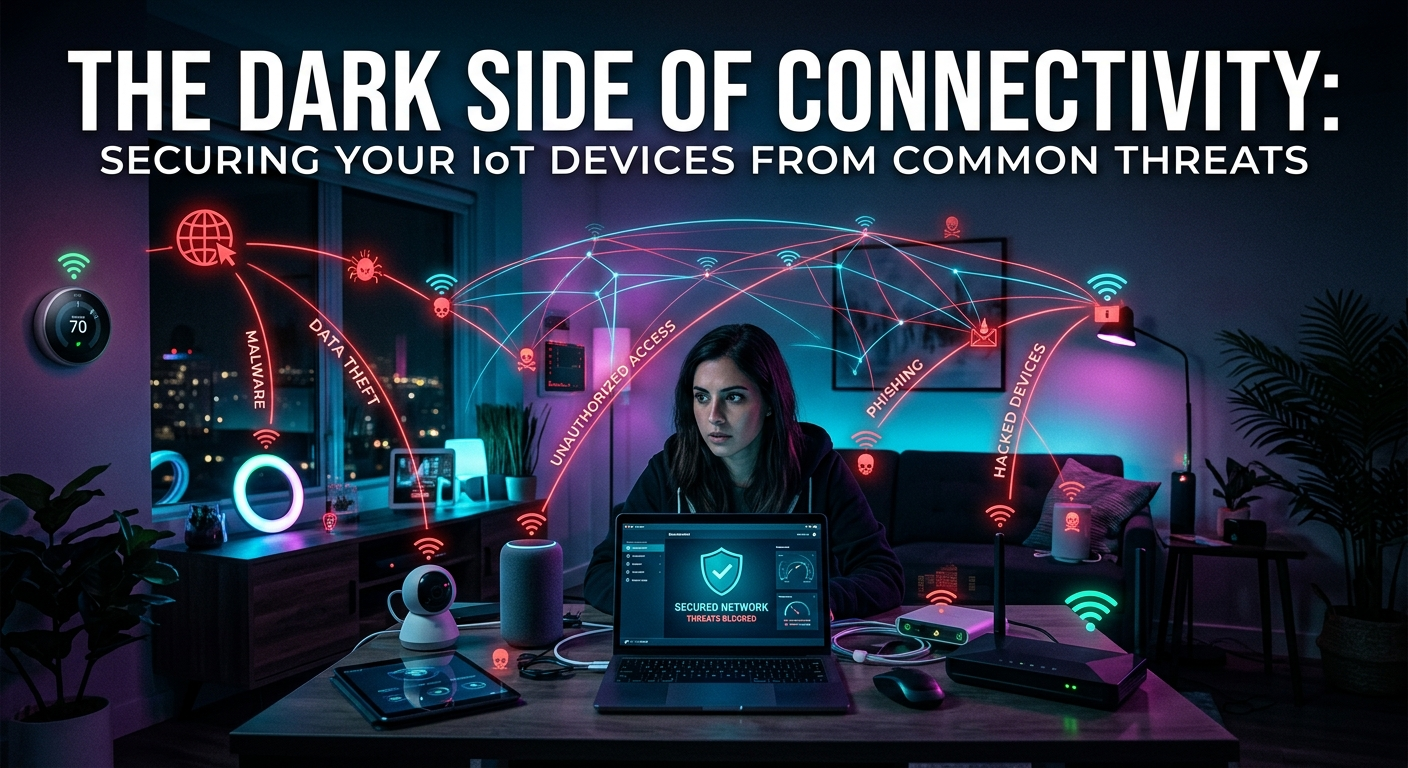
The Internet of Things (IoT) has transformed ordinary physical objects into connected computing systems. Cameras, televisions, smart speakers, watches, vehicles, medical devices, industrial controllers, agricultural sensors, security systems, appliances, meters and environmental monitors can now communicate with networks, cloud platforms and one another. This connectivity creates enormous economic and social value, but it also expands the number of places where security can fail.
The central challenge of IoT security is that an IoT device is rarely just an isolated object. It is part of an ecosystem involving hardware, firmware, operating systems, applications, mobile interfaces, wireless networks, cloud services, APIs, databases, manufacturers and users. A weakness in any one of these components can become a pathway into the wider environment.
NIST’s current IoT guidance emphasizes that manufacturers need to build cybersecurity into products and provide customers with the capabilities and information necessary to secure them. Its 2026 revision of NISTIR 8259 places particular emphasis on activities manufacturers should undertake before products reach customers.
This thesis examines the major cybersecurity threats affecting IoT devices, explains why connected devices are particularly vulnerable, and develops a comprehensive security framework covering authentication, access control, software updates, encryption, network segmentation, monitoring, privacy, physical security, lifecycle management and incident response.
1. Introduction: The Connected World
Connectivity has become one of the defining characteristics of modern technology.
A conventional computer generally has a recognizable user interface, operating system, security software and relatively powerful hardware. An IoT device may be much smaller and less visible. It could be a temperature sensor mounted on a wall, a smart electricity meter, an agricultural controller, a connected camera or an industrial sensor.
Despite its physical simplicity, that device may contain:
- A processor
- Memory
- Firmware
- Network interfaces
- Authentication mechanisms
- Cryptographic functions
- Sensors
- Actuators
- Cloud connectivity
- APIs
- Mobile applications
- Remote-management functions
Consequently, the security of an IoT system cannot be reduced to protecting the physical device alone.
The fundamental security question becomes:
Who or what can communicate with the device, what can they make it do, what information can they obtain, and what happens if the device is compromised?
This question is increasingly important because connectivity creates both opportunity and exposure.
2. Understanding the Internet of Things
IoT refers broadly to physical objects equipped with sensing, processing and communication capabilities that allow them to exchange information or interact with digital systems.
A simplified IoT architecture contains several layers.
2.1 Physical layer
This contains sensors, actuators, processors and other hardware.
Examples include:
- Cameras
- Temperature sensors
- Motion detectors
- Smart meters
- Industrial controllers
- Vehicle sensors
- Agricultural sensors
2.2 Connectivity layer
Devices communicate through technologies such as:
- Wi-Fi
- Ethernet
- Bluetooth
- Zigbee
- Thread
- Cellular networks
- LPWAN technologies
- Satellite connectivity
2.3 Edge and gateway layer
Gateways can aggregate data from multiple devices and provide processing, protocol conversion and security functions.
2.4 Cloud and platform layer
Cloud infrastructure may provide:
- Device management
- Data storage
- Analytics
- Artificial intelligence
- Remote administration
- Software updates
- Application programming interfaces
2.5 Application layer
Users interact with IoT ecosystems through:
- Mobile applications
- Web dashboards
- Enterprise software
- Control panels
- Voice interfaces
- Automated systems
Security must therefore extend across the entire architecture.
3. Why IoT Security Is Different
IoT security presents challenges that traditional computing security does not always encounter at the same scale.
3.1 Massive device populations
An organization may operate thousands or millions of sensors.
Managing one secure computer is relatively straightforward.
Managing 500,000 connected devices is fundamentally different.
Every device becomes an asset that must be:
- Identified
- Configured
- Updated
- Monitored
- Authenticated
- Eventually retired
NIST identifies device identification, configuration, data protection, interface access, software updates and cybersecurity-state awareness among the core technical capabilities relevant to IoT security.
3.2 Limited computing resources
Some IoT devices operate with:
- Small processors
- Limited memory
- Small batteries
- Minimal storage
Security mechanisms therefore have to be efficient.
3.3 Long lifetimes
An IoT device may remain deployed for many years.
A device installed today could still be operating when:
- Its original manufacturer has changed ownership
- Its cloud service has changed
- Its software is obsolete
- Its encryption libraries are outdated
- Its original administrator has left
- Its security-support period has expired
This creates a lifecycle-security problem.
3.4 Physical exposure
Unlike cloud servers, many IoT devices are physically accessible.
They can be installed:
- Outdoors
- In factories
- On vehicles
- In public spaces
- On farms
- In homes
- Inside utility infrastructure
Physical access can therefore become part of the threat model.
4. The IoT Attack Surface
The attack surface is the collection of possible points through which an attacker could attempt to compromise a system.
For IoT, the attack surface can include:
Device hardware
- Processor
- Memory
- Debug interfaces
- Storage
Firmware
- Boot software
- Drivers
- Embedded operating systems
- Libraries
Network interfaces
- Wi-Fi
- Bluetooth
- Ethernet
- Cellular
- Other wireless protocols
Administrative interfaces
- Web dashboards
- SSH-like management interfaces
- Mobile applications
- Cloud consoles
APIs
Applications often communicate with IoT platforms through APIs.
A poorly secured API can expose:
- Device information
- User information
- Commands
- Configuration
- Telemetry
Cloud services
A vulnerable cloud service can potentially affect thousands or millions of devices simultaneously.
Supply chain
Components and software libraries may originate from numerous suppliers.
Therefore, IoT security must consider not only the device manufacturer but also suppliers, software developers, cloud providers and service operators.
5. Common IoT Cybersecurity Threats
5.1 Weak or Default Passwords
One of the most fundamental IoT weaknesses is poor authentication.
Devices may be shipped with:
- Default credentials
- Simple passwords
- Shared administrator passwords
- Poor password-reset mechanisms
If users never change the original credentials, unauthorized access becomes much easier.
Security principle
Every device should have an appropriate identity and authentication mechanism.
Where passwords are used, organizations should require strong, unique credentials and avoid shared administrator accounts.
6. Credential Theft
Even strong passwords can be stolen.
Credentials can be exposed through:
- Phishing
- Malware
- Password reuse
- Compromised applications
- Data breaches
- Insecure storage
- Social engineering
For important IoT systems, stronger authentication can include:
- Multi-factor authentication
- Device certificates
- Hardware-backed credentials
- Short-lived authentication tokens
- Role-based access control
7. Unpatched Firmware
Firmware is the software embedded within a device.
A vulnerability in firmware can potentially allow unauthorized control of the device.
The problem becomes particularly serious when:
- The manufacturer stops issuing updates
- Users do not install updates
- Updates are difficult to perform
- Devices cannot be updated remotely
- Devices have no secure update mechanism
NIST’s IoT framework specifically identifies software-update capability as a core security capability.
8. Insecure Software Updates
Software updates themselves must be protected.
An update system should prevent unauthorized software from being installed.
Important controls include:
- Authenticating update packages
- Digitally signing firmware
- Verifying signatures before installation
- Protecting update communications
- Preventing unauthorized rollback
- Maintaining recovery mechanisms
The objective is to ensure that an attacker cannot turn the update mechanism into a delivery mechanism for malicious software.
9. Unencrypted Communications
IoT devices frequently transmit:
- Sensor data
- Account information
- Device status
- Location information
- Authentication information
- Operational commands
If sensitive information is transmitted without adequate protection, unauthorized parties may be able to observe or manipulate it.
Encryption should therefore protect sensitive communications both:
- In transit
- At rest
NIST identifies data protection as one of the core IoT technical security capabilities.
10. Man-in-the-Middle Attacks
A communication path between an IoT device and another system can become a target.
The general concept is that an unauthorized party attempts to position itself between communicating systems.
Effective defenses include:
- Proper encryption
- Certificate validation
- Secure authentication
- Network security
- Avoiding insecure protocols
- Monitoring unusual communication behavior
The objective is to ensure that devices communicate with the systems they are actually supposed to trust.
11. Insecure APIs
Modern IoT ecosystems depend heavily on APIs.
For example:
Mobile application → API → Cloud platform → IoT device
If the API is inadequately protected, attackers may attempt to manipulate requests.
Security controls should include:
- Strong authentication
- Authorization
- Input validation
- Rate limiting
- Secure session management
- Logging
- Monitoring
- Appropriate API version management
An authenticated user should not automatically receive permission to perform every possible operation.
12. Excessive Device Privileges
An IoT application should operate with only the permissions necessary to perform its intended functions.
This is the principle of least privilege.
For example, a temperature sensor should not need unrestricted access to an organization’s entire network.
Similarly, a smart lighting system should not have administrative access to unrelated enterprise databases.
Least privilege reduces the potential impact of compromise.
13. Botnets and Mass Compromise
A compromised IoT device may become part of a larger network of compromised devices.
This is commonly called a botnet.
A botnet can be used for activities such as:
- Distributed denial-of-service attacks
- Automated scanning
- Malicious traffic generation
- Credential attacks
- Other unauthorized activity
The danger is that one poorly secured device can become part of a much larger security problem.
Therefore, IoT security is both an individual-device problem and an ecosystem problem.
14. Denial-of-Service Attacks
IoT systems may depend on continuous availability.
An attack that overwhelms a device or its supporting infrastructure can disrupt operations.
Potential consequences include:
- Loss of monitoring
- Failure of automation
- Interrupted services
- Operational downtime
- Financial losses
For critical environments, availability must be treated as a security requirement rather than simply an engineering preference.
15. Eavesdropping and Privacy Threats
Many IoT devices collect highly sensitive information.
Examples include:
- Cameras
- Microphones
- Location sensors
- Health-related devices
- Smart-home systems
- Vehicle systems
The security problem therefore extends beyond unauthorized control.
It also includes unauthorized observation.
A compromised device could potentially expose information about:
- Where people are
- When they are present
- What activities occur
- How systems operate
- What equipment is being used
IoT security and privacy are consequently closely connected.
16. Physical Security
IoT devices are often deployed outside conventional data centers.
Physical security should therefore consider:
- Tamper resistance
- Secure enclosures
- Protection of ports
- Secure boot
- Protection of cryptographic keys
- Device placement
- Physical access controls
Physical security becomes especially important for devices deployed in public or industrial environments.
17. Supply-Chain Risks
IoT products frequently contain components from multiple organizations.
A device might incorporate:
Chip → firmware → operating system → libraries → application → cloud service
A vulnerability anywhere in this chain may affect the final product.
Organizations should therefore evaluate:
- Hardware suppliers
- Software dependencies
- Open-source components
- Firmware
- Cloud providers
- Update mechanisms
- Third-party APIs
Security cannot end at the company logo printed on the device.
18. The Human Factor
Technology is only part of cybersecurity.
Users can unintentionally weaken an otherwise secure IoT environment by:
- Reusing passwords
- Ignoring security updates
- Connecting unknown devices
- Sharing administrative credentials
- Leaving unused devices connected
- Misconfiguring network settings
Security education is therefore an important component of IoT security.
NIST’s IoT guidance recognizes non-technical supporting capabilities such as documentation, information exchange and education/awareness alongside technical device capabilities.
19. The Seven Core Technical Capabilities
NIST’s IoT cybersecurity catalog identifies seven major technical capability areas:
- Device Identification
- Device Configuration
- Data Protection
- Logical Access to Interfaces
- Software Update
- Cybersecurity State Awareness
- Device Security
These capabilities provide a useful foundation for evaluating whether an IoT device can be adequately secured.
20. Device Identification
Every important device should have a reliable identity.
Organizations should maintain an inventory containing information such as:
- Device type
- Manufacturer
- Model
- Serial number
- Software version
- Network identity
- Installation location
- Owner
- Security-support status
Without knowing what devices exist, security teams cannot reliably protect them.
This produces a fundamental cybersecurity principle:
You cannot adequately secure what you cannot identify.
21. Secure Configuration
Devices should be configured according to their intended purpose.
Security teams should disable unnecessary services and interfaces.
Examples include:
- Unused network services
- Unnecessary administrative interfaces
- Legacy communication protocols
- Unused accounts
Configuration should also be controlled so unauthorized individuals cannot change security settings.
22. Authentication and Authorization
Authentication answers:
Who are you?
Authorization answers:
What are you allowed to do?
These are different security functions.
An IoT ecosystem should distinguish between:
- Device identity
- User identity
- Administrator identity
- Application identity
- Service identity
This prevents every participant from receiving unrestricted access.
23. Network Segmentation
Network segmentation is one of the most valuable defensive strategies for IoT environments.
Instead of placing every device on the same network:
Internet
↓
Firewall
↓
IoT Network
↓
IoT Devices
Organizations can isolate IoT devices from sensitive systems.
For larger environments, additional segmentation may separate:
- Cameras
- Building automation
- Industrial systems
- Guest devices
- Corporate computers
- Critical infrastructure
If one IoT device is compromised, segmentation can limit the attacker’s ability to move elsewhere.
24. Zero-Trust Thinking for IoT
A useful security principle is:
Never automatically trust a device simply because it is inside the network.
IoT environments benefit from continuously evaluating:
- Identity
- Device health
- Authentication
- Authorization
- Network behavior
- Context
This is particularly important because an internal device can itself become compromised.
25. Encryption
Encryption protects information from unauthorized disclosure.
IoT security should consider encryption for:
Data in transit
Protect communications between:
- Device and gateway
- Device and cloud
- Application and cloud
- Gateway and enterprise systems
Data at rest
Protect stored information on:
- Devices
- Gateways
- Servers
- Cloud platforms
- Databases
Encryption should be implemented using modern, appropriately configured cryptographic protocols rather than obsolete security mechanisms.
26. Secure Boot
Secure boot helps ensure that a device starts only with authorized software.
A simplified sequence is:
Power on
↓
Bootloader verification
↓
Firmware verification
↓
Operating software verification
↓
Device starts
This creates a chain of trust from the hardware toward the software environment.
27. Security Monitoring
Security does not end after installation.
Organizations should monitor:
- Authentication attempts
- Configuration changes
- Firmware versions
- Network connections
- Unexpected traffic
- Device failures
- Administrative actions
- Security alerts
Monitoring helps identify abnormal behavior.
28. Cybersecurity State Awareness
A secure IoT environment should provide meaningful information about the security condition of devices.
For example:
- Is the device online?
- What firmware is running?
- Is it receiving updates?
- Has its configuration changed?
- Is it communicating normally?
- Has a security event occurred?
NIST includes cybersecurity-state awareness among the core technical capability areas for IoT devices.
29. Secure-by-Design IoT
Security should not be added after a product has already been designed.
Instead:
Requirements
↓
Threat modeling
↓
Secure architecture
↓
Secure development
↓
Security testing
↓
Deployment
↓
Monitoring
↓
Updates
↓
End-of-life
ENISA has similarly emphasized security throughout the IoT product lifecycle, including development, integration, use, maintenance and end-of-life.
30. Threat Modeling
Threat modeling asks structured questions before deployment.
What are we protecting?
- Devices
- Data
- People
- Networks
- Physical processes
- Business operations
Who might attack?
- Cybercriminals
- Malicious insiders
- Opportunistic attackers
- Organized attackers
- Other unauthorized actors
How could compromise occur?
- Weak credentials
- Vulnerabilities
- Misconfiguration
- Insecure APIs
- Supply-chain weaknesses
- Physical access
What would happen?
The organization should evaluate:
- Confidentiality
- Integrity
- Availability
- Safety
- Privacy
- Financial consequences
31. IoT Risk Management
A useful model is:
Identify → Assess → Protect → Detect → Respond → Recover
Identify
Create an accurate inventory and understand dependencies.
Assess
Determine which devices and systems present the greatest risks.
Protect
Implement controls such as:
- Authentication
- Encryption
- Segmentation
- Updates
- Access control
Detect
Monitor for unusual activity.
Respond
Contain and investigate incidents.
Recover
Restore normal operation and improve defenses.
32. Home IoT Security
Consumers should treat smart devices as networked computers.
Basic defensive measures include:
- Change default credentials
- Enable strong authentication where available
- Install security updates
- Use secure Wi-Fi
- Separate sensitive devices from guest devices
- Remove devices that are no longer supported
- Review application permissions
- Disable unnecessary remote-access features
- Purchase devices from manufacturers that provide meaningful security support
33. Business IoT Security
Organizations should implement a formal IoT asset-management program.
A useful inventory can record:
| Category | Information |
|---|---|
| Identity | Device ID/serial number |
| Ownership | Responsible department |
| Location | Physical deployment |
| Software | Firmware/version |
| Connectivity | Network/VLAN |
| Function | Operational purpose |
| Risk | Security classification |
| Support | Manufacturer support status |
| Updates | Patch status |
| Lifecycle | Deployment and retirement dates |
The inventory should be continuously maintained rather than created once and forgotten.
34. Industrial IoT Security
Industrial IoT introduces additional considerations because devices can influence physical processes.
Examples include:
- Manufacturing
- Water systems
- Energy
- Agriculture
- Logistics
- Mining
- Transportation
Security decisions must therefore consider not only data confidentiality but also:
- Operational continuity
- Equipment integrity
- Worker safety
- Environmental consequences
- Physical process stability
In these environments, cybersecurity becomes closely connected to operational technology and physical safety.
35. Smart Agriculture
Connected agriculture increasingly uses:
- Soil sensors
- Weather stations
- Irrigation controllers
- Cameras
- Livestock monitoring
- Automated equipment
- Farm-management platforms
A compromised agricultural IoT system could potentially affect information systems as well as physical operations.
Security architecture should therefore separate agricultural IoT devices from unrelated business systems while maintaining controlled communication between authorized components.
36. Smart Buildings
Smart buildings may contain:
- Access-control systems
- Cameras
- Lighting
- HVAC controls
- Elevators
- Environmental sensors
- Energy-management systems
The greater the integration, the greater the need for segmentation and controlled privileges.
A building-management device should not automatically have unrestricted access to corporate information systems.
37. Connected Vehicles
Connected vehicles represent another important IoT category.
Modern vehicles may contain numerous electronic systems communicating internally and externally.
Security must therefore address:
- Wireless interfaces
- Applications
- Cloud services
- Software updates
- Authentication
- Vehicle networks
- Privacy
Because connected vehicles interact with the physical world, security failures can have consequences beyond traditional data loss.
38. Medical and Health IoT
Connected healthcare devices can process highly sensitive information.
Security priorities include:
- Privacy
- Integrity
- Authentication
- Availability
- Secure updates
- Access control
- Strong device identity
The security design should reflect the potential consequences of device compromise rather than treating the equipment as an ordinary consumer gadget.
39. IoT Lifecycle Management
An IoT device should have a defined lifecycle:
Design
↓
Manufacturing
↓
Deployment
↓
Configuration
↓
Operation
↓
Maintenance
↓
Update
↓
Retirement
↓
Secure disposal
Security responsibilities should exist at every stage.
NIST’s April 2026 revision of its manufacturer guidance explicitly focuses on foundational cybersecurity activities for IoT products and aims to reduce the cybersecurity effort required from customers while reducing the prevalence and severity of compromises.
40. The Problem of End-of-Life
One of the most neglected IoT security problems is the end of vendor support.
When security updates stop, the risk profile changes.
Organizations should know:
- When support ends
- Which versions remain supported
- Whether replacement hardware is available
- Whether data can be securely erased
- Whether cloud services will continue
- What happens to device credentials
An unsupported device should not automatically remain connected indefinitely.
41. Incident Response for IoT
Organizations should prepare for compromise before it happens.
A basic response process is:
Step 1: Detect
Identify suspicious activity.
Step 2: Confirm
Determine whether the device or account is actually compromised.
Step 3: Contain
Limit the device’s ability to affect other systems.
Step 4: Investigate
Determine:
- What happened?
- When?
- Which systems were affected?
- What information was exposed?
Step 5: Eradicate
Remove the cause of compromise.
Step 6: Recover
Restore trusted operation.
Step 7: Learn
Update policies and architecture based on lessons learned.
42. A Practical IoT Security Architecture
A mature IoT environment can be structured as follows:
IoT Devices
↓
Device Identity & Authentication
↓
Secure Network Connectivity
↓
IoT Gateway
↓
Firewall / Segmentation
↓
IoT Management Platform
↓
Cloud / Enterprise Systems
↓
Security Monitoring
↓
Incident Response
Security controls should exist across every layer rather than concentrating protection at a single point.
43. The IoT Security Checklist
Device level
- Unique device identity
- Secure configuration
- Strong authentication
- Secure boot where appropriate
- Protected interfaces
- Secure firmware
- Reliable update mechanism
Network level
- Network segmentation
- Encrypted communications
- Firewall controls
- Restricted inbound access
- Controlled outbound communication
- Network monitoring
Application level
- Secure APIs
- Strong authentication
- Authorization
- Input validation
- Logging
- Rate limiting
Organizational level
- Asset inventory
- Risk assessment
- Security policies
- Staff awareness
- Incident-response plan
- Vendor assessment
- Lifecycle management
44. Manufacturers and the Shared Responsibility Model
IoT security is not solely the customer’s responsibility.
Manufacturers influence security through:
- Hardware architecture
- Firmware
- Default configurations
- Authentication mechanisms
- Update infrastructure
- Documentation
- Vulnerability disclosure
- Support periods
- End-of-life policies
NIST’s 2026 guidance specifically recognizes manufacturers’ role in making IoT products more securable and providing customers with cybersecurity-related information.
This leads to a shared-responsibility model:
Manufacturer
→ Secure product
Cloud provider
→ Secure infrastructure
Developer
→ Secure applications
Organization
→ Secure deployment
User
→ Secure configuration and use
No single participant can completely solve IoT security alone.
45. The Economics of IoT Security
Security failures can generate costs through:
- Downtime
- Data exposure
- Device replacement
- Incident investigation
- Legal obligations
- Reputation damage
- Operational disruption
- Loss of customer confidence
Consequently, cybersecurity investment should be viewed as risk management rather than simply an IT expense.
The most economical security strategy is often to design security into the system from the beginning.
46. The Future of IoT Security
The IoT ecosystem is evolving toward greater intelligence.
Future devices will increasingly incorporate:
- Edge AI
- Machine learning
- Hardware security
- Secure elements
- Remote attestation
- Automated patching
- Behavioral monitoring
- Digital twins
- Autonomous device management
AI may help identify abnormal device behavior.
For example:
Normal behavior
→ Device communicates with known services at expected intervals.
Abnormal behavior
→ Device suddenly communicates with unexpected destinations.
A monitoring system could flag that deviation for investigation.
However, AI itself introduces additional security considerations, including model integrity, data poisoning, privacy and false positives.
47. IoT and the Expansion of the Digital Attack Surface
The larger lesson is that connectivity changes the meaning of security.
In a disconnected world, compromising a physical object may require physical access.
In a connected world, the same object may become remotely accessible through:
Internet
↓
Cloud
↓
API
↓
Network
↓
Device
Connectivity therefore increases functionality while potentially increasing exposure.
The goal should not be to eliminate connectivity.
The goal is to make connectivity controlled, authenticated, monitored and resilient.
48. A Strategic Framework for Securing IoT
A mature IoT security program can be organized around ten principles:
Principle 1: Know every device
Maintain an accurate inventory.
Principle 2: Give every device an identity
Avoid anonymous or shared device identities.
Principle 3: Minimize privileges
Allow only necessary actions.
Principle 4: Protect communications
Use appropriate encryption and authentication.
Principle 5: Keep software current
Maintain secure update mechanisms.
Principle 6: Segment networks
Prevent one compromised device from becoming a gateway to everything else.
Principle 7: Monitor continuously
Look for abnormal behavior.
Principle 8: Protect privacy
Collect and retain only information that is justified.
Principle 9: Plan for failure
Prepare incident-response and recovery procedures.
Principle 10: Secure the entire lifecycle
Security must continue from design through retirement.
49. Conclusion
The Internet of Things represents one of the most important transformations in modern computing. It connects physical objects to digital networks and allows information, decisions and actions to move between the physical and digital worlds.
That transformation creates extraordinary benefits, but it also creates a darker side of connectivity.
Every connected device potentially becomes:
- An endpoint
- A source of information
- A control point
- A network participant
- A potential vulnerability
The fundamental security challenge is therefore not simply protecting individual gadgets. It is protecting the ecosystem created by their interconnection.
Strong IoT security requires a combination of secure design, reliable device identity, authentication, authorization, encryption, network segmentation, software updates, monitoring, privacy protection, physical security and lifecycle management.
NIST’s current IoT cybersecurity framework provides a useful foundation by emphasizing technical capabilities such as identification, configuration, data protection, access control, software updates and cybersecurity-state awareness, while also emphasizing supporting manufacturer capabilities.
The most important principle can be expressed simply:
Connectivity should create capability without creating uncontrolled access.
The future of IoT will not be determined only by how many objects we can connect. It will be determined by whether we can connect those objects securely, responsibly and sustainably.
As billions of devices increasingly participate in homes, businesses, agriculture, transportation, healthcare and industry, IoT cybersecurity will become an essential component of digital infrastructure rather than an optional technical feature.
The secure IoT of the future must therefore be built on a simple philosophy:
Identify everything. Trust carefully. Protect data. Limit access. Update continuously. Monitor constantly. Prepare for compromise. Secure the entire lifecycle.
Selected References
- National Institute of Standards and Technology (NIST), NISTIR 8259 Rev. 1 — Foundational Cybersecurity Activities for IoT Product Manufacturers, April 2026.
- NIST, NISTIR 8259A — IoT Device Cybersecurity Capability Core Baseline.
- NIST, IoT Cybersecurity Capabilities Catalog.
- NIST, Technical Device Cybersecurity Capabilities Catalog.
- NIST, IoT Non-Technical Supporting Capability Core Baseline.
- European Union Agency for Cybersecurity (ENISA), Security and Resilience of Smart Home Environments.
- ENISA, Good Practices for Security of IoT — Secure Software Development Lifecycle.






Be First to Comment