
Introduction
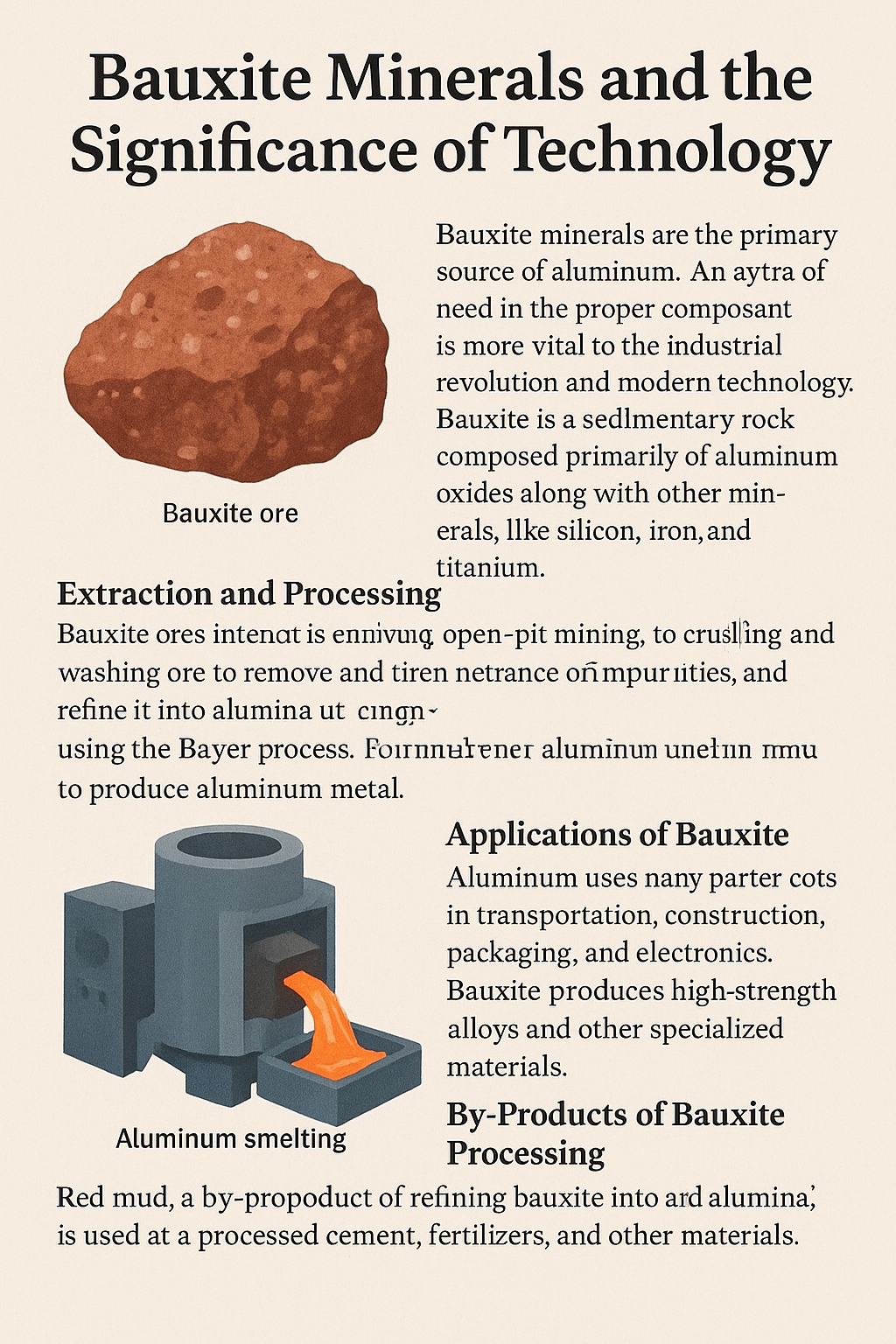
Bauxite stands as one of the most crucial industrial minerals in the modern world, serving as the primary ore for aluminum production. This reddish-brown sedimentary rock has transformed global manufacturing, transportation, and construction industries since its discovery in Les Baux, France, in 1821. As the world’s demand for lightweight, durable materials continues to surge, understanding bauxite’s properties, extraction technologies, and by-products becomes increasingly vital for sustainable industrial development.
What is Bauxite?
Bauxite is not a single mineral but rather a heterogeneous mixture of aluminum hydroxide minerals, iron oxides, clay minerals, and other impurities. The principal aluminum-bearing minerals found in bauxite include gibbsite (Al(OH)₃), boehmite (γ-AlO(OH)), and diaspore (α-AlO(OH)). The composition of bauxite varies significantly depending on its geological origin and weathering conditions.
The mineral typically forms in tropical and subtropical regions through the intense chemical weathering of aluminum-rich rocks under conditions of high temperature, abundant rainfall, and good drainage. This process, known as laterization, concentrates aluminum hydroxides while leaching away more soluble elements like silica, calcium, and sodium.
Bauxite deposits are classified into two main categories: lateritic bauxites, which form from the weathering of aluminum-rich rocks in tropical climates, and karst bauxites, which accumulate in depressions in carbonate rocks. Lateritic deposits account for approximately 90% of the world’s bauxite resources and are predominantly found in countries like Guinea, Australia, Brazil, Jamaica, and India.
Global Distribution and Economic Significance
The global distribution of bauxite reserves is remarkably concentrated. Guinea holds the largest reserves, estimated at over 7 billion metric tons, followed by Australia, Vietnam, Brazil, and Jamaica. This geographical concentration creates significant geopolitical implications for the aluminum industry and global supply chains.
The economic importance of bauxite extends far beyond its extraction value. The aluminum industry, which depends entirely on bauxite, contributes hundreds of billions of dollars to the global economy annually. Aluminum’s applications span aerospace, automotive, construction, packaging, electronics, and countless other sectors, making bauxite a strategic resource for industrial nations.
Countries with substantial bauxite reserves often face the challenge of balancing resource extraction with environmental conservation and sustainable development. The revenue generated from bauxite mining can significantly impact national economies, particularly in developing nations where these deposits are concentrated.
Mining Technologies and Methods
Surface Mining
The vast majority of bauxite extraction occurs through open-pit or strip mining methods, as most commercial deposits lie relatively close to the surface, typically within 20 meters of ground level. Modern surface mining operations employ sophisticated technologies to maximize efficiency while minimizing environmental impact.
The mining process begins with the removal of overburden—the soil and vegetation covering the bauxite deposit. Advanced GPS-guided bulldozers and excavators precisely remove this material, which is stored for later rehabilitation efforts. Once exposed, the bauxite ore is extracted using hydraulic excavators and loaded onto haul trucks or conveyor systems for transport to processing facilities.
Technological Innovations in Mining
Recent technological advancements have revolutionized bauxite mining operations. Autonomous haul trucks, equipped with artificial intelligence and sensor networks, now operate in several major mines, improving safety and operational efficiency. These vehicles can work continuously without fatigue, optimize fuel consumption, and reduce human exposure to hazardous conditions.
Drone technology has emerged as a valuable tool for geological surveying, mine planning, and environmental monitoring. High-resolution aerial imagery and LiDAR scanning enable mining companies to create detailed three-dimensional models of deposits, improving resource estimation and extraction planning.
Real-time monitoring systems, incorporating Internet of Things (IoT) sensors, track equipment performance, ore quality, and environmental parameters throughout the mining operation. This data-driven approach allows for predictive maintenance, quality control, and immediate response to potential issues.
Sustainable Mining Practices
Modern bauxite mining increasingly emphasizes environmental stewardship and sustainability. Progressive mine rehabilitation involves the systematic restoration of mined land concurrent with ongoing extraction activities. This approach includes topsoil preservation, native species replanting, and ecosystem reconstruction to return the land to productive use.
Water management systems capture and recycle process water, minimizing freshwater consumption and preventing contamination of local water sources. Dust suppression technologies, including misting systems and chemical binders, reduce airborne particulates that could affect air quality and nearby communities.
The Bayer Process: Converting Bauxite to Alumina
The Bayer Process, developed by Austrian scientist Karl Josef Bayer in 1888, remains the dominant method for extracting alumina (aluminum oxide, Al₂O₃) from bauxite ore. This chemical refining process has undergone continuous technological refinement but retains its fundamental principles.
Process Steps
Digestion: Crushed and ground bauxite is mixed with a hot, concentrated solution of sodium hydroxide (caustic soda) at temperatures between 140°C and 250°C, depending on the mineralogy of the ore. Under these conditions, aluminum hydroxide minerals dissolve to form sodium aluminate, while most impurities remain insoluble.
Clarification: The pregnant liquor containing dissolved sodium aluminate is separated from the insoluble residue, known as red mud or bauxite residue, through a series of settling tanks and filtration systems. This step requires sophisticated separation technology to maximize alumina recovery while producing a manageable residue stream.
Precipitation: The clarified sodium aluminate solution is cooled and seeded with fine alumina hydrate crystals. This induces the crystallization of aluminum trihydroxide, which precipitates out of solution over 24 to 48 hours in large precipitation tanks.
Calcination: The precipitated aluminum trihydroxide is washed, filtered, and heated in rotary kilns at temperatures exceeding 1000°C. This drives off water molecules, converting the trihydroxide to pure alumina, a white powder suitable for aluminum smelting.
Technological Advancements in the Bayer Process
Modern alumina refineries have implemented numerous technological improvements to enhance efficiency and sustainability. Heat exchange networks capture thermal energy from hot process streams to preheat incoming materials, significantly reducing energy consumption. Some refineries achieve energy recovery rates exceeding 90%.
Advanced process control systems, utilizing artificial intelligence and machine learning algorithms, optimize digestion conditions in real-time based on ore composition, maximizing alumina extraction while minimizing caustic consumption. These systems can adjust temperatures, pressures, and residence times dynamically to accommodate variations in feed quality.
Pressure filtration technology has largely replaced traditional gravity settling for red mud separation, reducing processing time, improving liquor clarity, and decreasing the moisture content of the residue. This advancement reduces the volume of residue requiring storage and facilitates alternative utilization pathways.
Red Mud: The Major By-Product Challenge
Red mud represents the most significant by-product of alumina production, with approximately 1 to 2 tons generated for every ton of alumina produced. This alkaline residue, containing iron oxides, silica, titanium dioxide, and various trace elements, presents both environmental challenges and potential opportunities.
Composition and Properties
Red mud’s distinctive color comes from its high iron oxide content, typically comprising 30-60% of the material. The residue also contains significant quantities of aluminum oxide (10-20%), silicon dioxide (5-15%), titanium dioxide (3-10%), calcium oxide, sodium oxide, and trace amounts of heavy metals and radioactive elements.
The material’s highly alkaline nature (pH 10-13) results from residual sodium hydroxide, making it potentially harmful to ecosystems if not properly managed. Traditional disposal involves storage in large containment facilities, which require careful engineering to prevent environmental contamination.
Environmental Concerns
The volume of red mud generated globally exceeds 150 million tons annually, creating substantial storage requirements and potential environmental risks. Dam failures at red mud storage facilities have caused environmental catastrophes, most notably the 2010 Ajka incident in Hungary, which released millions of cubic meters of red mud into surrounding communities and waterways.
Improper management can lead to groundwater contamination, soil alkalinization, and aquatic ecosystem damage. The long-term stability of storage facilities and the legacy of abandoned sites present ongoing environmental liabilities for the aluminum industry.
Innovative Utilization Technologies
Research into red mud utilization has intensified in recent decades, driven by environmental concerns and the potential economic value of recovering valuable components. Several promising applications have emerged:
Construction Materials: Red mud can partially replace cement in concrete production, reducing CO₂ emissions associated with cement manufacturing. Research indicates that concrete incorporating up to 30% red mud can meet structural requirements while sequestering alkaline materials. Fired bricks and ceramic tiles incorporating red mud have demonstrated suitable mechanical properties and durability.
Iron Recovery: Advanced metallurgical processes can extract iron from red mud, producing pig iron or direct reduced iron. Pyrometallurgical smelting, carbothermic reduction, and novel direct reduction methods have shown technical feasibility, though economic viability depends on iron prices and processing costs.
Rare Earth Element Extraction: Red mud contains economically significant concentrations of rare earth elements, including scandium, yttrium, lanthanum, and neodymium. Hydrometallurgical and pyrometallurgical techniques for recovering these strategic materials are under development, potentially transforming red mud from waste to valuable resource.
Environmental Remediation: The iron oxides and hydroxides in red mud provide excellent adsorption properties for removing contaminants from water and soil. Applications include phosphorus removal from wastewater, heavy metal sequestration, and acid mine drainage neutralization.
Soil Amendment: After neutralization and weathering, red mud can improve sandy soils by enhancing water retention and nutrient availability. Controlled application in agriculture and land restoration projects shows promise, though careful management is required to prevent sodium accumulation.
Catalysts and Adsorbents: Modified red mud serves as an effective catalyst for various chemical reactions and as an adsorbent for dyes, organic pollutants, and greenhouse gases. Research continues into optimizing these applications for industrial-scale implementation.
Other By-Products and Co-Products
Gallium
Bauxite typically contains small amounts of gallium, which concentrates in the sodium aluminate solution during the Bayer Process. Modern refineries recover gallium as a valuable co-product, with purity levels reaching 99.9999%. Gallium finds critical applications in semiconductors, LEDs, solar cells, and advanced electronics. The growing demand for gallium, driven by renewable energy and telecommunications technologies, has enhanced the economic value of this recovery process.
Titanium Dioxide
Some bauxite deposits contain elevated titanium concentrations. Specialized processing techniques can extract titanium dioxide from red mud or directly from bauxite, producing a pigment widely used in paints, plastics, paper, and cosmetics. Advanced separation technologies make this extraction increasingly economical.
Vanadium and Other Trace Elements
Depending on geological origin, bauxite may contain recoverable quantities of vanadium, chromium, nickel, and other strategic elements. Multi-metal recovery processes are being developed to maximize resource utilization and improve the overall economics of bauxite processing.
Caustic Soda Recovery
The Bayer Process operates as a closed-loop system regarding caustic soda, with most sodium hydroxide recovered and recycled. However, losses occur through incorporation into red mud and alumina product. Advanced washing and evaporation technologies continuously improve recovery rates, reducing both costs and environmental impact.
Smelting: From Alumina to Aluminum
While technically beyond bauxite processing, the Hall-Héroult electrolytic smelting process represents the essential final step in converting bauxite resources into usable aluminum metal. This energy-intensive process, consuming approximately 15,000 kilowatt-hours per ton of aluminum produced, accounts for the majority of the aluminum industry’s environmental footprint.
Technological Evolution in Smelting
Modern smelters increasingly utilize renewable energy sources, particularly hydroelectric power, to reduce carbon emissions. Inert anode technology, currently under development, promises to eliminate carbon dioxide emissions from the smelting process entirely, replacing carbon anodes with ceramic or metal alternatives that produce oxygen rather than CO₂.
Advanced cell designs improve energy efficiency through better thermal management, reduced anode-cathode distance, and optimized electrolyte composition. These improvements can reduce energy consumption by 10-15% compared to older technologies.
Environmental Impact and Sustainability
The bauxite-to-aluminum value chain presents significant environmental challenges that technology continues to address. Beyond red mud management, key concerns include energy consumption, greenhouse gas emissions, biodiversity impacts, and water usage.
Carbon Footprint Reduction
The aluminum industry has committed to substantial carbon footprint reductions through multiple pathways. Renewable energy adoption in smelting operations has already reduced emissions significantly in regions with abundant hydroelectric, solar, or wind resources. Carbon capture and storage technologies are being piloted at alumina refineries to capture CO₂ emissions from calcination.
Process optimization using artificial intelligence and advanced analytics minimizes energy consumption throughout the value chain. Some refineries and smelters have achieved energy intensity reductions exceeding 30% over the past two decades through incremental technological improvements.
Biodiversity and Land Restoration
Mining operations in biodiverse tropical regions require careful management to minimize ecological impact. Modern practices include biodiversity offset programs, wildlife corridor preservation, and sophisticated rehabilitation protocols that recreate self-sustaining ecosystems.
Advanced seed collection and propagation programs preserve local genetic diversity, while soil ecology studies ensure that restored areas develop appropriate microbial and invertebrate communities. Long-term monitoring programs track ecosystem recovery over decades, providing feedback for continuous improvement.
Water Management
Alumina refineries consume substantial water quantities for ore processing, cooling, and washing. Closed-loop water systems, advanced treatment technologies, and process optimization have dramatically reduced freshwater consumption at modern facilities. Some refineries achieve water recycling rates exceeding 80%, minimizing impact on local water resources.
Circular Economy Approaches
The aluminum industry increasingly embraces circular economy principles, recognizing that sustainability requires system-level thinking. Aluminum’s infinite recyclability without quality degradation makes it ideal for circular systems, with recycling requiring only 5% of the energy needed for primary production.
Designing products for disassembly and recycling, establishing reverse logistics systems, and developing advanced sorting technologies all contribute to increased recycling rates. Many aluminum producers now incorporate recycled content into new products, reducing demand for primary aluminum and the associated bauxite mining.
Future Technological Directions
The bauxite and aluminum industries continue to evolve through technological innovation, addressing economic, environmental, and social challenges.
Alternative Extraction Methods
Research into alternative alumina extraction processes aims to reduce energy consumption, eliminate caustic requirements, or enable processing of lower-grade ores. Acid-based processes, carbothermic reduction, and direct electrolysis of bauxite are among the approaches under investigation. While none currently matches the Bayer Process economically, breakthrough innovations could transform the industry.
Artificial Intelligence and Automation
Machine learning algorithms optimize every stage of bauxite processing, from mine planning to smelter operation. Predictive maintenance systems minimize equipment downtime, quality control systems ensure product consistency, and autonomous vehicles increase safety and efficiency.
Digital twins—virtual replicas of physical facilities—enable simulation and optimization of complex processes, accelerating improvement cycles and reducing risks associated with process changes.
Biotechnology Applications
Emerging biotechnological approaches explore using microorganisms for metal extraction and red mud processing. Certain bacteria and fungi can solubilize aluminum from ores or selectively precipitate valuable elements from red mud. While early-stage, these bioprocessing techniques could offer lower-energy, lower-impact alternatives to conventional methods.
Advanced Materials from Red Mud
Materials science research continues discovering novel applications for red mud-derived materials. Geopolymers, zeolites, pigments, and specialized ceramics all show promise. As processing costs decrease and material properties improve, commercial applications will expand, progressively transforming red mud from liability to asset.
Economic Considerations and Market Dynamics
The economics of bauxite mining and alumina production depend on multiple factors including ore grade, energy costs, environmental compliance, and aluminum prices. Market dynamics reflect the global nature of the industry, with production concentrated in resource-rich nations while consumption centers in industrialized and rapidly developing countries.
Trade policies, environmental regulations, and technological capabilities significantly influence competitive positioning. Countries investing in advanced technologies, sustainable practices, and value-added processing increasingly capture greater economic benefits from their bauxite resources.
The transition toward electric vehicles, renewable energy infrastructure, and lightweight construction materials drives growing aluminum demand, ensuring bauxite’s continued strategic importance. Simultaneously, increasing recycling rates and efficiency improvements moderate primary production growth.
Social Dimensions
Bauxite mining affects communities worldwide, presenting both opportunities and challenges. Employment generation, infrastructure development, and economic growth represent positive contributions, while land displacement, environmental impacts, and cultural disruption create tensions.
Leading companies increasingly adopt comprehensive stakeholder engagement practices, free prior informed consent protocols, and benefit-sharing arrangements with affected communities. Social license to operate has become essential for project success, driving improvements in corporate responsibility and community relations.
Indigenous peoples’ rights, particularly in regions like the Amazon and northern Australia, require special consideration. Respecting traditional land rights, protecting sacred sites, and ensuring genuine participation in decision-making processes are increasingly recognized as fundamental requirements for ethical resource development.
Conclusion
Bauxite minerals underpin a vast industrial ecosystem essential to modern society. The technologies employed in extracting, processing, and utilizing bauxite have evolved dramatically over the past century, driven by economic imperatives, environmental concerns, and societal expectations.
The journey from bauxite ore to aluminum metal involves sophisticated chemical engineering, advanced materials science, and cutting-edge technologies. By-products, particularly red mud, represent both significant challenges and emerging opportunities as research unlocks new utilization pathways and recovery processes.
Looking forward, the industry faces the imperative of dramatically reducing its environmental footprint while meeting growing global demand for aluminum. Success requires continued technological innovation, system-level thinking embracing circular economy principles, and genuine commitment to sustainable development.
The future of bauxite processing lies in intelligent integration of advanced technologies—artificial intelligence, biotechnology, materials science, and renewable energy—to create operations that are simultaneously economically viable, environmentally responsible, and socially beneficial. As these technologies mature and converge, the bauxite and aluminum industries will continue their transformation toward true sustainability, ensuring that this vital resource contributes positively to human development for generations to come.



Be First to Comment