
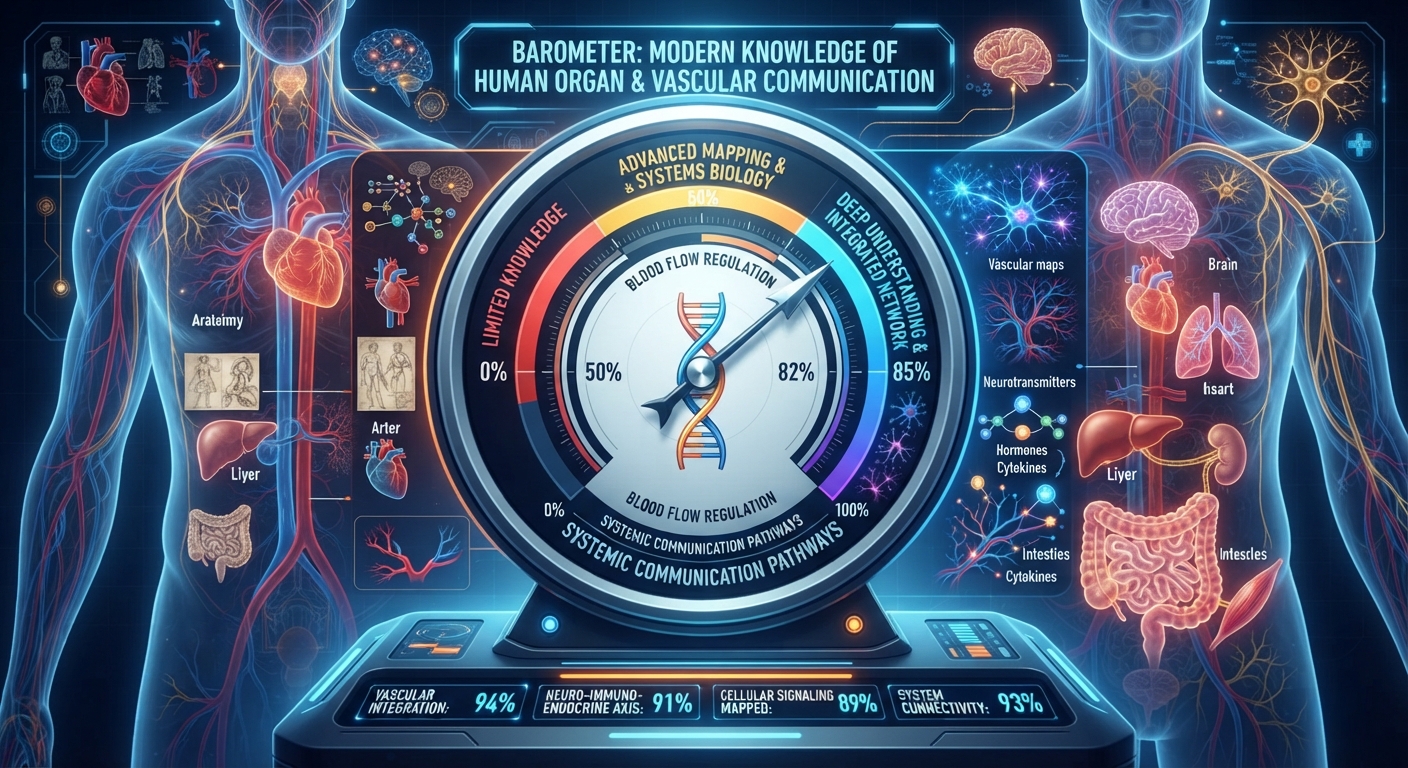
COMPREHENSIVE SCIENTIFIC THESIS
Circulatory System By LadyOfHats | Free SVG
Central nervous system (CNS) – function, disorders | healthdirect
Órganos Linfáticos Secundarios | Concise Medical Knowledge
7
Scientific theme: Human biological systems, organ connectivity, vascular networks, cellular communication, molecular signalling, and systems biology.
Central research question: How far has modern science progressed in discovering, mapping, measuring, and understanding the physical and chemical connections that allow all human organs to communicate, coordinate, exchange information, and work together to sustain life?
PART I — EXECUTIVE SCIENTIFIC OVERVIEW
The human body is one of the most sophisticated interconnected biological systems known to science.
It is not simply a collection of separate organs. It is a continuously communicating network consisting of:
- Approximately 37 trillion human cells, with variation between individuals.
- Approximately 78 organs, depending on how organs are classified.
- A vast network of arteries, veins, and microscopic capillaries.
- A central and peripheral nervous system.
- An endocrine system responsible for hormonal communication.
- An immune system responsible for protection and biological surveillance.
- A lymphatic system responsible for fluid management and immune transport.
- A digestive system that supplies nutrients and communicates with other organs.
- A respiratory system that supplies oxygen and removes carbon dioxide.
- A complex network of chemical messengers, electrical impulses, proteins, receptors, and genetic instructions.
The extraordinary discovery of modern medicine is that these systems do not operate independently.
The heart communicates with the brain. The brain communicates with the digestive system. The kidneys communicate with the heart and blood vessels. The liver communicates with the digestive system, immune system, and metabolism.
Even individual cells communicate with neighbouring cells and distant organs.
The most important scientific conclusion: Modern science has developed a remarkable understanding of the body’s major communication pathways, but it has not yet achieved a complete, real-time understanding of every connection, interaction, and biological decision occurring throughout the human body.
PART II — THE MASTER ARCHITECTURE OF HUMAN BODY CONNECTIVITY
Chapter 1. The human body as an interconnected biological network
Ch. 1 Clicker Questions Flashcards | Quizlet
To understand human organ communication, imagine the body as a highly advanced technological network.
A modern telecommunications network contains:
- Communication infrastructure.
- Transmission pathways.
- Information processing centres.
- Sensors.
- Control systems.
- Energy supplies.
- Monitoring systems.
- Feedback mechanisms.
The human body has biological equivalents of all these components.
| Technological infrastructure | Human biological equivalent |
|---|---|
| Data centres | Brain and distributed processing tissues |
| Communication cables | Nerves and blood vessels |
| Information signals | Electrical impulses and chemical messengers |
| Network routers | Neural circuits and regulatory centres |
| Sensors | Receptors in cells and organs |
| Energy infrastructure | Mitochondria and metabolic systems |
| Network security | Immune system |
| Fluid distribution | Circulatory system |
| Waste management | Kidneys, liver, lungs and other systems |
| Network maintenance | Stem cells, repair mechanisms and immune cells |
This comparison is useful, although biological networks are much more adaptive and self-organising than conventional computer networks.
The seven major communication networks
Essays and Reflections on Longevity, Healthspan, and Purpose | Vibrant Ages — Vibrant Ages
| Network | Principal function |
|---|---|
| 1. Circulatory | Transports oxygen, nutrients, hormones and other substances |
| 2. Nervous | Transmits electrical and chemical information |
| 3. Endocrine | Coordinates distant organs through hormones |
| 4. Immune | Detects threats and coordinates protective responses |
| 5. Lymphatic | Returns tissue fluid to circulation and supports immunity |
| 6. Respiratory | Exchanges oxygen and carbon dioxide |
| 7. Digestive | Processes food and supplies nutrients and metabolic signals |
These networks overlap and cooperate. They should not be understood as seven independent systems.
PART III — THE CIRCULATORY SYSTEM: THE PHYSICAL CONNECTIVITY INFRASTRUCTURE
Chapter 2. How blood vessels connect the entire body
Human Anatomy by Alice Roberts | The Definitive Visual Guide | 9781409347361 | Booktopia
The circulatory system is one of the most important physical communication and distribution infrastructures in the human body.
Its primary components are:
- Heart.
- Arteries.
- Arterioles.
- Capillaries.
- Venules.
- Veins.
- Blood.
The heart provides the pressure that moves blood through the vascular network.
2.1 The architecture of blood vessels
Blood vessels form a branching network that reaches almost every living tissue.
File:Blood vessels-en.svg – Wikimedia Commons
| Blood vessel | Architecture | Main function |
|---|---|---|
| Aorta | Largest systemic artery | Distributes blood from the heart |
| Arteries | Thick muscular walls | Carry blood away from the heart |
| Arterioles | Small muscular vessels | Regulate blood distribution |
| Capillaries | Extremely thin walls | Exchange substances with tissues |
| Venules | Small collecting vessels | Receive blood from capillaries |
| Veins | Thinner walls, often with valves | Return blood towards the heart |
An important distinction: arteries carry blood away from the heart, while veins carry blood towards the heart. Their oxygen content depends on the circulation involved.
2.2 The capillary network: where biological exchange happens
Capillaries are among the most important structures in the human body.
They create the interface between circulating blood and surrounding tissues.
Their functions include:
- Delivering oxygen.
- Delivering glucose and other nutrients.
- Transferring hormones and signalling molecules.
- Removing carbon dioxide.
- Collecting metabolic waste.
- Supporting fluid and electrolyte exchange.
The capillary network is particularly significant because the blood does not simply deliver supplies to organs. It enables organs to exchange substances with the surrounding cellular environment.
Scientific significance: Without functioning microcirculation, an organ can receive blood through its major arteries but still fail to supply its cells adequately.
2.3 How far has science mapped the vascular system?
Modern medicine can:
- Visualise major arteries and veins using CT angiography and MRI.
- Examine blood flow using Doppler ultrasound.
- Study microscopic vessels using microscopy.
- Measure oxygen saturation and blood pressure.
- Map vascular structures in individual organs.
- Study endothelial cells and the molecular mechanisms controlling vascular function.
However, scientists have not produced one complete, universally validated, microscopic, dynamic map of every blood vessel in every living human.
The smallest vessels are particularly challenging to observe continuously throughout the body.
PART IV — THE HEART AS THE CENTRAL CIRCULATORY PUMP
Chapter 3. Heart architecture and organ communication
1: (a) Blood flow through the heart; (b) The heart inside the whole… | Download Scientific Diagram
The heart has four chambers:
- Right atrium.
- Right ventricle.
- Left atrium.
- Left ventricle.
These chambers coordinate two connected circulatory circuits.
3.1 Pulmonary circulation
The right side of the heart sends oxygen-poor blood to the lungs.
In the lungs:
- Carbon dioxide moves from blood into the air spaces.
- Oxygen moves from the air spaces into the blood.
- Blood returns to the left side of the heart.
3.2 Systemic circulation
The left ventricle pumps oxygen-rich blood into the aorta.
Blood then travels to:
- Brain.
- Liver.
- Kidneys.
- Digestive organs.
- Muscles.
- Skin.
- Bones.
- Other tissues.
After exchanging substances with tissues, blood returns through the veins to the right side of the heart.
3.3 The heart communicates with other organs
The heart is not merely a pump.
It participates in biological signalling through:
- Electrical impulses.
- Mechanical pressure.
- Hormonal substances.
- Nervous-system regulation.
- Chemical feedback.
For example, heart muscle cells release natriuretic peptides that help regulate blood volume and pressure through their effects on the kidneys and blood vessels.
This demonstrates that the heart is simultaneously a mechanical pump and a signalling organ.
PART V — THE NERVOUS SYSTEM: THE ELECTRICAL COMMUNICATION NETWORK
Chapter 4. The brain, spinal cord and peripheral nerves
The nervous system is the body’s principal rapid information-processing and communication network.
It consists of:
Central nervous system
- Brain.
- Spinal cord.
Peripheral nervous system
- Sensory nerves.
- Motor nerves.
- Autonomic nerves.
The nervous system receives information, processes it and coordinates responses.
4.1 How organs communicate through nerves
Consider what happens when blood pressure changes.
- Pressure-sensitive receptors detect changes.
- Sensory nerves carry information to the brainstem.
- The brainstem processes the information.
- Autonomic nerves adjust heart activity and blood-vessel diameter.
- Blood pressure is regulated through feedback.
This is an example of a biological control system.
4.2 The autonomic nervous system
An unexpected error has occurred | Quizlet
Two major divisions regulate involuntary bodily activities.
| Division | Principal role |
|---|---|
| Sympathetic | Coordinates responses to activity, challenge and increased energy demand |
| Parasympathetic | Supports digestion, recovery and other maintenance activities |
Both continuously influence organ function.
The heart, lungs, digestive tract, bladder, blood vessels and many other structures receive autonomic regulation.
4.3 The scale of scientific understanding
Modern neuroscience has mapped many neural pathways and identified numerous neurotransmitters.
Scientists can record electrical activity, examine neural circuits, map selected connections and study the relationship between brain activity and organ function.
However, the complete human brain connectome, including every connection and its changing strength, has not been fully mapped.
Even less complete is a whole-body map connecting every nerve ending to every organ, blood vessel and individual cell.
PART VI — THE ENDOCRINE SYSTEM: THE CHEMICAL COMMUNICATION NETWORK
Chapter 5. How hormones connect distant organs
The endocrine system communicates through hormones released into the bloodstream or surrounding tissues.
Unlike many nerve signals, which act rapidly and locally, hormones can travel throughout the body and influence distant organs.
Major endocrine organs include:
- Hypothalamus.
- Pituitary gland.
- Thyroid gland.
- Parathyroid glands.
- Adrenal glands.
- Pancreas.
- Ovaries.
- Testes.
Some other organs, including the heart, kidneys, liver, and digestive tract, also produce important hormones.
Examples of organ-to-organ communication
| Origin | Hormone or signal | Target or effect |
|---|---|---|
| Pancreas | Insulin | Regulates glucose uptake and metabolism |
| Thyroid | T3 and T4 | Regulate metabolic activity |
| Kidneys | Erythropoietin | Stimulates red blood cell production |
| Adrenal glands | Cortisol | Influences metabolism and stress responses |
| Heart | Natriuretic peptides | Influences kidney sodium and fluid regulation |
| Hypothalamus | Releasing hormones | Regulates pituitary activity |
5.1 The hypothalamus-pituitary connection
Endocrine System Diagram Generator | Labeled & Blank
The hypothalamus connects nervous-system information with endocrine regulation.
It communicates with the pituitary gland, which influences several other endocrine glands.
This creates a sophisticated hierarchical control network.
For example:
Hypothalamus → Pituitary gland → Thyroid gland → Body tissues.
This is a major discovery in modern physiology: the nervous and hormonal systems are integrated rather than isolated.
PART VII — THE IMMUNE AND LYMPHATIC NETWORKS
Chapter 6. The body’s biological surveillance and transport systems
The immune system is a distributed network of cells, tissues, organs and chemical messengers.
Its principal functions include:
- Recognising potential threats.
- Identifying abnormal cells.
- Coordinating immune responses.
- Producing antibodies.
- Regulating inflammation.
- Supporting tissue repair.
Important immune organs and tissues include the bone marrow, thymus, spleen, lymph nodes and mucosal immune tissues.
6.1 The lymphatic system
The lymphatic system collects excess fluid from tissues and returns it to the bloodstream.
It also transports immune cells and helps coordinate immune surveillance.
The major components include:
- Lymphatic capillaries.
- Lymphatic vessels.
- Lymph nodes.
- Thoracic duct.
- Spleen.
- Thymus.
6.2 How blood and lymph communicate
Blood capillaries exchange fluid with surrounding tissues.
Some of this fluid enters lymphatic capillaries, becoming lymph.
Lymph eventually returns to the venous circulation.
This means the blood and lymphatic networks are physically connected parts of a larger fluid-management system.
PART VIII — ORGAN-TO-ORGAN COMMUNICATION
Chapter 7. Understanding the major biological connections
This is where modern systems biology becomes particularly interesting.
Scientists increasingly understand organs as interconnected components of larger physiological networks.
The following examples demonstrate how deeply interconnected human organs are.
7.1 Brain and heart
Communication pathways:
- Autonomic nerves.
- Hormonal signalling.
- Blood pressure feedback.
- Chemical messengers.
The brain adjusts heart rate according to the body’s requirements.
The heart, in turn, influences the brain through changes in blood pressure and circulating signals.
7.2 Heart and kidneys
The kidneys regulate:
- Blood volume.
- Sodium balance.
- Potassium balance.
- Acid-base balance.
- Blood pressure.
The heart influences kidney function through blood flow, pressure and hormonal signalling.
The kidneys influence the heart by controlling circulating fluid volume and blood pressure.
This is an example of a two-way biological relationship.
7.3 Liver and digestive system
The digestive system absorbs nutrients.
The liver receives much of the nutrient-rich blood from the intestines through the hepatic portal vein.
The liver then:
- Processes nutrients.
- Regulates glucose storage and release.
- Produces important blood proteins.
- Processes many drugs and chemical substances.
- Produces bile.
- Participates in immune regulation.
The portal circulation is a particularly important example of direct organ-to-organ vascular connectivity.
7.4 Lungs and heart
The lungs and heart form the pulmonary circulation.
The lungs supply oxygen and eliminate carbon dioxide.
The heart distributes oxygenated blood to the rest of the body.
Their functions are inseparable.
7.5 Pancreas and liver
The pancreas releases insulin and glucagon.
These hormones communicate with the liver to regulate glucose storage and release.
This coordination helps maintain blood glucose within an appropriate range.
7.6 Intestines and brain
The gut-brain axis is one of the most fascinating areas of contemporary biological research.
Communication occurs through:
- Vagus nerve pathways.
- Enteric nervous system.
- Hormones.
- Immune signalling.
- Microbial metabolites.
The intestinal microbiome also influences aspects of metabolism, immunity and neurological signalling.
However, scientists are still investigating many of the mechanisms and their importance in human health.
PART IX — THE MICROSCOPIC ARCHITECTURE: HOW CELLS COMMUNICATE
Chapter 8. Beyond organs: the cellular communication revolution
Animal Cell Diagram Generator — Labeled & Unlabeled | SciFig
An organ is made of tissues, and tissues are made of specialised cells.
The real biological communication system therefore extends far below the level of visible organs.
Cells communicate through several mechanisms.
| Communication mechanism | How it works |
|---|---|
| Electrical signalling | Changes in cell membrane voltage |
| Chemical signalling | Molecules bind to cellular receptors |
| Hormonal signalling | Hormones travel to distant targets |
| Synaptic signalling | Neurons communicate across synapses |
| Paracrine signalling | Cells communicate with nearby cells |
| Autocrine signalling | Cells respond to their own signals |
| Direct contact | Cells exchange information through physical connections |
| Extracellular vesicles | Cells transfer molecular cargo in small membrane-bound particles |
8.1 The cell membrane: the communication boundary
The cell membrane is not simply a protective covering.
It contains receptors, channels, transporters and other proteins.
These structures allow cells to:
- Detect external signals.
- Exchange ions.
- Receive chemical information.
- Regulate nutrients.
- Respond to neighbouring cells.
- Maintain internal chemical conditions.
8.2 Receptors: biological information receivers
A receptor is a biological structure that recognises a particular signal.
For example:
Insulin binds to insulin receptors.
This activates intracellular signalling pathways that influence glucose transport, metabolism and other cellular activities.
The same hormone can produce different effects in different tissues because cells have different receptors and internal signalling machinery.
8.3 Mitochondria and energy communication
Mitochondria – Veterinary Histology
Mitochondria are cellular structures that produce much of the ATP used to power cellular activities.
They also participate in:
- Calcium regulation.
- Metabolic signalling.
- Cellular stress responses.
- Programmed cell-death pathways.
- Communication with the nucleus.
This means even the energy-producing machinery inside cells participates in biological communication.
PART X — THE BODY’S INFORMATION AND CONTROL ARCHITECTURE
Chapter 9. How the body coordinates thousands of simultaneous activities
A major discovery in modern physiology is that the body uses feedback mechanisms to maintain internal stability.
This process is called homeostasis.
Examples include:
- Temperature regulation.
- Blood pressure regulation.
- Blood glucose regulation.
- Blood oxygen regulation.
- Blood acidity regulation.
- Water and electrolyte balance.
9.1 The feedback control model
Negative and Fractional Indices Explained – GCSE Maths Revision
A typical biological control loop works as follows:
1. Stimulus
A change occurs in the internal environment.
2. Receptor
A sensor detects the change.
3. Control centre
The brain, endocrine system or local tissue processes information.
4. Effector
An organ, gland, muscle or cell responds.
5. Feedback
The response changes the original condition.
The body continuously uses these mechanisms.
However, not every biological process is controlled centrally. Many tissues possess local regulatory systems that operate independently while remaining connected to the whole body.
PART XI — HOW FAR HAS MODERN SCIENCE ADVANCED?
Chapter 10. Measuring scientific knowledge of human biological connectivity
This chapter addresses your central question directly.
Modern science has made enormous progress, but scientific understanding is uneven across different levels of the body.
The following is a qualitative assessment of scientific maturity, not a numerical measurement of how much of the body has been discovered.
About – Wyss Center for Bio and Neuroengineering – Geneva
10.1 Scientific knowledge assessment
| Research area | Current scientific understanding |
|---|---|
| Major organ anatomy | Very advanced |
| Major arteries and veins | Very advanced |
| Heart electrical activity | Very advanced |
| Blood circulation | Very advanced |
| Hormonal communication | Advanced |
| Major nervous pathways | Advanced |
| Immune-system architecture | Advanced, with major unresolved questions |
| Cellular signalling | Advanced, but highly complex |
| Human microbiome | Developing rapidly |
| Brain connectivity | Advanced, but incomplete |
| Whole-body molecular communication | Developing |
| Real-time whole-body cellular mapping | Limited |
| Complete human biological network simulation | Not achieved |
10.2 What science can already observe
Modern technologies allow researchers to investigate the human body at several scales.
脳MRIドックの種類について | ラジオロジークリニック扇町
Magnetic Resonance Imaging (MRI)
Examines organs, soft tissues, the brain and selected blood-flow characteristics.
Study Finds Most Americans’ Hearts Older Than Their Age | DAIC
Computed Tomography (CT)
Produces detailed anatomical images, including blood vessels when contrast imaging is used.
Back to School: What Mitochondria Really Do | Yale School of Medicine
Electron microscopy
Reveals extremely small cellular structures and their organisation.
Single-Cell Sequencing: Methods and Applications | Technology Networks
Single-cell sequencing
Investigates gene activity in individual cells and identifies different cell populations.
PERK opens line of communication between inside and outside of the cell — News
Fluorescence microscopy
Allows scientists to observe selected proteins, structures and cellular activities.
2-Minute Neuroscience: Neuroimaging
Functional MRI
Measures blood-oxygen-related signals to investigate brain activity and connectivity.
These technologies provide different types of information. None independently provides a complete picture of the body’s entire communication architecture.
PART XII — THE SEVEN FRONTIERS OF UNFINISHED SCIENTIFIC DISCOVERY
Chapter 11. What humanity still does not completely understand
Although modern medicine has mapped many biological structures, significant research questions remain.
Frontier 1. The complete human connectome
Scientists still lack a complete map of all neural connections in the living human brain.
The challenge is not merely identifying connections. It is understanding how those connections change with learning, memory, experience and biological development.
Frontier 2. Whole-body cellular communication
We do not yet have a complete dynamic map showing how every cell communicates with every other cell across the entire human body.
Frontier 3. Microcirculation
The smallest blood vessels remain difficult to observe and measure throughout all organs in real time.
Scientists are still investigating how microvascular changes influence organ health and disease.
Frontier 4. Immune-system communication
Immune cells communicate through a vast network of chemical signals.
The timing, location and interactions of these signals are extraordinarily complicated.
Frontier 5. The gut-brain-microbiome network
Scientists are discovering how microorganisms in the digestive system interact with immune, metabolic and neurological systems.
Many specific mechanisms and their clinical importance remain under investigation.
Frontier 6. Organ-to-organ communication during disease
One organ can influence the condition of several others.
For example, kidney dysfunction can affect cardiovascular function, blood chemistry and bone health.
Understanding these interactions is an important research priority.
Frontier 7. Whole-body digital biological modelling
Scientists are developing computational models of organs, tissues, cells and physiological networks.
However, an accurate digital simulation of every human organ, cell, blood vessel, nerve and molecular interaction is still beyond current capabilities.
PART XIII — THE FUTURE OF HUMAN BIOLOGICAL SCIENCE
Chapter 12. The next generation of medical research
Spatial and Synthetic Data Power Healthcare Digital Twins
《國際要聞》仿生器官晶片重大突破!哥大研發多器官晶片可模擬器官間交互作用|國家新創獎
14
Several technologies could significantly expand our understanding of the human body.
| Technology | Future scientific contribution |
|---|---|
| Artificial intelligence | Analysing complex biological relationships |
| Digital twins | Modelling selected organs and physiological processes |
| Spatial transcriptomics | Mapping gene activity within tissue locations |
| Advanced microscopy | Observing cellular structures and interactions |
| Organ-on-a-chip | Studying interactions between human cell types and tissues |
| Wearable biosensors | Monitoring selected physiological signals |
| Multi-omics | Combining genetic, protein, metabolic and other biological data |
| Computational neuroscience | Modelling neural networks and communication |
12.1 Artificial intelligence and whole-body systems biology
AI could help scientists integrate information from:
- Genomics.
- Proteomics.
- Metabolomics.
- Blood chemistry.
- Medical imaging.
- Cellular microscopy.
- Electrical activity.
- Organ function.
- Environmental influences.
The ultimate research objective would be to understand not only what each organ does, but how all organs influence one another over time.
However, an AI-generated prediction is not automatically proof of a biological mechanism. Experimental validation remains essential.
PART XIV — A MASTER ARCHITECTURE OF HUMAN ORGAN COMMUNICATION
Chapter 13. Integrating the entire body into one scientific model
The following conceptual architecture brings the major communication networks together.
THE HUMAN BIOLOGICAL NETWORK
CENTRAL INFORMATION AND REGULATION
Brain • Spinal cord • Hypothalamus
Nervous system
Electrical and chemical signals
Endocrine system
Hormonal signals
CIRCULATORY AND LYMPHATIC INFRASTRUCTURE
Heart • Arteries • Capillaries • Veins • Lymphatic vessels
Respiratory organs
Digestive organs
Kidneys and urinary organs
Liver and pancreas
Immune organs
Muscles, bones and skin
CELLULAR AND MOLECULAR NETWORK
Cells • Receptors • Proteins • DNA • RNA • Mitochondria • Metabolites
BIOLOGICAL OUTCOME
Energy • Growth • Repair • Protection • Adaptation • Homeostasis
Conceptual model. The connections are bidirectional and distributed; this is not a literal anatomical hierarchy.
This architecture demonstrates that the body is a network of networks.
The heart distributes blood, but the nervous system regulates circulation. Hormones influence blood vessels, kidneys and metabolism. Immune cells travel through blood and lymph. Cells exchange information with their environment.
All these interactions ultimately support the functioning of the whole organism.
PART XV — RESEARCH FRAMEWORK: HOW TO BUILD A MORE COMPLETE UNDERSTANDING
Chapter 14. A scientific research programme
A serious scientific programme investigating human organ connectivity could be organised around five research pillars.
| Research pillar | Principal investigation |
|---|---|
| 1. Anatomical mapping | Identify physical connections between organs |
| 2. Physiological mapping | Measure blood flow, electrical activity and organ performance |
| 3. Molecular mapping | Identify hormones, proteins, receptors and signalling molecules |
| 4. Computational mapping | Integrate biological information into interconnected models |
| 5. Dynamic mapping | Investigate how communication changes with time, activity and disease |
Suggested research questions
- How many distinct communication pathways connect the major human organs?
- How does the nervous system coordinate with the circulatory system?
- How do hormones regulate multiple organs simultaneously?
- How do blood vessels influence cellular health?
- How does the immune system communicate with the brain?
- How does the microbiome influence the rest of the body?
- How can AI combine anatomical and molecular information into a whole-body model?
- Which biological connections remain poorly understood?
Important scientific disciplines
- Human anatomy.
- Human physiology.
- Neuroscience.
- Cardiovascular science.
- Endocrinology.
- Immunology.
- Molecular biology.
- Cell biology.
- Systems biology.
- Bioinformatics.
- Biomedical engineering.
- Computational medicine.
PART XVI — FINAL SCIENTIFIC ASSESSMENT
Chapter 15. How much does humanity really know?
The answer depends on the level of biological organisation being investigated.
Five levels of scientific understanding
Level 1 — Organ anatomy
Very advanced
The major organs, their locations, structures and many physical connections are extensively understood.
Level 2 — Organ physiology
Very advanced
Major organ functions, circulation, respiration, digestion and physiological regulation are extensively studied.
Level 3 — Cellular and molecular communication
Advanced, incomplete
Many molecular pathways are understood, but numerous interactions remain under investigation.
Level 4 — Whole-body biological integration
Developing
Scientists understand many organ-to-organ relationships but lack a complete integrated dynamic map.
Level 5 — Complete real-time biological simulation
Not achieved
A complete, experimentally validated digital representation of every human cell, vessel, nerve and molecular interaction does not yet exist.
The ultimate conclusion
Modern science has moved far beyond simply identifying the human body’s organs.
It has discovered that the body operates through multiple overlapping communication infrastructures:
- Electrical communication through neurons.
- Chemical communication through hormones and neurotransmitters.
- Physical transport through blood vessels.
- Fluid transport through lymphatic vessels.
- Molecular communication between cells.
- Immune communication through specialised cells and chemical messengers.
- Metabolic communication through nutrients and cellular energy pathways.
Yet one of the greatest challenges of 21st-century biology is understanding how these systems work together as one continuously changing biological network.
The next major scientific achievement may not simply be discovering another organ, cell or molecule. It may be constructing a much more complete understanding of how all known biological components interact.
The human body is not merely a collection of organs. It is an integrated biological communication, transportation, energy, information-processing and self-regulating ecosystem.
PART XVII — RECOMMENDED SCIENTIFIC READING AND RESEARCH INSTITUTIONS
For deeper investigation, the following resources provide strong foundations:
- NCBI Bookshelf — anatomy, physiology and molecular biology. Explore NCBI Bookshelf.
- Human Cell Atlas — mapping human cell types and tissues. Explore Human Cell Atlas.
- Allen Institute — neuroscience and cellular research. Explore Allen Institute.
- Human Protein Atlas — proteins and their distribution across human tissues. Explore Human Protein Atlas.
- National Institutes of Health — biomedical research and systems biology. Explore NIH.
A proposed next scientific project
An especially valuable continuation would be to develop a Master Scientific Atlas of Human Organ Connectivity, structured into 12 interconnected research volumes:
- Heart and cardiovascular architecture.
- Complete arterial, venous and capillary architecture.
- Brain, spinal cord and nervous communication.
- Endocrine and hormonal communication.
- Respiratory and pulmonary circulation.
- Liver, pancreas and digestive communication.
- Kidney, blood filtration and electrolyte communication.
- Immune and lymphatic architecture.
- Human cellular and molecular communication.
- DNA, RNA, proteins and mitochondrial communication.
- AI-driven human biological network mapping.
- The future of whole-body digital biological simulation.
This would provide a structured foundation for studying the human body from the macroscopic organ level down to microscopic molecular interactions.




Be First to Comment