
COMPREHENSIVE SCIENTIFIC THESIS
A physiological, biochemical, molecular, endocrine and clinical health study
3d rendered medically accurate illustration of female Internal organs
Circulatory System – Clinical GateClinical Gate
Frontiers | Mitoepigenetics and Its Emerging Roles in Cancer
10
Abstract
Acid–base balance is one of the most important regulatory systems in the human body. It maintains the chemical environment necessary for cells, enzymes, hormones, proteins, blood circulation, metabolism and organs to function correctly.
In women’s health, acid–base regulation is particularly interesting because it interacts with several interconnected physiological systems:
- The respiratory system and its control of carbon dioxide.
- The kidneys and their regulation of bicarbonate and hydrogen ions.
- The cardiovascular system and blood circulation.
- The digestive system and its production and absorption of acids and bases.
- The reproductive system and its specialised local pH environments.
- The endocrine system and hormonal influences on fluid and electrolyte regulation.
- Cellular metabolism, mitochondria and energy production.
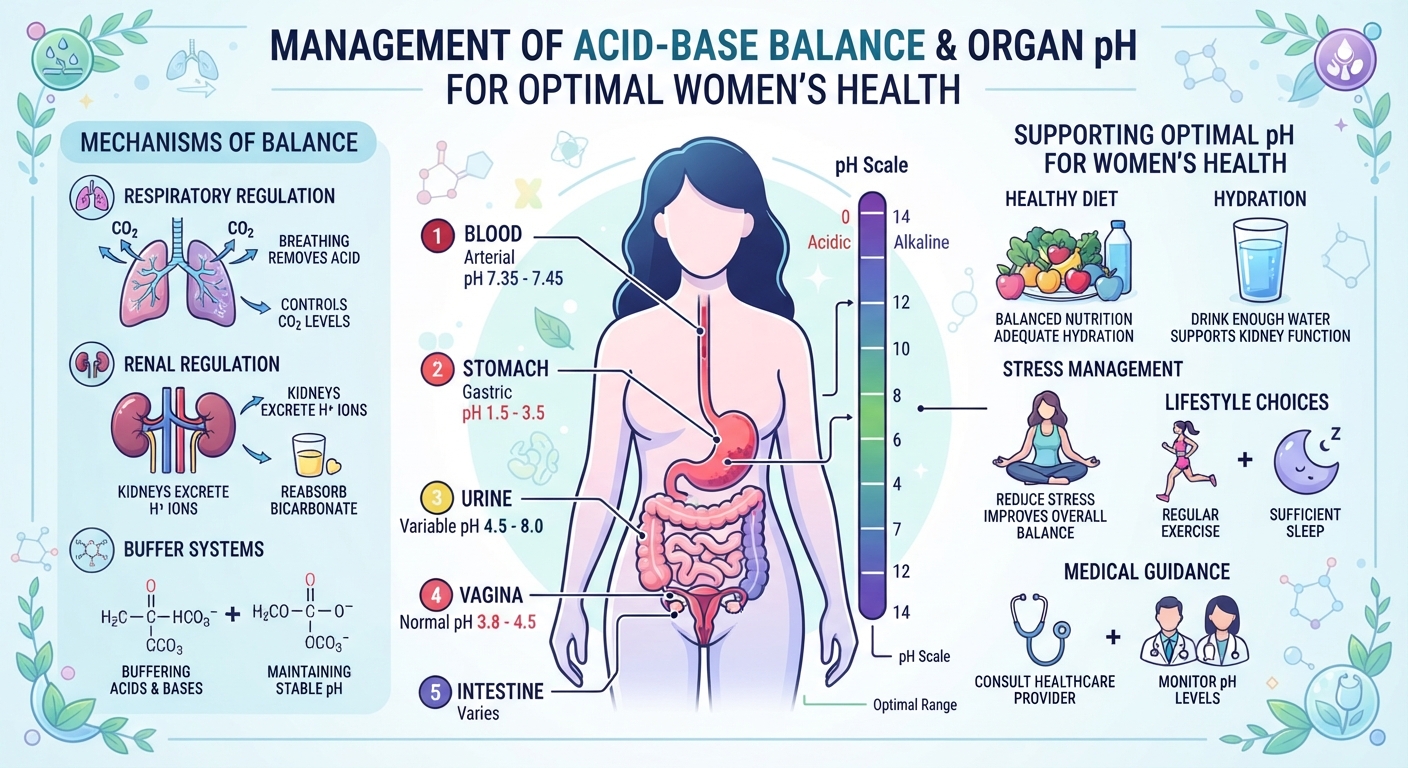
An important scientific distinction: The body does not maintain one universal pH throughout every organ. Different organs, tissues and cellular compartments have different normal pH environments. Blood pH is tightly regulated, while the stomach, vagina, urinary tract, cells and other tissues have their own specialised chemical environments.
The objective is therefore not to make every organ alkaline. It is to maintain the appropriate pH in each biological environment.
CHAPTER 1. Understanding the science of pH
1.1 What is pH?
pH is a scientific measurement of hydrogen-ion activity in a solution.
It indicates whether an environment is:
- Acidic: relatively greater hydrogen-ion activity.
- Neutral: approximately balanced hydrogen-ion activity.
- Alkaline: relatively lower hydrogen-ion activity.
The mathematical relationship is:
\[ pH=-\log_{10}(a_{H^+}) \]
Where:
- \(pH\) = acidity or alkalinity.
- \(a_{H^+}\) = hydrogen-ion activity.
The pH scale is logarithmic. A change of one pH unit represents approximately a tenfold change in hydrogen-ion activity.
1.2 Why pH matters biologically
pH affects:
| Biological function | Importance of pH |
|---|---|
| Enzyme activity | Controls biochemical reaction efficiency |
| Protein structure | Influences protein shape and function |
| Oxygen delivery | Influences haemoglobin’s oxygen affinity |
| Cellular metabolism | Supports metabolic reactions |
| Electrolyte balance | Influences ion distribution |
| Immune defence | Affects the activity of certain immune mechanisms |
| Reproductive health | Helps maintain specialised reproductive environments |
For example, an enzyme that functions efficiently in one pH environment may function poorly in another.
This is why the stomach needs an acidic environment while blood must remain within a narrow, slightly alkaline range.
1.3 Important physiological pH environments
Dung dịch đệm là gì? Phân loại và ứng dụng của dung dịch đệm
| Body environment | Approximate pH |
|---|---|
| Arterial blood | 7.35–7.45 |
| Stomach | 1–3, varying with digestion |
| Vaginal environment in many reproductive-age women | 3.8–4.5 |
| Skin surface | 4.5–5.5, approximately |
| Saliva | 6.2–7.6 |
| Urine | 4.5–8.0 |
| Cytoplasm of many cells | Approximately 7.0–7.2 |
These are approximate physiological ranges, not universal diagnostic cut-offs. Age, hormonal stage, food intake, medication, infection and other factors can influence some of these environments.
CHAPTER 2. The master architecture of acid–base regulation
The human body uses three principal regulatory mechanisms.
An introduction to Stewart acid–base – The Physiological Society
The three-layer regulatory architecture
Layer 1: Chemical buffer systems
Seconds
Immediately resist changes in pH.
Layer 2: Respiratory regulation
Minutes
Lungs regulate carbon dioxide elimination.
Layer 3: Renal regulation
Hours to days
Kidneys regulate bicarbonate and hydrogen-ion excretion.
2.1 The chemical buffer system
Buffers are chemical substances that resist sudden changes in acidity.
The most important extracellular buffer system is the bicarbonate–carbon dioxide system.
Its chemical reaction is:
\[ CO_2+H_2O \rightleftharpoons H_2CO_3 \rightleftharpoons H^++HCO_3^- \]
Where:
- \(CO_2\) = carbon dioxide.
- \(H_2O\) = water.
- \(H_2CO_3\) = carbonic acid.
- \(H^+\) = hydrogen ions.
- \(HCO_3^-\) = bicarbonate ions.
This system connects the lungs, bloodstream and kidneys.
Other important buffers include haemoglobin, plasma proteins and phosphate.
2.2 The respiratory system: the lungs as a chemical regulator
The respiratory system – Clinical Tree
The lungs play a major role in controlling blood acidity through the removal of carbon dioxide.
The process works as follows:
- Cells produce carbon dioxide during metabolism.
- Carbon dioxide enters the bloodstream.
- Blood transports it to the lungs.
- The lungs transfer carbon dioxide into the alveoli.
- Carbon dioxide leaves the body during exhalation.
When carbon dioxide accumulates, the chemical equilibrium shifts towards greater hydrogen-ion concentration, potentially lowering blood pH.
When excessive carbon dioxide is removed, blood pH can increase.
The respiratory centre in the brainstem coordinates breathing in response to chemical signals, including carbon dioxide and hydrogen-ion changes.
Women’s health connection: Respiratory regulation becomes particularly important during pregnancy, when progesterone increases the respiratory drive.
2.3 The kidneys: the principal long-term acid–base regulators
File:Kidney nephron molar transport diagram.svg – Wikimedia Commons
The kidneys perform several essential functions:
- Reabsorb filtered bicarbonate.
- Excrete excess hydrogen ions.
- Produce new bicarbonate.
- Regulate potassium and sodium.
- Maintain fluid and electrolyte balance.
- Remove metabolic waste products.
The nephron is the microscopic functional unit of the kidney.
Its major structures include:
| Structure | Acid–base function |
|---|---|
| Glomerulus | Filters blood plasma |
| Proximal tubule | Reabsorbs most filtered bicarbonate |
| Loop of Henle | Contributes to fluid and electrolyte regulation |
| Distal tubule | Participates in electrolyte and acid regulation |
| Collecting duct | Helps regulate final hydrogen-ion secretion and urine composition |
Two important renal processes deserve attention.
A. Bicarbonate conservation
The kidneys prevent excessive loss of bicarbonate, which is essential for maintaining blood pH.
B. Hydrogen-ion elimination
The kidneys remove acid through mechanisms involving phosphate and ammonium.
The ammonium system is particularly important when the body needs to eliminate additional metabolic acid.
CHAPTER 3. The architecture of pH across women’s organs
Each organ has a different chemical environment because its biological functions are different.
Human anatomy. Infographic elements. Female body.
3.1 Organ-by-organ physiological architecture
| Organ or system | Chemical environment and role |
|---|---|
| Brain | Intracellular and extracellular pH regulation supports nerve signalling |
| Heart | Carefully regulated intracellular pH supports electrical and mechanical activity |
| Lungs | Exchange of oxygen and carbon dioxide regulates blood chemistry |
| Liver | Processes nutrients, lactate, amino acids and metabolic products |
| Stomach | Strongly acidic environment supports digestion |
| Small intestine | Generally neutral to mildly alkaline environment supports digestion and absorption |
| Pancreas | Produces bicarbonate-rich fluid to neutralise stomach acid entering the intestine |
| Kidneys | Regulate systemic acid–base balance |
| Skin | Mildly acidic surface environment supports the skin barrier |
| Vagina | Normally acidic during much of the reproductive years |
| Uterus | Has a changing reproductive-tract environment influenced by hormones and the menstrual cycle |
| Urinary bladder | Stores urine whose pH varies with metabolism and kidney function |
3.2 The digestive system and pH
34.1 Digestive Systems – Biology | OpenStax
The digestive system uses different pH environments to perform different chemical functions.
Stomach
Gastric acid is produced by specialised cells called parietal cells. Hydrochloric acid helps activate digestive enzymes and supports protein digestion.
Pancreas
The pancreas produces bicarbonate-rich fluid. This helps neutralise acidic material entering the small intestine from the stomach.
Small intestine
The small intestine requires a less acidic environment for many digestive enzymes and nutrient-absorption processes.
Liver
The liver participates in metabolic processing and the management of substances such as lactate and amino acids. It also produces bicarbonate through its contribution to systemic metabolism.
The scientific principle is that each digestive organ maintains the chemical conditions necessary for its specialised function.
CHAPTER 4. Women’s reproductive health and vaginal pH
This is one of the most important distinctions in the relationship between pH and women’s health.
4.1 The vaginal microbiome
The vagina is a biological ecosystem containing microorganisms that interact with the vaginal lining and its chemical environment.
In many healthy reproductive-age women, Lactobacillus bacteria are prominent.
These bacteria help produce lactic acid, supporting an acidic vaginal environment.
The relationship can be represented as:
Oestrogen activity
Supports glycogen accumulation in vaginal epithelial cells.
Lactobacillus bacteria
Use available substrates and produce lactic acid.
Acidic vaginal environment
Helps maintain microbial balance and restrict the growth of certain harmful organisms.
This is an example of a relationship between hormones, human tissue, microorganisms and chemical regulation.
The vaginal microbiome is not identical in every woman. Different healthy microbial communities exist.
Sources: NCBI+2
4.2 Hormonal changes and vaginal pH
Hormonal activity influences the vaginal environment throughout different stages of life.
| Life stage | Hormonal influence | Possible pH effect |
|---|---|---|
| Childhood before puberty | Lower oestrogen | Vaginal pH is often higher |
| Puberty | Increasing oestrogen | Supports Lactobacillus and lower vaginal pH |
| Reproductive years | Oestrogen activity | Often supports an acidic environment |
| Menstruation | Blood temporarily changes vaginal chemistry | pH can increase temporarily |
| Pregnancy | Hormonal and microbiome changes | Vaginal ecology can change |
| Postpartum period | Hormonal changes, particularly during breastfeeding | Vaginal pH may increase |
| Menopause | Declining oestrogen | Vaginal pH commonly increases |
These changes are not automatically signs of disease.
4.3 What can disrupt vaginal pH?
Several factors can change the vaginal ecosystem:
- Antibiotic treatment.
- Hormonal changes.
- Vaginal infections.
- Menstruation.
- Menopause.
- Douching and internal cleansing.
- Scented soaps and irritating hygiene products.
It is important to distinguish bacterial vaginosis, yeast infections and other vaginal conditions. They have different causes and may require different treatments.
An elevated vaginal pH can occur with bacterial vaginosis or trichomoniasis, but vaginal pH alone cannot establish a diagnosis. A yeast infection can occur with a relatively normal vaginal pH.
Scientific recommendation: The vagina is self-regulating. Avoid internal cleansing, vaginal deodorants and products marketed to change vaginal acidity. Gentle external washing is generally sufficient.
Source: NCBI+2
CHAPTER 5. Hormonal architecture and acid–base regulation
The endocrine system is a chemical communication network.
Hormones do not simply control reproductive functions. They also influence fluid regulation, kidney activity, metabolism and respiratory physiology.
5.1 Important hormones
| Hormone | Principal function | Connection with acid–base physiology |
|---|---|---|
| Oestrogen | Reproductive and tissue regulation | Influences vaginal glycogen and microbiome |
| Progesterone | Menstrual and pregnancy regulation | Stimulates respiratory drive |
| Aldosterone | Regulates sodium and potassium | Influences renal hydrogen-ion and potassium handling |
| Antidiuretic hormone (ADH) | Regulates water retention | Influences water and electrolyte concentrations |
| Parathyroid hormone | Regulates calcium and phosphate | Influences phosphate metabolism |
| Insulin | Regulates glucose metabolism | Influences metabolism and potassium distribution |
| Cortisol | Regulates stress and metabolism | Influences metabolic and electrolyte processes |
5.2 The relationship between progesterone and breathing
Progesterone has an important influence on the respiratory centre.
During pregnancy:
- Progesterone stimulates ventilation.
- Ventilation increases.
- More carbon dioxide is exhaled.
- Blood carbon dioxide decreases.
- The kidneys compensate by excreting additional bicarbonate.
- Maternal blood pH remains within its pregnancy-adjusted physiological range.
This is an example of two different organ systems working together to maintain homeostasis.publications.ersnet.org+2
CHAPTER 6. The four major acid–base disorders
The body’s regulatory architecture can become disrupted when the lungs, kidneys or metabolic systems cannot maintain their normal functions.
Respiratory And Metabolic Acid Base Imbalances
There are four principal categories.
6.1 Metabolic acidosis
Metabolic acidosis occurs when there is excessive metabolic acid, insufficient bicarbonate, or both.
Possible causes include:
- Severe diarrhoea, which can cause bicarbonate loss.
- Certain kidney disorders.
- Diabetic ketoacidosis.
- Severe tissue hypoperfusion and lactic acid accumulation.
- Certain toxic exposures.
6.2 Metabolic alkalosis
This occurs when bicarbonate increases or excessive hydrogen ions are lost.
Possible causes include:
- Prolonged vomiting.
- Certain diuretic medications.
- Excessive mineralocorticoid activity.
- Significant potassium depletion.
6.3 Respiratory acidosis
This occurs when inadequate ventilation leads to carbon dioxide accumulation.
Possible causes include:
- Serious respiratory disease.
- Certain neurological conditions.
- Respiratory muscle weakness.
- Severe respiratory depression.
6.4 Respiratory alkalosis
This occurs when excessive ventilation removes too much carbon dioxide.
Possible causes include:
- Pregnancy-related respiratory adaptation.
- Certain lung conditions.
- Fever or pain.
- Some anxiety-related breathing episodes.
- Certain serious systemic illnesses.
6.5 Comparison of the four disorders
| Disorder | Primary disturbance | Blood pH direction |
|---|---|---|
| Metabolic acidosis | Reduced bicarbonate | Decreases |
| Metabolic alkalosis | Increased bicarbonate | Increases |
| Respiratory acidosis | Increased carbon dioxide | Decreases |
| Respiratory alkalosis | Reduced carbon dioxide | Increases |
These disorders are diagnosed through clinical assessment and laboratory testing, not by interpreting symptoms or dietary preferences alone.
CHAPTER 7. Cellular pH, mitochondria and women’s metabolic health
7.1 The microscopic architecture of cells
Gerador de Diagrama do Ciclo Celular | SciDraw AI
Every human organ is composed of cells. Each cell maintains its own chemical environment.
Cellular pH regulation is essential for:
- Protein synthesis.
- DNA and RNA processes.
- Enzyme activity.
- Cellular communication.
- Nutrient transport.
- Energy production.
- Cell growth and repair.
Cells use specialised membrane transport proteins to regulate hydrogen ions and bicarbonate.
Examples include:
- Sodium–hydrogen exchangers.
- Bicarbonate transporters.
- Proton pumps.
- Chloride–bicarbonate exchangers.
These mechanisms prevent uncontrolled changes in intracellular acidity.
7.2 Mitochondria: the cellular energy system
Mitochondria are important because they generate much of the energy used by human cells.
They produce adenosine triphosphate (ATP), the principal energy-carrying molecule in cellular metabolism.
Their architecture includes:
| Structure | Function |
|---|---|
| Outer membrane | Separates mitochondrion from cytoplasm |
| Inner membrane | Contains the electron transport chain |
| Cristae | Increase membrane surface area |
| Intermembrane space | Accumulates hydrogen ions during oxidative phosphorylation |
| Matrix | Contains enzymes involved in metabolic processes |
| ATP synthase | Uses the proton gradient to generate ATP |
The proton gradient
One of the most fascinating mechanisms in biology is the mitochondrial proton gradient.
During oxidative phosphorylation:
- Electrons pass through the electron transport chain.
- Energy from electron transfer moves hydrogen ions across the inner mitochondrial membrane.
- A proton electrochemical gradient develops.
- Hydrogen ions flow back through ATP synthase.
- ATP is produced.
This is called chemiosmosis.
Important distinction: The mitochondrial proton gradient is not the same as the pH of the bloodstream. Mitochondria maintain specialised local chemical gradients while the whole body maintains systemic acid–base balance.
7.3 Lactate and cellular metabolism
Lactate is a normal product of glucose metabolism.
It is particularly important during periods of increased energy demand.
The liver and other tissues can reuse lactate as a metabolic fuel or convert it into other substances.
Excessive lactate accumulation can occur in serious medical conditions involving inadequate tissue oxygen delivery or impaired metabolism. Lactate is not simply a waste product or evidence that someone’s body is generally acidic.
CHAPTER 8. Electrolytes: the supporting architecture of pH regulation
Overhydration Symptoms: 9 Signs of Drinking Too Much Water – Svalbarði Polar Iceberg Water
Electrolytes are electrically charged minerals and ions that help regulate cellular and organ functions.
They interact with the kidneys, cardiovascular system, muscles and nervous system.
8.1 The major electrolytes
| Electrolyte | Principal physiological function |
|---|---|
| Sodium (Na⁺) | Extracellular fluid balance and nerve signalling |
| Potassium (K⁺) | Heart rhythm, muscle and nerve function |
| Calcium (Ca²⁺) | Bone structure, muscle contraction and cell signalling |
| Magnesium (Mg²⁺) | Enzyme activity, energy metabolism and neuromuscular function |
| Chloride (Cl⁻) | Fluid balance and acid–base regulation |
| Bicarbonate (HCO₃⁻) | Major extracellular buffer |
8.2 Why potassium is particularly important
The kidneys regulate potassium and acid–base balance together.
Significant potassium abnormalities can affect:
- Heart electrical activity.
- Muscle function.
- Kidney function.
- Cellular metabolism.
Some hormonal disorders and kidney conditions can disturb both potassium and hydrogen-ion regulation.
8.3 Calcium and women’s health
Calcium is important throughout a woman’s life.
It supports:
- Bone development.
- Muscle contraction.
- Nerve communication.
- Blood clotting.
- Cellular signalling.
Oestrogen changes, particularly during menopause, can affect bone remodelling and long-term bone health.
However, calcium regulation is not simply a matter of adjusting the body’s pH. It is controlled by a sophisticated hormonal and renal system involving parathyroid hormone, vitamin D and other mechanisms.
CHAPTER 9. Pregnancy and acid–base balance
Pregnancy provides one of the clearest examples of how the human body adapts its chemical environment to support two interconnected biological systems.
Physiology and Pharmacology of Obstetric Anesthesia – Clinical Tree
9.1 Maternal respiratory adaptations
During pregnancy, progesterone increases respiratory stimulation.
The mother generally breathes a greater volume of air with each breath.
This causes:
- Increased minute ventilation.
- Reduced arterial carbon dioxide.
- Mild physiological respiratory alkalosis.
- Increased renal bicarbonate excretion.
This adaptation helps facilitate carbon dioxide transfer from the developing baby into the mother’s circulation and ultimately into the lungs for elimination.
9.2 Kidney adaptations
Pregnancy also changes kidney physiology.
The kidneys experience increased blood flow and glomerular filtration.
This affects:
- Sodium handling.
- Water regulation.
- Bicarbonate regulation.
- Calcium metabolism.
- Electrolyte balance.
9.3 Why pregnancy requires specialised monitoring
Pregnancy-related changes mean that laboratory results cannot always be interpreted using non-pregnant reference ranges.
For example, carbon dioxide and bicarbonate levels are normally lower during pregnancy because of physiological respiratory adaptation.
An apparently ordinary laboratory result may therefore require pregnancy-specific interpretation.PubMed Central (PMC)+3
CHAPTER 10. Menstrual cycles, menopause and changing pH environments
Women’s physiology changes throughout life. Hormonal changes influence tissues, metabolism, fluid regulation and reproductive health.
10.1 Menstrual cycle
The menstrual cycle involves coordinated hormonal changes.
| Phase | Principal hormonal activity |
|---|---|
| Menstruation | Oestrogen and progesterone are relatively low |
| Follicular phase | Oestrogen rises |
| Ovulation | LH surge triggers ovulation |
| Luteal phase | Progesterone increases |
These hormonal changes can influence vaginal secretions and the vaginal microbiome.
Menstrual blood can temporarily raise vaginal pH. This does not mean that the blood pH itself has become acidic or alkaline.
10.2 Menopause
During menopause, ovarian oestrogen production decreases.
This can influence:
- Vaginal tissue thickness.
- Vaginal moisture.
- Vaginal microbial communities.
- Vaginal pH.
- Urinary and genital tissue health.
- Bone metabolism.
The increase in vaginal pH after menopause is a local reproductive-tissue change, not an indication that the entire body has become alkaline.
CHAPTER 11. Nutrition, hydration and acid–base homeostasis
11.1 Can food change the body’s blood pH?
This is a particularly important scientific question.
The short answer is that, in a person with functioning lungs and kidneys, ordinary dietary changes do not substantially alter blood pH.
The body has powerful regulatory mechanisms that maintain blood pH within a narrow range.
Foods can influence the amount and type of acids and bases the kidneys process, and they can influence urine pH. This is different from changing blood pH.
11.2 Nutrition supporting normal physiological function
How fiber intake shapes your gut microbes’ digestion strategy
6 najlepších zdrojov bielkovín v jedle. Chutné a zdravé možnosti
Calcium Deficiency: Symptoms, Causes, | Symptoms Insight
6
A balanced dietary pattern supports the organs responsible for acid–base regulation.
| Nutritional component | Examples | Physiological contribution |
|---|---|---|
| Protein | Eggs, fish, beans | Tissue maintenance and enzyme production |
| Potassium | Bananas, beans, vegetables | Cellular and cardiovascular function |
| Magnesium | Nuts, seeds, legumes | Enzyme and energy metabolism |
| Calcium | Dairy, fortified alternatives | Bone and muscle function |
| Fibre | Whole grains, fruits, vegetables | Digestive health |
| Water | Safe drinking water | Normal circulation and kidney function |
| Iron | Beans, meat, fortified foods | Haemoglobin production |
11.3 Hydration and kidney function
Adequate hydration supports:
- Normal kidney filtration.
- Circulatory volume.
- Urine production.
- Electrolyte regulation.
- Temperature control.
Hydration requirements vary according to climate, activity, age, pregnancy and health conditions.
Excessive water consumption is not beneficial and can dangerously dilute blood sodium.
11.4 Understanding the alkaline diet misconception
There is an important distinction between three concepts:
- The acidity of a food.
- The effect of food metabolism on urine chemistry.
- The pH of circulating blood.
These are not interchangeable.
A diet rich in vegetables, fruits, whole grains and appropriate protein sources can support overall health. However, alkaline water, special supplements and extreme dietary restrictions are not established methods of correcting systemic acid–base disorders.
The objective should be good nutrition and normal organ function, not forcing the body to become alkaline.
CHAPTER 12. Medical monitoring and laboratory assessment
Understanding acid–base balance requires distinguishing between measurements of blood chemistry, urine chemistry and local reproductive health.
12.1 Important medical tests
| Medical test | What it measures | Why it matters |
|---|---|---|
| Arterial blood gas (ABG) | Blood pH, carbon dioxide and oxygen | Evaluates respiratory and metabolic acid–base status |
| Serum bicarbonate | Bicarbonate concentration | Helps assess metabolic acid–base disturbances |
| Electrolyte panel | Sodium, potassium and chloride | Evaluates electrolyte balance |
| Kidney function tests | Creatinine and estimated GFR | Evaluates kidney filtration |
| Urine pH | Acidity or alkalinity of urine | Helps investigate certain kidney and urinary conditions |
| Urinalysis | Blood, protein, glucose and other findings | Investigates urinary and kidney conditions |
| Serum calcium | Circulating calcium | Evaluates calcium regulation |
| Serum magnesium | Magnesium concentration | Investigates electrolyte disturbances |
| Lactate | Circulating lactate | Helps assess certain metabolic and circulatory problems |
12.2 Understanding blood pH
Arterial blood pH reference
7.35–7.45
Typical adult arterial blood reference range
Acidemia
Normal range
Alkalemia
- Below 7.35: Acidemia.
- 7.35–7.45: Typical normal arterial range.
- Above 7.45: Alkalemia.These thresholds describe blood measurements, not vaginal, stomach or urine pH. Clinical interpretation also requires carbon dioxide, bicarbonate and the underlying condition.
12.3 Important warning signs
Acid–base disorders may develop alongside other medical problems.
Medical evaluation is important when someone experiences unexplained:
- Persistent vomiting or diarrhoea.
- Unusual or severe weakness.
- Persistent breathing difficulties.
- Confusion or unusual drowsiness.
- Significant dehydration.
- Persistent abnormal heart rhythms or palpitations.
Severe breathing difficulty, fainting, confusion or severe deterioration requires emergency medical assessment.
Persistent vaginal irritation, unusual discharge, unpleasant odour, pain or urinary symptoms also deserve appropriate clinical evaluation. These symptoms should not be diagnosed by pH measurements alone.
CHAPTER 13. The integrated architecture: how all the systems communicate
The most important scientific insight is that acid–base regulation is not an isolated kidney or lung function.
It is a coordinated biological network.
Ch. 1 Clicker Questions Flashcards | Quizlet
13.1 The complete biological communication network
1. Cellular metabolism
Produces carbon dioxide, metabolic acids and other substances.
2. Blood circulation
Transports gases, bicarbonate, electrolytes and metabolic products.
3A. Lungs
Remove carbon dioxide through breathing.
3B. Kidneys
Regulate bicarbonate and hydrogen-ion excretion.
4. Endocrine and nervous systems
Coordinate respiratory, renal, metabolic and fluid regulation.
5. Organ and cellular homeostasis
Maintains the chemical conditions required for normal biological activity.
13.2 The role of the major organs
| Organ | Its contribution to the network |
|---|---|
| Brain | Coordinates breathing and hormonal regulation |
| Lungs | Control carbon dioxide removal |
| Heart | Maintains circulation |
| Kidneys | Regulate acid excretion and bicarbonate |
| Liver | Supports metabolic processing |
| Pancreas | Regulates glucose and digestive bicarbonate secretion |
| Intestines | Absorb water, minerals and nutrients |
| Ovaries | Produce reproductive hormones |
| Reproductive tissues | Maintain specialised local chemical environments |
This integrated architecture explains why an abnormality in one system can affect several other systems.
CHAPTER 14. A scientific framework for optimal women’s health
A comprehensive women’s health approach should focus on protecting the normal functioning of the body’s regulatory systems rather than attempting to manipulate pH artificially.
14.1 Seven pillars of physiological health
COPD vs. Asthma: How the Lung Conditions Differ | SELF
1. Respiratory health
Protect normal lung function and the body’s ability to exchange oxygen and carbon dioxide.
Front and inside view of human kidney anatomy isolated on white background. 3d vector illustration.
2. Kidney health
Maintain normal kidney function through appropriate hydration, medical monitoring and management of kidney-related conditions.
Minimalizm zdrowotny: jak uprościć swoje nawyki zdrowotne? | lekizsieci.pl
3. Nutritional health
Obtain adequate minerals, vitamins, protein, fibre and energy from a balanced diet.
4. Hormonal health
Understand menstrual, reproductive and menopausal hormonal changes.
Lactobacilli and Their Probiotic Effects in the Vagina of Reproductive Age Women | MDPI
5. Reproductive health
Protect the natural vaginal microbiome and seek medical assessment for persistent symptoms.
Heart Failure – Lathrup Village, MI: Heart and Vein Center
6. Cardiovascular health
Support healthy circulation, blood pressure and oxygen delivery.
Circadian Rhythm | BioRender Science Templates
7. Lifestyle and recovery
Support physiological regulation through adequate sleep, regular age-appropriate physical activity and balanced nutrition.
CHAPTER 15. Research and innovation opportunities
The science of acid–base balance creates several important opportunities for future medical research, particularly in women’s health.
| Research area | Scientific research question | Potential application |
|---|---|---|
| Vaginal microbiome | How do microbial communities influence local pH? | Better reproductive-health diagnostics |
| Hormonal physiology | How do oestrogen and progesterone influence local and systemic regulation? | Improved understanding of reproductive health |
| Pregnancy physiology | How do maternal kidneys and lungs adapt together? | Improved pregnancy monitoring |
| Kidney research | How do renal transport proteins regulate bicarbonate? | Better understanding of kidney disorders |
| Mitochondrial research | How do cellular proton gradients influence metabolism? | Improved understanding of cellular energy disorders |
| Artificial intelligence | Can physiological data help identify developing acid–base disturbances? | Clinical decision-support research |
| Precision medicine | How do age and hormonal stages affect clinical reference ranges? | More accurate interpretation of laboratory results |
15.1 Artificial intelligence and the future of acid–base monitoring
Artificial intelligence could help clinicians analyse multiple physiological measurements simultaneously.
For example, an AI-supported clinical system could analyse:
- Blood pH.
- Carbon dioxide.
- Bicarbonate.
- Sodium and potassium.
- Kidney function.
- Respiratory measurements.
- Pregnancy status.
- Relevant medical history.
The purpose would be to identify patterns that deserve clinical attention.
AI must not replace medical assessment or independently diagnose patients from a single pH measurement.
CHAPTER 16. Conclusion: the science of maintaining biological equilibrium
The management of acid–base balance is one of the most sophisticated examples of biological engineering.
The human body operates through a highly coordinated network involving:
- Chemical buffer systems.
- Respiratory carbon dioxide regulation.
- Kidney bicarbonate and hydrogen-ion regulation.
- Hormonal communication.
- Electrolyte management.
- Cellular metabolism.
- Organ-specific pH environments.
For women’s health, these mechanisms interact with menstrual cycles, reproductive hormones, pregnancy, menopause, kidney physiology and the vaginal microbiome.
The most important conclusion is that optimal women’s health requires maintaining the correct chemical environment in each organ, not attempting to make the entire body alkaline.
Healthy blood pH, healthy kidney function, appropriate electrolyte concentrations, normal cellular metabolism and a balanced reproductive microbiome are different but interconnected components of physiological wellbeing.
CHAPTER 17. Scientific bibliography and further study
The following medical references provide a foundation for further academic investigation.
- Merck Manual — Acid–Base Regulation. Kidney and respiratory regulation.
- National Library of Medicine — Physiology, Acid Base Balance. Foundational physiology.
- National Library of Medicine — Vaginitis. Vaginal microbiome and pH.
- Peer-reviewed research — Vaginal pH Value for Clinical Diagnosis and Treatment of Common Vaginitis.
- Peer-reviewed research — Fetomaternal Acid–Base Balance and Electrolytes during Pregnancy.
- European Respiratory Review — Respiratory Physiology of Pregnancy.
- National Library of Medicine — Physiology, Maternal Changes.
- Royal College of Pathologists of Australasia — Urine pH and Clinical Interpretation.
Final research perspective: The next frontier in women’s physiological research is understanding how the respiratory, renal, endocrine, cellular and reproductive systems interact as one integrated biological network. This is where molecular biology, clinical medicine, laboratory science and artificial intelligence can contribute to better healthcare.
Educational note: This thesis explains normal physiology and general medical principles. It is not a personal diagnosis or treatment plan. Persistent symptoms or concerns about acid–base disorders should be assessed by a qualified healthcare professional.






Be First to Comment