
Comprehensive Thesis
1. Introduction: The invisible biological ecosystem within the human body
The human body is not composed solely of human cells. It is also a complex biological ecosystem containing enormous populations of microscopic organisms, collectively known as the human microbiota.
These microorganisms include:
- Bacteria
- Archaea
- Fungi
- Viruses
- Microscopic organisms such as certain protozoa
Many of these organisms live on the skin, in the mouth, in the intestines, in the respiratory tract, and within other environments associated with the human body.
The collective genetic material of these microorganisms is called the microbiome.
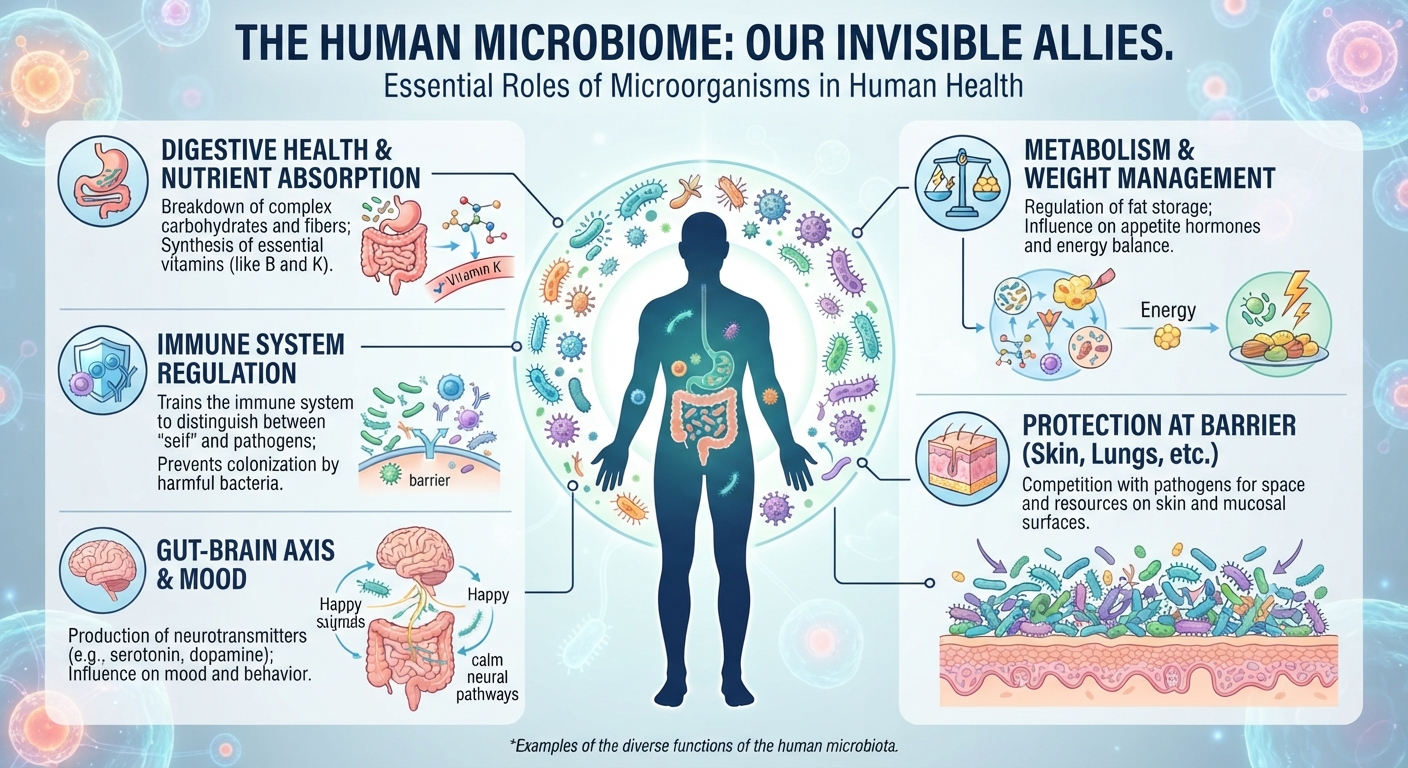
The microbiome is significant because it contributes to digestion, immune-system development, nutrient processing, protection against certain harmful organisms, metabolism, and communication with human biological systems.
Frontiers | P. acnes-Driven Disease Pathology: Current Knowledge and Future Directions
What is the gut microbiome—and how can it affect your health? | National Geographic
Compartmentalized and systemic control of tissue immunity by commensals | Nature Immunology
9
The human body can therefore be understood as a biological partnership between:
- Human cells and organs.
- Microorganisms living in and on the body.
- Chemical substances produced by both.
- The immune system controlling interactions.
- Environmental factors influencing the ecosystem.
2. Understanding the terminology
| Term | Meaning |
|---|---|
| Microorganism | An organism too small to be seen clearly without magnification |
| Microbiota | The community of microorganisms living in a particular environment |
| Microbiome | The microorganisms, their genetic material, and their biological environment/functions, depending on usage |
| Bacteria | Single-celled organisms without a nucleus |
| Archaea | A distinct group of microorganisms different from bacteria |
| Fungi | Organisms including yeasts and microscopic fungal species |
| Virus | A biological entity that reproduces using host cells |
| Symbiosis | A close relationship between different biological organisms |
| Mutualism | A relationship in which both partners benefit |
| Commensalism | A relationship where one benefits while the other is not significantly affected |
| Dysbiosis | An imbalance or disruption in a microbial ecosystem |
3. Architecture of the human microbiome
The microbiome is not evenly distributed throughout the body. Different regions provide different environments, which select for different microorganisms.
Compartmentalized and systemic control of tissue immunity by commensals | Nature Immunology
7
Major microbial environments
A. Intestinal microbiome
The gastrointestinal tract is one of the most densely populated microbial environments in the human body.
The large intestine contains particularly high concentrations of microorganisms.
Its ecosystem includes:
- Bacteria that ferment dietary fibre
- Bacteria that produce organic acids
- Microorganisms involved in vitamin metabolism
- Organisms that compete with potentially harmful microbes
- Microorganisms that interact with immune cells
The intestines function as a major biological interface between food, microorganisms, chemical substances, and the immune system.
B. Skin microbiome
The skin is the body’s largest external biological barrier.
Microorganisms living on the skin help form an ecological community influenced by:
- Temperature
- Moisture
- Sweat
- Sebum
- Skin acidity
- Exposure to the environment
Some skin microorganisms compete with harmful microbes and contribute to the normal functioning of the skin’s protective ecosystem.
C. Oral microbiome
The mouth contains a highly diverse microbial environment.
Microorganisms are found on:
- Teeth
- Tongue
- Gums
- Saliva
- Oral mucosal surfaces
They form organised communities called biofilms.
The oral microbiome contributes to the breakdown of certain substances and influences the ecological balance of the mouth.
D. Respiratory microbiome
The upper respiratory tract, particularly the nose and throat, contains microorganisms.
These communities interact with:
- Airborne particles
- Mucus
- Immune cells
- Respiratory epithelial cells
The respiratory environment is different from the intestinal environment because it has different oxygen levels, moisture, nutrient availability, and physical conditions.
E. Other microbial environments
Microorganisms are also associated with other body locations, including:
- The urinary and reproductive tracts
- The external ear
- The eyes
- Certain body surfaces and mucosal regions
The composition of these communities varies according to age, environment, anatomy, and individual circumstances.
4. The microscopic architecture of microorganisms
Microorganisms possess biological structures that allow them to survive, reproduce, exchange substances, and interact with their environments.
A. Bacterial cell architecture
How Do Antibiotics Kill Bacteria? – LivePhysics
What is X-ray Fluorescence (XRF)
6
A typical bacterial cell may contain:
| Structure | Function |
|---|---|
| Cell membrane | Controls substances entering and leaving |
| Cell wall | Provides structural support and protection |
| Cytoplasm | Internal environment for biochemical reactions |
| Ribosomes | Manufacture proteins |
| DNA | Stores genetic information |
| Flagella | Movement in certain species |
| Pili | Attachment and other functions in some bacteria |
| Capsule | Protective outer layer in certain species |
Bacteria are remarkably diverse. Different species possess different metabolic systems, shapes, genetic capabilities, and environmental tolerances.
B. Microbial shapes
Microbiology diagram show bacterial morphology (coccus, bacillus and spiral)
Lab 4: Bacteria Flashcards | Quizlet
6
Common bacterial shapes include:
- Cocci: spherical or rounded
- Bacilli: rod-shaped
- Spirilla: spiral-shaped
- Vibrios: curved or comma-shaped
Shape can influence how microorganisms move, attach to surfaces, and interact with their surroundings.
5. The intestinal microbiome: a biological processing ecosystem
The intestinal microbiome is particularly important because it participates in the processing of food components that human enzymes cannot fully digest.
What Is the Gut Microbiome? The Complete Science-Backed Guide – BioPhysics Essentials
Frontiers | Advances in intestinal epithelium and gut microbiota interaction
9
5.1 Fermentation of dietary fibre
Certain carbohydrates and fibres pass through the upper digestive tract without being completely digested by human enzymes.
Microorganisms in the colon can ferment these materials.
This produces substances called short-chain fatty acids (SCFAs), particularly:
- Acetate
- Propionate
- Butyrate
These molecules are biologically important.
Butyrate
Butyrate is an important energy source for many colon cells.
It also participates in maintaining the intestinal lining and influences immune signalling.
Acetate
Acetate is a major microbial fermentation product that can enter circulation and be used by various tissues.
Propionate
Propionate is involved in metabolic pathways, including processes associated with the liver.
The production of these molecules demonstrates that the microbiome is not merely present in the body: it actively transforms biological materials into chemicals that can influence human physiology.
6. Microorganisms and nutrient metabolism
The human digestive system and its microorganisms work together in processing food.
The microbiome contributes to the metabolism of:
- Certain dietary fibres
- Resistant starch
- Complex carbohydrates
- Some plant compounds
- Various nutrients and metabolic intermediates
Some microorganisms also contribute to vitamin-related processes.
For example, certain intestinal microorganisms can synthesise vitamin K compounds and some B vitamins.
However, the amount produced, how much is absorbed, and its nutritional significance vary. Microbial vitamin production does not replace the need for a balanced diet.
7. Microorganisms and the immune system
The microbiome is closely connected to the human immune system.
Dysbiosis and the immune system | Nature Reviews Immunology
Probiotics, Prebiotics, and Phytogenic Substances for Gut Health | Encyclopedia MDPI
9
The immune system must distinguish between:
- Normal body tissues
- Harmless or beneficial microorganisms
- Potentially harmful organisms
- Damaged cells
- Foreign substances
Microorganisms help shape this biological environment.
7.1 Immune-system education
Interactions with microorganisms help influence the development and regulation of immune responses, particularly during early life.
The immune system learns to respond appropriately to different biological signals.
7.2 Immune regulation
Some microbial products influence immune-cell signalling and regulatory mechanisms.
These interactions can help maintain a balanced response rather than excessive inflammation.
7.3 Protection against invading microorganisms
The normal microbiota can contribute to resistance against harmful microorganisms through ecological competition.
This includes competition for:
- Nutrients
- Attachment sites
- Space
- Environmental resources
Certain microbial communities also produce substances that influence the growth of other organisms.
This protective ecological function is often called colonisation resistance.
8. Microorganisms and the intestinal barrier
The intestinal wall is an important biological interface.
Its architecture includes:
- Intestinal epithelial cells
- Tight junctions between cells
- Mucus layers
- Immune cells
- Chemical signalling molecules
- Microorganisms living within the intestinal environment
Intestinal Barrier – Tight Junctions | BioRender Science Templates
BPC-157 Peptide: Benefits, Research, Dosage | HL Benefits
8
The barrier allows nutrients and selected substances to be absorbed while limiting the movement of harmful materials into underlying tissues.
Microbial metabolites can influence epithelial function, mucus production, and immune activity.
The intestinal barrier is therefore not a simple wall. It is a dynamic biological control system.
9. Microorganisms and the brain: the gut-brain connection
The intestines and brain communicate through several interconnected pathways.
These include:
- Nervous-system signalling
- The vagus nerve
- Hormones
- Immune signalling
- Microbial metabolites
- Metabolic communication
Gut-Brain Axis: How Gut Health May Shape Mood
Frontiers | The gut microbiota–brain axis in neurological disorder
11
This interconnected network is commonly called the gut-brain axis.
The microbiome may influence aspects of this system by producing or modifying chemical substances that interact with host physiology.
However, the scientific understanding of microbiome influences on mood, cognition, and behaviour is still developing. Many findings are based on laboratory studies, animal experiments, or associations, and not every result has been demonstrated as a direct effect in humans.
10. Microorganisms and metabolism
Microorganisms influence the body’s metabolic environment.
They participate in chemical transformations involving:
- Food-derived compounds
- Bile acids
- Amino acids
- Carbohydrates
- Lipids
- Vitamins
- Plant-derived molecules
The liver, intestines, pancreas, immune system, and microbiome interact within a complex metabolic network.
This relationship is important because metabolism is not controlled by a single organ. It is an interconnected system involving many tissues, chemical signals, and biological processes.
11. Microbial communication and ecosystem organisation
Microorganisms do not always operate as isolated cells.
They can form organised communities and interact with one another.
Some microbial communities communicate through chemical signals. They can change their behaviour according to environmental conditions and the presence of neighbouring microorganisms.
Certain bacteria use systems known as quorum sensing, which allow them to respond to the concentration of signalling molecules within a microbial population.
These systems are involved in some microbial behaviours, including coordinated community activities.
Microbial ecosystems can therefore display:
- Competition
- Cooperation
- Chemical signalling
- Resource sharing
- Environmental adaptation
- Community succession
This resembles ecological processes found in forests, oceans, soil, and other natural environments, although the mechanisms are microscopic.
12. The microbiome and human development
The human microbiome changes throughout life.
Microbiome development across the lifespan
Early life
Initial microbial communities develop and interact with the maturing immune system.
Childhood
Microbial composition changes with diet, surroundings, and development.
Adolescence
Hormonal changes, lifestyle, diet, and other influences affect microbial environments.
Adulthood
Microbial communities may become relatively stable but remain responsive to environmental change.
Older age
Changes in diet, physiology, medication, and living conditions can alter microbial composition.
The microbiome is not a fixed collection of organisms. It is a dynamic ecosystem that responds to the body’s changing conditions.
13. The major microbial groups and their biological significance
The human microbiome contains many different organisms. Their functions depend on the species, their environment, and the interactions between organisms.
1. Bifidobacterium
Important members of the intestinal microbiome, especially during early life. They participate in carbohydrate metabolism and fermentation.
Descubra os benefícios de cada tipo de probiótico e saiba como emagrecer com eles
2. Lactobacillus
Certain species participate in carbohydrate fermentation and produce lactic acid. Some strains are used in fermented foods and studied as probiotics.
Bacteria in the digestive system may work to maintain balance both directly and indirectly
3. Faecalibacterium
Certain species are important fibre-fermenting organisms associated with butyrate production and intestinal ecosystem function.
4. Bacteroides
Important intestinal bacteria capable of processing a range of complex carbohydrates and other materials.
한국인과 외국인 장내미생물, 무슨 차이가 있을까 | 서울신문
5. Akkermansia
A microorganism associated with the mucus layer of the intestine. It is studied for its relationship with intestinal barrier and metabolic biology.
File:Saccharomyces cerevisiae 100x phase-contrast microscopy2.jpg – Wikimedia Commons
6. Yeasts
Fungi are also part of microbial ecosystems. Some yeasts are useful in food production, while others can cause infections under certain conditions.
These are examples, not a complete list. The human microbiome contains thousands of microbial species and many more microbial strains.
14. Microorganisms as biological factories
One of the most important scientific discoveries concerning microorganisms is that they function as biological chemical-processing systems.
They can transform materials through biochemical reactions.
Simplified microbial processing architecture
Food and environmental substancesFibre · carbohydrates · proteins · other compounds
Microbial enzymesBiological catalysts process available materials
Microbial metabolismFermentation and other chemical pathways
Metabolic productsOrganic acids · gases · vitamins · other molecules
Human biological responsesAbsorption · signalling · metabolism · immune interaction
This process is an example of the relationship between microbiology, biochemistry, molecular biology, and human physiology.
15. Microbiome ecosystem: food, environment, and balance
Microbial populations are influenced by many factors.
| Factor | Potential influence |
|---|---|
| Dietary diversity | Supplies different substrates to microbial communities |
| Fibre intake | Supports fermentation by certain organisms |
| Antibiotics | Can affect susceptible microbial populations |
| Age | Changes microbial ecology throughout life |
| Environment | Influences exposure to microorganisms |
| Sleep and daily rhythms | Interact with host physiology and microbial rhythms |
| Physical activity | Associated with changes in host physiology and microbial composition |
| Medication | Can alter microbial communities or their metabolism |
| Illness | May change the environment supporting microbial populations |
A healthy microbiome is not necessarily defined by having the highest number of species or one particular species.
Health is more closely related to the functional capability, ecological stability, and interaction of microbial communities with the host. Scientists are still investigating how best to define a healthy microbiome across different people.
16. Dysbiosis: disruption of microbial balance
Dysbiosis refers broadly to changes in microbial composition or function that may be associated with an unhealthy biological environment.
It may involve:
- Reduced abundance of particular organisms
- Changes in microbial diversity
- Expansion of certain organisms
- Loss of important metabolic functions
- Changes in microbial products
Dysbiosis is associated with various diseases and biological conditions in research. However, association does not necessarily mean that microbial imbalance caused the disease.
Disease itself can change the microbiome. Diet, medication, environment, and other factors may also affect both microbial composition and health.
Therefore, microbiome research requires careful distinction between:
- Cause
- Consequence
- Correlation
- Mechanism
17. The microbiome and biotechnology
Microorganisms are central to modern biotechnology.
Humanity has used microorganisms for thousands of years, long before understanding their microscopic architecture.
National Reference Laboratory | Pathkind Labs
Biotecnología de las fermentaciones
7
Major applications
Food production
Microorganisms are used in producing:
- Yoghurt
- Cheese
- Bread
- Certain fermented vegetables
- Other fermented foods
Medicine
Microorganisms and microbial biotechnology contribute to:
- Research into medicines
- Production of certain biological products
- Understanding infectious diseases
- Vaccine research and manufacturing
- Development of diagnostic methods
Agriculture
Microorganisms are important in:
- Soil nutrient cycling
- Decomposition
- Plant nutrient availability
- Ecosystem functioning
- Agricultural biotechnology
Environmental science
Microbial communities participate in:
- Waste decomposition
- Nutrient recycling
- Wastewater treatment
- Carbon cycling
- Nitrogen cycling
The human microbiome is therefore one component of a much wider microbial world that sustains ecosystems and modern industry.
18. The scientific architecture of microbiome research
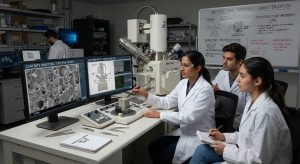
Scientists investigate microorganisms using several technological systems.
JMF | Joint Microbiome Facility
End-to-End Microbiome Platform with AI Prediction Models | BiomeDx
10
A. Microscopy
Microscopy allows scientists to observe:
- Cell shape
- Cell arrangement
- Microbial communities
- Surface structures
- Certain interactions between organisms
B. DNA sequencing
DNA sequencing helps researchers identify microorganisms and examine their genetic material.
C. Metagenomics
Metagenomics studies genetic material collected from microbial communities.
It can reveal which organisms may be present and what biological capabilities their genes encode.
D. Metabolomics
Metabolomics measures small molecules produced or modified by biological systems.
This is particularly important because identifying microorganisms alone does not necessarily reveal what they are doing.
E. Bioinformatics and artificial intelligence
Computational systems analyse large amounts of microbial data to investigate:
- Species relationships
- Genetic patterns
- Metabolic pathways
- Ecosystem changes
- Relationships between microbiomes and health
Modern microbiome science is a combination of biology, chemistry, computer science, statistics, genomics, and medicine.
19. A systems-level model of the human microbiome
The human body can be understood as a network of interacting biological systems.
External environmentFood · water · air · surroundings
Microbial ecosystemBacteria · fungi · archaea · microbial genes
Biochemical networkEnzymes · fermentation · metabolites · signalling
Human physiological systemsDigestive · immune · nervous · metabolic systems
Whole-body health and adaptationBiological function · resilience · development
This is a simplified model. In reality, feedback loops operate in both directions: human physiology affects microorganisms, and microorganisms can affect human physiology.
20. The significance of human microorganisms
The significance of the microbiome can be summarised through seven major biological functions.
How Do SCFAs Support Gut Barrier and Metabolic Health?
1. Digestive assistance
Microorganisms help process dietary materials that human digestive enzymes cannot completely break down.
2. Immune development
They interact with immune cells and contribute to the development and regulation of immune responses.
Gut Microbiota and Short Chain Fatty Acids: Implications in Glucose Homeostasis
3. Chemical production
They produce and transform substances such as short-chain fatty acids and other metabolites.
Checking your browser – reCAPTCHA
4. Barrier support
Microbial interactions contribute to the functioning of the intestinal environment and its protective barrier.
Checking your browser – reCAPTCHA
5. Ecological protection
Normal microbial communities compete with potentially harmful organisms and help maintain ecological stability.
Butterflies in Your Belly: The Microbiota-Gut-Brain Axis
6. Biological communication
Microbial products participate in interactions involving the nervous, immune, endocrine, and metabolic systems.
7. Scientific and technological innovation
Microorganisms provide major opportunities for research in biotechnology, agriculture, medicine, nutrition, and environmental science.
21. Future scientific discoveries
Microbiome science is still developing. Future research may improve our understanding of:
- How microorganisms interact with human genes.
- How microbial chemical signals influence different organs.
- How the microbiome changes during human development.
- How microorganisms contribute to nutrition and metabolism.
- How microbial ecosystems respond to environmental change.
- How individual microbiomes differ between people.
- How microbial genetic information can support personalised scientific research.
- How artificial intelligence can identify relationships within complex microbiome datasets.
One major challenge is that the same microorganism may behave differently in different environments. Its effects depend on the surrounding ecosystem, the host, available nutrients, and other microbial species.
This means future research will increasingly focus on microbial functions and interactions, not simply identifying individual organisms.
22. Final conclusion
Human microorganisms represent a hidden biological dimension of human life.
They form complex ecosystems that interact with human organs, tissues, immune cells, biochemical pathways, and environmental conditions. They help process food, transform chemicals, participate in immune regulation, compete with potentially harmful organisms, and contribute to biological communication.
The human body is therefore best understood as an interconnected biological system consisting of human cells, microbial communities, biochemical reactions, genetic information, and environmental interactions.
The microbiome is one of the most fascinating frontiers of modern science because it connects microbiology, molecular biology, genetics, biochemistry, immunology, neuroscience, nutrition, and biotechnology.
The central scientific principle is that human health and biological function emerge from interactions between multiple systems—not from human cells operating in isolation.


Be First to Comment