
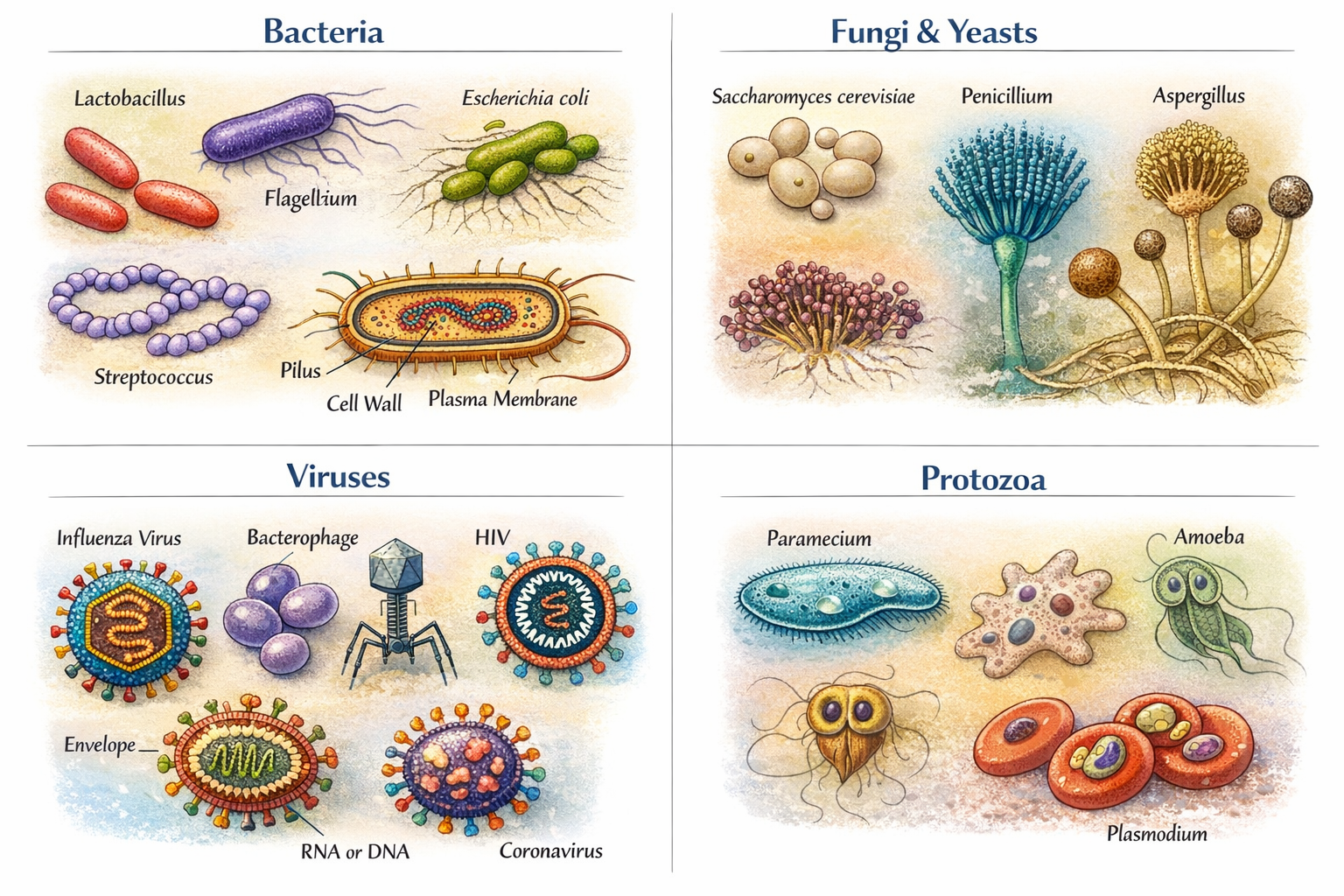
Introduction: The Invisible Architects of Our World
Microorganisms represent the most abundant, diverse, and ancient forms of life on Earth. These microscopic entities—invisible to the naked eye yet omnipresent—have shaped our planet’s atmosphere, geology, and biology for over 3.5 billion years. From the depths of ocean trenches to the heights of the stratosphere, from arctic ice to volcanic hot springs, microorganisms thrive in virtually every conceivable environment. They outnumber all other life forms combined, with an estimated 10³¹ (ten nonillion) individual microorganisms inhabiting our planet, a number so vast it exceeds the stars in the observable universe.
This comprehensive exploration examines 50 significant microorganisms, their anatomy, ecological roles, and profound impacts on human health, other organisms, and planetary systems.
I. BACTERIA: The Ancient Prokaryotes
1. Escherichia coli (E. coli)
Classification: Beneficial and potentially pathogenic Anatomy: Rod-shaped (bacillus), 2 micrometers long, 0.5 micrometers wide, with flagella for motility, single circular chromosome, plasmids Significance: The most studied organism in biology. Beneficial strains colonize the human gut, producing vitamin K2 and preventing pathogen colonization. Pathogenic strains (O157:H7) cause severe food poisoning. Essential in biotechnology for insulin production, genetic engineering, and molecular biology research. In humans, comprises about 0.1% of intestinal flora but serves crucial metabolic functions.
2. Lactobacillus acidophilus
Classification: Beneficial Anatomy: Rod-shaped, non-motile, 0.6-0.9 micrometers wide, forms chains, thick peptidoglycan cell wall Significance: A probiotic powerhouse inhabiting the human gastrointestinal tract and vagina. Produces lactic acid, lowering pH to inhibit pathogens. Aids lactose digestion, synthesizes vitamins, enhances immune function. Critical for yogurt and fermented food production. Populations of 10⁸-10⁹ cells/gram in healthy intestines contribute to digestive health across mammals.
3. Streptococcus pneumoniae
Classification: Pathogenic Anatomy: Spherical (coccus), 0.5-1.25 micrometers, forms pairs or chains, polysaccharide capsule that evades immune detection Significance: Leading cause of bacterial pneumonia, meningitis, and otitis media, causing over 1 million deaths annually, primarily in children under five. Its polysaccharide capsule research led to DNA discovery as genetic material. Demonstrates antibiotic resistance evolution, making it a critical public health concern.
4. Bacillus anthracis
Classification: Pathogenic Anatomy: Large rod-shaped, 1-1.2 by 3-5 micrometers, forms highly resistant endospores, produces protective anthrax toxin Significance: Causes anthrax in humans and livestock. Its endospores can survive centuries in soil, affecting agricultural ecosystems. Historical significance in germ theory development (Koch’s postulates) and bioterrorism concerns. Natural soil inhabitant that becomes dangerous when transmitted to mammals.
5. Mycobacterium tuberculosis
Classification: Pathogenic Anatomy: Thin rod, 0.2-0.5 by 2-4 micrometers, distinctive waxy cell wall rich in mycolic acids making it acid-fast Significance: Causes tuberculosis, infecting approximately one-quarter of the global population (latent form), with 10 million active cases annually and 1.5 million deaths. Its slow growth (15-20 hour division time) and waxy cell wall make treatment difficult. Co-evolution with humans spans millennia, significantly impacting human history and population dynamics.
6. Clostridium botulinum
Classification: Pathogenic Anatomy: Rod-shaped anaerobe, 0.5-2 by 3-20 micrometers, forms terminal endospores giving “drumstick” appearance Significance: Produces botulinum toxin, the most poisonous biological substance known (lethal dose: 1-3 nanograms/kg). Causes botulism from improperly preserved foods. Paradoxically beneficial: Botox for medical and cosmetic applications. Found in soil and aquatic sediments globally, playing roles in decomposition under anaerobic conditions.
7. Rhizobium species
Classification: Beneficial Anatomy: Rod-shaped, 0.5-1 by 1.2-3 micrometers, motile with flagella, forms specialized bacteroid forms within plant nodules Significance: Critical nitrogen-fixing symbiont of leguminous plants. Converts atmospheric nitrogen (N₂) into ammonia, making nitrogen bioavailable. Enables legumes to thrive in nitrogen-poor soils. Reduces agricultural nitrogen fertilizer needs by 50-70 million tons annually, preventing equivalent greenhouse gas emissions. Essential for sustainable agriculture and natural ecosystem nitrogen cycles.
8. Cyanobacteria (Anabaena, Nostoc, Synechococcus species)
Classification: Beneficial Anatomy: Variable morphology—spherical to filamentous, 0.5-100 micrometers, contain thylakoid membranes with chlorophyll and phycobilins Significance: Performed Earth’s first oxygenic photosynthesis 2.4 billion years ago, creating our oxygen-rich atmosphere (Great Oxidation Event). Today produce 20-30% of Earth’s oxygen. Form basis of aquatic food webs. Nitrogen-fixing capabilities enrich aquatic and terrestrial ecosystems. Some produce toxins (microcystins) during harmful blooms, affecting water supplies. Ancestors of chloroplasts in plants through endosymbiosis.
9. Helicobacter pylori
Classification: Pathogenic (but complex relationship) Anatomy: Spiral-shaped (helical), 0.5-1 by 2.5-5 micrometers, multiple flagella, produces urease enzyme Significance: Inhabits human stomach lining in ~50% of global population. Causes gastric ulcers and increases stomach cancer risk. However, emerging evidence suggests its absence correlates with increased esophageal cancer and childhood asthma, suggesting co-evolutionary benefits. Revolutionary discovery (1982) overturned belief that bacteria couldn’t survive stomach acid, earning Nobel Prize (2005).
10. Staphylococcus aureus
Classification: Pathogenic/Commensal Anatomy: Spherical, 0.5-1.5 micrometers, forms grape-like clusters, thick peptidoglycan wall Significance: Colonizes ~30% of human nasal passages harmlessly but causes serious infections (boils, pneumonia, septicemia, toxic shock syndrome). MRSA (methicillin-resistant S. aureus) exemplifies antibiotic resistance crisis. Produces various toxins and enzymes that degrade tissue. Important model for studying pathogenesis and host-pathogen interactions.
11. Salmonella enterica
Classification: Pathogenic Anatomy: Rod-shaped, 0.7-1.5 by 2-5 micrometers, motile with peritrichous flagella, type III secretion system Significance: Causes typhoid fever (S. typhi) and gastroenteritis (S. typhimurium and others). Approximately 21 million typhoid cases annually with 200,000 deaths. Contaminates food and water through fecal-oral route. Asymptomatic carriers (“Typhoid Mary”) can spread disease. Natural reservoir in birds and reptiles links wildlife to human disease.
12. Vibrio cholerae
Classification: Pathogenic Anatomy: Curved rod (comma-shaped), 0.5-0.8 by 1.4-2.6 micrometers, single polar flagellum Significance: Causes cholera, producing severe diarrhea and dehydration (up to 20 liters fluid loss/day if untreated). Major historical pandemic pathogen, still causes 1.3-4 million cases annually. Lives naturally in brackish water and estuaries, forming biofilms on zooplankton. Links human disease to aquatic ecosystems and climate patterns. Cholera research founded epidemiology (John Snow, 1854).
13. Pseudomonas aeruginosa
Classification: Pathogenic opportunist Anatomy: Rod-shaped, 0.5-0.8 by 1.5-3 micrometers, polar flagella, produces distinctive blue-green pigment (pyocyanin) Significance: Ubiquitous in soil and water, low virulence in healthy individuals but devastating in immunocompromised patients and burn victims. Major cause of cystic fibrosis lung infections and nosocomial (hospital-acquired) infections. Remarkable metabolic versatility allows survival in diverse environments. Intrinsically resistant to many antibiotics. Important in bioremediation of petroleum pollutants.
14. Bifidobacterium species
Classification: Beneficial Anatomy: Irregular rod-shaped (Y or V forms), 0.5-1.3 by 1.5-8 micrometers, non-motile, anaerobic Significance: Dominant bacteria in breastfed infant intestines (>90% of gut flora), protecting against enteric pathogens. Adults harbor lower levels but remain important for gut health. Ferment dietary fiber producing short-chain fatty acids that nourish intestinal cells. Modulate immune system development. Key probiotic species in supplements and functional foods.
15. Streptomyces species
Classification: Beneficial Anatomy: Filamentous, forms branching mycelium resembling fungi, produces aerial hyphae and spores Significance: Soil-dwelling bacteria producing earthy “petrichor” smell after rain. Most important antibiotic-producing organisms: streptomycin, tetracycline, erythromycin, neomycin, and over 75% of clinically useful antibiotics originate from Streptomyces. Decompose recalcitrant organic matter including chitin and cellulose. Harbor complex secondary metabolomes with potential for novel drug discovery.
16. Nitrosomonas and Nitrobacter species
Classification: Beneficial Anatomy: Various shapes (rods, spheres), 0.5-2 micrometers, extensive internal membranes for energy metabolism Significance: Nitrifying bacteria essential for nitrogen cycle. Nitrosomonas oxidizes ammonia to nitrite; Nitrobacter oxidizes nitrite to nitrate. Enable plant nitrogen uptake in soils and complete nitrogen cycling in aquatic systems. Critical for wastewater treatment, removing toxic ammonia. Population densities in soil reach 10⁴-10⁶ cells/gram, cycling millions of tons of nitrogen annually.
17. Mycoplasma pneumoniae
Classification: Pathogenic Anatomy: Pleomorphic (variable shape), 0.1-0.3 micrometers, lacks cell wall, smallest free-living organisms Significance: Causes “walking pneumonia,” accounting for 20-40% of community-acquired pneumonia cases. Its lack of cell wall makes it naturally resistant to beta-lactam antibiotics. Minimal genome (816 genes) makes it valuable for synthetic biology research. Studies inform understanding of minimal life requirements.
18. Thermus aquaticus
Classification: Beneficial Anatomy: Rod-shaped, 0.5-0.8 by 5-10 micrometers, thermophilic (heat-loving), forms yellow-brown colonies Significance: Lives in hot springs at 50-80°C. Source of Taq polymerase enzyme used in PCR (polymerase chain reaction), revolutionizing molecular biology, forensics, medical diagnostics, and biotechnology. Discovery exemplifies bioprospecting value. Demonstrates life’s adaptability to extreme conditions.
19. Clostridium tetani
Classification: Pathogenic Anatomy: Rod-shaped, 0.5-1.7 by 2-18 micrometers, produces terminal round endospores (“drumstick” appearance), strictly anaerobic Significance: Causes tetanus (“lockjaw”) through tetanospasmin neurotoxin, causing painful muscle spasms and potentially fatal respiratory failure. Spores ubiquitous in soil and animal feces, entering through wounds. Despite effective vaccine, causes 34,000-50,000 deaths annually, mostly in regions with inadequate vaccination. Demonstrates importance of vaccination programs.
20. Yersinia pestis
Classification: Pathogenic Anatomy: Rod-shaped coccobacillus, 0.5-0.8 by 1-3 micrometers, non-motile, forms capsule at body temperature Significance: Causes bubonic, septicemic, and pneumonic plague. Historical devastation includes Black Death (1347-1353) killing 30-60% of Europe. Transmitted by fleas from rodent reservoirs, demonstrating complex ecological relationships. Modern cases (~650 annually) occur primarily in Africa. Exemplifies how vector-borne zoonotic diseases shaped human civilization.
II. ARCHAEA: The Extremophiles
21. Methanobrevibacter smithii
Classification: Beneficial Anatomy: Short rods, 0.4-0.7 by 1-2 micrometers, lacks peptidoglycan cell wall (has pseudomurein instead) Significance: Most abundant archaeon in human gut (up to 10% of anaerobic microbiota). Produces methane by consuming hydrogen and CO₂, facilitating efficient microbial fermentation. Influences caloric extraction from food and may affect obesity. Humans release 0.2-1.5 liters of methane daily through gut archaea. Represents archaea’s integration into animal microbiomes.
22. Halobacterium salinarum
Classification: Beneficial (environmental) Anatomy: Rod-shaped, 0.5-1 by 3-8 micrometers, contains purple membrane with bacteriorhodopsin protein Significance: Thrives in extreme salt concentrations (4-5 M NaCl, 10x seawater). Uses light-harvesting bacteriorhodopsin for energy, converting light to chemical energy without photosynthesis. Produces distinctive pink-red pigmentation in hypersaline environments. Model organism for studying membrane proteins and sensory rhodopsins. Demonstrates alternative energy mechanisms.
23. Pyrococcus furiosus
Classification: Beneficial (biotechnology) Anatomy: Spherical, 0.8-2.5 micrometers diameter, tuft of flagella, hyperthermophile Significance: Lives in deep-sea hydrothermal vents at 70-103°C, near water’s boiling point at those depths. Produces thermostable enzymes valuable for biotechnology. Demonstrates life at temperature extremes, informing search for extraterrestrial life. Represents ancient metabolic pathways from Earth’s early hot conditions. Its DNA polymerase (Pfu) used in high-fidelity PCR.
24. Sulfolobus species
Classification: Beneficial (environmental) Anatomy: Irregular spherical, 0.8-2 micrometers, archaeal flagella (archaella), lacks cell wall Significance: Acidothermophile living in volcanic hot springs (pH 2-3, 75-80°C). Oxidizes sulfur for energy. Cell membrane contains unique tetraether lipids stable at extreme conditions. Studies inform understanding of early Earth environments. Potential for biomining applications, extracting metals from low-grade ores.
III. FUNGI: The Decomposers and Symbionts
25. Saccharomyces cerevisiae (Baker’s/Brewer’s Yeast)
Classification: Beneficial Anatomy: Oval cells, 5-10 micrometers, single-celled fungus, reproduces by budding, contains nucleus and organelles Significance: Essential for bread leavening, beer/wine fermentation for 8,000+ years. First eukaryote with complete genome sequenced (1996). Primary model organism for eukaryotic cell biology, genetics, and aging research. Produces ethanol and CO₂ through fermentation. Industrial applications produce pharmaceuticals, biofuels, enzymes. Natural habitat: fruit surfaces and tree bark.
26. Candida albicans
Classification: Pathogenic/Commensal Anatomy: Dimorphic—yeast form (4-6 micrometers ovals) and hyphal form (elongated filaments), transitions based on environment Significance: Normal component of human oral cavity, gut, and genital tract in 40-60% of healthy adults. Opportunistic pathogen causing thrush (oral infection), vaginitis, and life-threatening systemic infections in immunocompromised patients. Morphological switching between yeast and hyphal forms correlates with virulence. Model for studying fungal pathogenesis and commensal-pathogen transitions.
27. Aspergillus fumigatus
Classification: Pathogenic Anatomy: Filamentous, forms branching hyphae network, produces conidiophores with chains of airborne spores (2-3 micrometers) Significance: Ubiquitous soil fungus that decomposes organic matter. Humans inhale hundreds of spores daily harmlessly, but causes invasive aspergillosis in immunocompromised patients (30-90% mortality). Allergic bronchopulmonary aspergillosis affects asthmatics and cystic fibrosis patients. Demonstrates how environmental decomposers become pathogens in vulnerable hosts.
28. Penicillium chrysogenum
Classification: Beneficial Anatomy: Filamentous mold, branching hyphae with brush-like conidiophores, blue-green appearance from spores Significance: Source of penicillin, the first mass-produced antibiotic, revolutionizing medicine (1940s). Fleming’s 1928 discovery began antibiotic era, saving hundreds of millions of lives. Natural habitat: soil and decaying vegetation. Also produces other metabolites useful for food production (Penicillium camemberti/roqueforti for cheese). Demonstrates fungi’s sophisticated chemical warfare against bacteria.
29. Cryptococcus neoformans
Classification: Pathogenic Anatomy: Encapsulated yeast, 4-6 micrometers, thick polysaccharide capsule (up to 30 micrometers total diameter) Significance: Soil-dwelling fungus enriched in bird droppings. Causes cryptococcal meningoencephalitis, leading cause of fungal meningitis especially in HIV/AIDS patients (220,000 cases annually with 180,000 deaths). Capsule enables immune evasion. Model for studying fungal virulence and host immunity.
30. Pneumocystis jirovecii
Classification: Pathogenic Anatomy: Atypical fungus, 4-6 micrometers, lacks ergosterol in cell membrane (typical fungal sterol) Significance: Causes Pneumocystis pneumonia (PCP) exclusively in immunocompromised hosts, particularly AIDS patients before effective antiretroviral therapy (leading AIDS-defining illness). Colonizes healthy lungs asymptomatically in most people. Cannot be cultured in vitro, complicating research. Demonstrates specialized adaptation to mammalian lungs.
31. Arbuscular Mycorrhizal Fungi (Glomus species)
Classification: Beneficial Anatomy: Produces extensive branching hyphae networks, forms tree-like arbuscules inside plant root cells Significance: Symbiotic relationship with 80% of terrestrial plant species for 400 million years. Extends plant root systems 100-1000x through hyphal networks, enhancing water and nutrient (especially phosphorus) uptake. Plants provide fungi with carbohydrates. Form “wood-wide web” connecting plants underground. Essential for ecosystem function, agriculture, and plant evolution. Estimated 50,000 km of hyphae per cubic meter of soil.
32. Malassezia species
Classification: Commensal/Pathogenic Anatomy: Lipophilic yeast, 2-5 micrometers, requires fatty acids for growth, unusual cell wall composition Significance: Dominant fungal component of human skin microbiome, comprising >50% of skin fungi. Normally harmless but causes dandruff, seborrheic dermatitis, and tinea versicolor. Feeds on sebaceous oils. Demonstrates how environmental conditions shift commensals toward pathogenicity. Present on skin of all humans by three months of age.
IV. PROTOZOA: The Unicellular Eukaryotes
33. Plasmodium species (P. falciparum, P. vivax)
Classification: Pathogenic Anatomy: Complex life cycle with multiple morphological stages; sporozoites (10-15 micrometers) inject by mosquitoes, merozoites (1-2 micrometers) invade red blood cells Significance: Causes malaria, one of humanity’s deadliest diseases with 247 million cases and 619,000 deaths annually (2021), primarily African children. Complex life cycle involves mosquito vector and human host. P. falciparum most deadly; P. vivax most widespread. Has shaped human genetics (sickle cell trait provides partial resistance). Major barrier to economic development in endemic regions.
34. Giardia lamblia
Classification: Pathogenic Anatomy: Pear-shaped trophozoite, 12-15 micrometers, with two nuclei giving “face-like” appearance, four pairs of flagella, ventral adhesive disc Significance: Causes giardiasis, leading protozoal cause of diarrheal disease globally (280 million cases annually). Waterborne transmission through resistant cysts contaminates drinking and recreational water. Common in developing countries with poor sanitation. Infects wide range of mammals, creating zoonotic reservoir. Evolutionarily ancient, lacking mitochondria (instead has mitosomes).
35. Entamoeba histolytica
Classification: Pathogenic Anatomy: Trophozoite stage 15-60 micrometers, highly motile with pseudopodia, ingests red blood cells; cyst stage 10-15 micrometers with 1-4 nuclei Significance: Causes amoebic dysentery and liver abscesses. Approximately 50 million cases annually with 100,000 deaths. Fecal-oral transmission through contaminated water/food. Most infections asymptomatic but potentially severe. Trophozoites lyse intestinal epithelium, causing characteristic “flask-shaped” ulcers. Demonstrates convergent evolution of pathogenesis with unrelated bacteria.
36. Trypanosoma brucei
Classification: Pathogenic Anatomy: Elongated, 15-40 micrometers, single flagellum creating undulating membrane, kinetoplast (mitochondrial DNA mass) Significance: Causes African sleeping sickness (trypanosomiasis) transmitted by tsetse flies. 10,000 cases annually but historically devastated populations. Crosses blood-brain barrier causing neurological symptoms. Remarkable antigenic variation (periodically changes surface proteins) evades immune responses. Affects 36 African countries, limiting livestock agriculture. Related T. cruzi causes Chagas disease in Americas.
37. Toxoplasma gondii
Classification: Pathogenic (complex relationship) Anatomy: Crescent-shaped trophozoite, 4-6 micrometers, apical complex for host cell invasion, forms tissue cysts (50-100 micrometers) containing thousands of bradyzoites Significance: Infects approximately one-third of global human population, usually asymptomatically. Definitive host: cats; intermediate hosts: virtually all warm-blooded animals. Causes toxoplasmosis, dangerous to fetuses and immunocompromised. Manipulates rodent behavior, reducing fear of cat odor—remarkable parasite-induced behavioral modification. May subtly affect human behavior and cognition. Model for studying parasite-host interactions and immune evasion.
38. Paramecium species
Classification: Beneficial (environmental) Anatomy: Slipper-shaped, 50-300 micrometers, covered with thousands of cilia in rows, two nuclei (macronucleus and micronucleus), contractile vacuoles Significance: Free-living freshwater protozoan feeding on bacteria and small eukaryotes. Critical link in aquatic food webs, controlling bacterial populations. Classic model organism in biology education and research (genetics, behavior, cellular processes). Demonstrates cellular complexity achievable in single cell. Populations reach 10³-10⁴ cells/liter in nutrient-rich waters.
39. Leishmania species
Classification: Pathogenic Anatomy: Amastigote form in mammals (2-5 micrometers, oval with kinetoplast), promastigote in sand fly vector (elongated, 15-20 micrometers, flagellated) Significance: Causes leishmaniasis spectrum: cutaneous (skin sores), mucocutaneous (destroys facial tissues), visceral/kala-azar (affects organs, 90% fatal untreated). 1 million new cases annually. Transmitted by phlebotomine sand flies. Infects macrophages, paradoxically thriving in cells meant to destroy pathogens. Climate change expanding vector range. Major neglected tropical disease.
40. Diatoms (multiple genera)
Classification: Beneficial Anatomy: Single-celled algae with unique silica cell walls (frustules) forming intricate geometric patterns, 2-200 micrometers, contain chloroplasts Significance: Produce 20-25% of Earth’s oxygen—as much as all rainforests combined. Form base of aquatic food webs. Create half of global organic matter through photosynthesis. Accumulate as diatomaceous earth deposits used industrially (filtration, abrasives). Indicator species for water quality. Over 100,000 species estimated. Biomass production: 6-8 billion tons carbon annually. Evolutionary innovation of glass architecture.
V. VIRUSES: The Obligate Intracellular Entities
41. Influenza Virus
Classification: Pathogenic Anatomy: Enveloped virus, 80-120 nanometers, spherical to filamentous, segmented RNA genome (8 segments), surface proteins hemagglutinin (HA) and neuraminidase (NA) Significance: Causes seasonal flu (3-5 million severe cases, 290,000-650,000 deaths annually). Antigenic shift/drift enables immune evasion, necessitating annual vaccines. Pandemic potential: 1918 Spanish flu killed 50-100 million. Infects humans, birds, pigs; reassortment in pigs creates pandemic strains. Demonstrates viral evolution, zoonotic emergence, and public health challenges.
42. Bacteriophages (various species)
Classification: Beneficial Anatomy: Diverse morphologies; T4 phage has icosahedral head (95 nanometers), contractile tail (80 nanometers), tail fibers for bacterial surface recognition Significance: Most abundant biological entities on Earth (10³¹ estimated, outnumbering bacteria 10:1). Kill ~40% of ocean bacteria daily, driving bacterial evolution and regulating populations. Critical for nutrient cycling in aquatic ecosystems. Horizontal gene transfer agents between bacteria. Phage therapy: alternative to antibiotics for resistant bacterial infections. Shaped bacterial evolution for billions of years.
43. Human Immunodeficiency Virus (HIV)
Classification: Pathogenic Anatomy: Enveloped retrovirus, 120 nanometers diameter, cone-shaped capsid, two RNA copies, reverse transcriptase enzyme, surface protein gp120 Significance: Causes AIDS, pandemic affecting 38.4 million people (2021). Killed 40 million since 1981. Destroys CD4+ T cells, crippling immune system. Integrates into host genome via reverse transcriptase. High mutation rate enables immune escape and drug resistance. Transformed from fatal to chronic manageable disease in developed countries through antiretroviral therapy. Major driver of viral research advances.
44. SARS-CoV-2
Classification: Pathogenic Anatomy: Enveloped coronavirus, 50-140 nanometers, distinctive spike proteins protruding from surface, positive-sense single-stranded RNA genome (~30,000 bases) Significance: Causes COVID-19 pandemic (2019-present): 770 million cases, 7 million deaths officially (likely undercounted). Demonstrated modern pandemic potential despite medical advances. Rapid vaccine development (mRNA vaccines) showcased biotechnology achievements. Economic disruption exceeded $10 trillion globally. Spike protein binds ACE2 receptor for cell entry. Ongoing evolution produces variants with altered transmissibility and immune escape.
45. Human Papillomavirus (HPV)
Classification: Pathogenic (some types) Anatomy: Non-enveloped, icosahedral, 52-55 nanometers, circular double-stranded DNA genome Significance: Most common sexually transmitted infection; most sexually active people acquire HPV. Over 200 types; some (HPV 6, 11) cause benign warts; others (HPV 16, 18) cause cervical, oropharyngeal, and other cancers (70% of cervical cancer). 600,000 cancer cases annually worldwide. Highly successful prophylactic vaccine prevents oncogenic types. Demonstrates viral oncogenesis and vaccine triumph.
46. Tobacco Mosaic Virus (TMV)
Classification: Pathogenic to plants Anatomy: Rod-shaped, 300 by 18 nanometers, helical structure, single-stranded RNA, 2,130 copies of identical coat protein Significance: First virus ever discovered (1892) and crystallized (1935). Causes mosaic pattern disease in tobacco and other plants, reducing crop yields. Historical importance in virology development and understanding life at molecular level. Model for studying virus structure and assembly. Demonstrates viruses affect all life kingdoms. Now used as nanotechnology scaffold for drug delivery and materials science.
47. Herpes Simplex Virus (HSV-1 and HSV-2)
Classification: Pathogenic Anatomy: Enveloped, icosahedral, 180-200 nanometers, double-stranded DNA genome (152,000 base pairs), tegument layer between capsid and envelope Significance: HSV-1 (oral herpes) infects ~67% of population; HSV-2 (genital herpes) ~13%. Establishes latency in nerve cells, periodically reactivating throughout life. Cannot be eliminated by immune system or current treatments. Model for studying latent viral infections and neurovirology. Related herpesviruses (varicella-zoster, cytomegalovirus, Epstein-Barr) affect billions. Demonstrates virus-host coevolution toward non-lethal persistence.
48. Poliovirus
Classification: Pathogenic (nearly eradicated) Anatomy: Non-enveloped, icosahedral, 30 nanometers, positive-sense single-stranded RNA, simple structure with only 4 proteins Significance: Caused devastating paralytic poliomyelitis epidemics until vaccine development (Salk 1955, Sabin 1961). Global eradication campaign reduced cases from 350,000 annually (1988) to 30 (2022). Endemic in only 2 countries (Pakistan, Afghanistan). Demonstrates vaccine success and challenges of disease eradication. Fecal-oral transmission links sanitation to disease control.
VI. ALGAE: The Primary Producers
49. Chlorella species
Classification: Beneficial Anatomy: Spherical green algae, 2-10 micrometers, single cell with cup-shaped chloroplast, cell wall, reproduces by autospores Significance: Widespread freshwater algae with extremely rapid growth rate (doubling every 20 hours). Produces high protein content (50-60% dry weight). Investigated for biofuel production, wastewater treatment, and as nutritional supplement. Highly efficient photosynthesis converts 3-8% of solar energy to biomass (vs. 0.5% for terrestrial plants). Potential for food security and sustainable biotechnology. Model organism for photosynthesis research.
50. Dinoflagellates (Karenia brevis, Alexandrium species)
Classification: Both beneficial and harmful Anatomy: Single cells, 20-100 micrometers, two flagella (one encircles cell, one trailing), some possess cellulose plates, many photosynthetic but some heterotrophic Significance: Major marine phytoplankton producing significant oxygen and forming food web base. Some species bioluminescent, creating spectacular ocean light displays. However, harmful algal blooms (HABs/”red tides”) produce neurotoxins (saxitoxin, brevetoxin) killing fish, marine mammals, causing shellfish poisoning in humans. K. brevis blooms cause millions in economic losses to fisheries and tourism. Demonstrate how essential organisms become harmful when environmental conditions shift. Climate change and nutrient pollution increasing bloom frequency and intensity.
Global Microorganism Populations and Distribution
Quantifying the Microbial World
The total number of micro organisms on Earth represents numbers almost incomprehensible to human cognition:
Bacteria: Estimated 10³⁰ cells globally
- Ocean: 10²⁸ cells (largest reservoir)
- Soil: 2.6 × 10²⁹ cells
- Subsurface (deep Earth): 2-6 × 10²⁹ cells
- Animal/human hosts: 10²³ cells
- Atmosphere: 10²² cells
Archaea: Estimated 10²⁹ cells
- Predominantly in oceans and deep subsurface
- Comprise up to 20% of ocean biomass
Fungi: Estimated 10²⁹-10³⁰ cells (including spores)
- 2-6 million species estimated (only ~150,000 described)
- Soil fungal biomass: 1,500 kg/hectare in forests
Protozoa: Estimated 10²⁷ cells
- Aquatic and soil habitats
- 50,000 described species, possibly 500,000 total
Viruses: Estimated 10³¹ particles
- Most abundant biological entities
- 10¹⁵ pass through Earth’s atmosphere daily
Total estimated microorganisms: ~10³¹
To contextualize: if each microorganism were a grain of sand, they would cover Earth’s entire surface 200 meters deep.
Microbial Biomass
Despite microscopic size, microorganisms comprise enormous biomass:
- Total microbial biomass: ~70-90 gigatons of carbon (Gt C)
- Bacteria: ~70 Gt C
- Fungi: ~12 Gt C
- Archaea: ~7 Gt C
- Protozoa: ~4 Gt C
For comparison:
- All humans: 0.06 Gt C
- All animals: ~2 Gt C
- All plants: ~450 Gt C
Microorganisms constitute 15% of Earth’s biomass but drive most biogeochemical cycles.
Significance of Microorganisms Across Different Scales
Planetary Level Impacts
1. Atmospheric Composition Microorganisms created and maintain Earth’s atmosphere:
- Cyanobacteria produced oxygen through photosynthesis, transforming Earth from anoxic to oxic (2.4 billion years ago)
- Current oxygen production: ~50% from oceanic phytoplankton
- Methanogens produce 70% of atmospheric methane
- Denitrifying bacteria regulate nitrogen gas levels
2. Climate Regulation
- Marine phytoplankton sequester 2 billion tons carbon annually
- Soil microbes store 1,500 gigatons carbon (more than atmosphere’s 800 Gt)
- Methanogens contribute to greenhouse gas emissions
- Ocean microorganisms drive carbon pump: fix CO₂ at surface, transport to deep ocean
3. Biogeochemical Cycles Microorganisms drive all major elemental cycles:
- Carbon cycle: Photosynthesis, respiration, decomposition, methane production
- Nitrogen cycle: Nitrogen fixation (78% of atmospheric N₂ unavailable without bacteria), nitrification, denitrification
- Sulfur cycle: Sulfur oxidation/reduction in ocean and soil
- Phosphorus cycle: Solubilization of phosphate rocks
- Iron cycle: Oxidation/reduction affecting ocean iron availability
Without microorganisms, these cycles would cease, and Earth’s life would collapse within years.
4. Rock Formation and Geology
- Limestone: accumulated shells of marine microorganisms
- Petroleum deposits: ancient algae and bacteria
- Iron ore deposits: metabolic activity of iron-oxidizing bacteria
- Soil formation: microbial weathering of rock
Ecosystem Level
Aquatic Ecosystems
- Phytoplankton form base of food web supporting all marine life
- Bacterial decomposition recycles nutrients
- Coral reefs depend on symbiotic dinoflagellates (zooxanthellae)
- Microbial loop: bacteria consume dissolved organic matter, become food for protozoa, transferring energy to higher trophhs
Terrestrial Ecosystems
- Soil microbiomes determine nutrient availability for plants
- Mycorrhizal networks connect plant communities, sharing water and nutrients
- Decomposition returns nutrients: without decomposers, nutrients would remain locked in dead organic matter
- Nitrogen-fixing bacteria enable plant growth in nitrogen-poor soils
Extreme Environments Microorganisms dominate where other life cannot survive:
- Hydrothermal vents: chemosynthetic bacteria form base of unique ecosystems independent of sunlight
- Antarctic dry valleys: endolithic bacteria live inside rocks
- Deep subsurface: bacteria and archaea up to 5 km underground
- Hypersaline lakes: halophiles thrive at 10x ocean salinity
Organismal Level: Impact on Other Living Things
Plants
- Rhizobia fix nitrogen for legumes: 40-300 kg nitrogen/hectare/year
- Mycorrhizae enhance nutrient uptake for 80% of plant species
- Endophytic bacteria produce growth hormones and defend against pathogens
- Cyanobacteria (Anabaena) in symbiosis with Azolla fern enable rice cultivation
- Pathogens: fungi cause 70% of crop diseases (rust, blight, smuts)
Animals (Non-Human)
- Ruminant gut bacteria digest cellulose, enabling herbivore survival
- Termite gut protozoa break down wood
- Squid-vibrio symbiosis: bioluminescent bacteria in light organs
- Coral-zooxanthellae: photosynthetic algae provide 90% of coral energy
- Pathogens: anthrax (wildlife), white-nose syndrome in bats (fungus), chytridiomycosis decimating amphibians
Other Microorganisms
- Bacteriophages control bacterial populations
- Predatory bacteria (Bdellovibrio) consume other bacteria
- Antibiotic-producing Streptomyces compete with other soil bacteria
- Parasitic protozoa (Plasmodium) transmitted between hosts by mosquitoes
- Horizontal gene transfer: bacteria exchange genetic material, spreading antibiotic resistance
Human Level Impacts
Human Microbiome Each human harbors trillions of microorganisms:
- Gut: 10¹³-10¹⁴ bacterial cells (1,000+ species), weight ~1.5 kg
- Aid digestion, produce vitamins (K, B12, biotin, folate)
- Train immune system, prevent pathogen colonization
- Produce neurotransmitters affecting brain function (gut-brain axis)
- Dysbiosis linked to obesity, diabetes, inflammatory bowel disease, depression
- Skin: 10¹² bacteria (diverse communities by body site)
- Produce antimicrobial compounds
- Educate immune system
- Break down sebum, dead cells
- Oral cavity: 700+ bacterial species
- Some prevent cavities, others cause them
- Periodontal disease bacteria linked to cardiovascular disease
- Other sites: Respiratory tract, urogenital tract each harbor specialized communities
Ratio: ~1:1 microbial to human cells (older 10:1 estimate revised), but microbial genes outnumber human genes 100:1
Health Impacts
Benefits:
- Immune system development: germ-free animals have deficient immunity
- Colonization resistance: beneficial microbes prevent pathogen establishment
- Metabolism: gut bacteria extract additional calories, produce short-chain fatty acids
- Vitamin synthesis: intestinal bacteria produce vitamin K and B-complex vitamins
- Detoxification: gut bacteria metabolize toxins and drugs
- Mental health: gut microbiota produce serotonin, GABA affecting mood
Diseases: Microorganisms cause major disease burden:
- Infectious diseases: 15 million deaths annually (25% of global deaths)
- Respiratory infections: 3.5 million deaths (pneumonia, tuberculosis, influenza)
- Diarrheal diseases: 1.5 million deaths
- HIV/AIDS: 680,000 deaths
- Malaria: 619,000 deaths
- Tuberculosis: 1.5 million deaths
- Chronic diseases with microbial components:
- Cancer: H. pylori (stomach), HPV (cervical), hepatitis viruses (liver)
- Autoimmune: gut dysbiosis implicated in multiple sclerosis, rheumatoid arthritis
- Metabolic: obesity, type 2 diabetes correlation with altered gut microbiota
- Neurological: possible connections to Parkinson’s, Alzheimer’s
Biotechnology and Industry
- Pharmaceuticals: 70%+ antibiotics from microorganisms, insulin from engineered E. coli, vaccines from yeast/bacteria
- Food production: Fermentation (cheese, yogurt, bread, beer, wine, soy sauce), probiotics, vitamin production
- Agriculture: Biofertilizers, biopesticides, soil health enhancement
- Bioremediation: Oil spill cleanup, heavy metal removal, wastewater treatment
- Biofuels: Ethanol, biodiesel, hydrogen production from microbial fermentation
- Enzymes: Detergents, food processing, textiles (microbial cellulases, proteases, lipases)
- Materials: Bioplastics, biopolymers, nanoparticle synthesis
Economic Impact
- Global probiotic market: $58 billion (2021)
- Antibiotic market: $45 billion annually
- Industrial enzyme market: $7 billion (predominantly microbial)
- Bioremediation market: $13 billion
- Agricultural losses to microbial pathogens: $220 billion annually
- Healthcare costs of antimicrobial resistance: projected $100 trillion by 2050 if unaddressed
Evolutionary and Historical Significance
Origins of Life
- First life on Earth: bacteria/archaea-like organisms 3.5-3.8 billion years ago
- Source of all eukaryotic organelles: mitochondria from α-proteobacteria, chloroplasts from cyanobacteria (endosymbiosis)
- Microbial evolution produced all basic metabolic pathways used by life today
Human Evolution
- Microbiome co-evolution shaped human genetics, immunity, metabolism
- Infectious diseases major selective pressure: sickle cell trait (malaria resistance), CCR5-Δ32 deletion (plague/HIV resistance)
- Agricultural revolution enabled population growth but increased disease transmission
- Urban sanitation development driven by microbial disease understanding
Historical Pandemics
- Bubonic Plague (Black Death): 75-200 million deaths, reshaped European society
- Smallpox: 300-500 million 20th-century deaths, decimated indigenous Americas populations
- Spanish Flu (1918): 50-100 million deaths, more than WWI
- Ongoing: Tuberculosis, malaria shaped human populations for millennia
Future Perspectives and Challenges
Antibiotic Resistance
- 700,000 deaths annually from drug-resistant infections
- Projected 10 million deaths annually by 2050 without intervention
- MRSA, XDR-TB, CRE represent “post-antibiotic era” threats
- Solutions: new antibiotics, phage therapy, antimicrobial stewardship
Climate Change Impacts
- Permafrost thawing releases ancient microbes and methane
- Ocean acidification affects marine microbiomes
- Shifting disease vector ranges (mosquitoes, ticks) expand pathogen territory
- Harmful algal blooms increasing with warming waters
- Soil microbiome disruption affecting carbon sequestration
Microbiome Medicine
- Fecal microbiota transplants cure C. difficile infections
- Engineered probiotics for treating diseases
- Personalized medicine based on individual microbiome
- Psychobiotics: microbes influencing mental health
Synthetic Biology
- Engineering microbes for drug production, biofuels, environmental cleanup
- CRISPR gene editing revolutionizing microbial manipulation
- Creating minimal genomes to understand essential life components
- Biocontainment concerns for engineered organisms
Exploration
- Deep biosphere: microbes kilometers underground, estimated 70% of Earth’s bacteria/archaea
- Extraterrestrial search: microbes most likely form of alien life
- Extreme environment research informs astrobiology
Conclusion: The Microbial Foundation of Life
Microorganisms are not merely inhabitants of Earth, they are Earth’s primary shapers and life sustainers. For 3 billion years before complex life arose, microorganisms ruled alone, transforming our planet from a lifeless rock into a habitable world. They created our oxygen atmosphere, established all fundamental metabolic pathways, and laid the groundwork for multicellular life.
Today, with 10³¹ individuals representing Earth’s most abundant life forms, microorganisms continue their planetary stewardship. They produce half our oxygen, drive all biogeochemical cycles, form the base of food webs, and maintain the delicate chemical balance sustaining life. Within our own bodies, trillions of microbial partners aid digestion, train our immune systems, and influence even our moods and behaviors.
Yet this relationship is double-edged. The same microbial world that sustains us also challenges us with infectious diseases killing millions annually. As we face antimicrobial resistance, emerging pandemics, and climate-driven ecological disruptions, understanding and wisely managing our relationship with microorganisms becomes critical for humanity’s future.
The microbial world reminds us that humans are not separate from nature but embedded within vast, ancient, and largely invisible ecosystems. We are walking ecosystems ourselves, each person a world for trillions of microorganisms. Our survival depends not on dominating microbes but on understanding, respecting, and partnering with the microbial forces that have shaped and continue to shape all life on Earth.
From the smallest virus to the vast networks of soil fungi, from the gut bacteria processing our food to the oceanic phytoplankton breathing life into our atmosphere, microorganisms demonstrate that the foundation of life’s complexity, beauty, and resilience exists at scales we can barely perceive. In studying these fifty species and the countless billions of others, we glimpse the intricate web of microscopic life upon which our macroscopic existence entirely depends.




Be First to Comment