

“The Body Electric” is an excellent subject for a thesis because the human body is not merely a chemical system. It is also an electrochemical, electrical, electromagnetic, information-processing and mechanically dynamic system. Modern physiology demonstrates that electrical phenomena occur from the level of individual cell membranes to the nervous system, heart, muscles, sensory organs and coordinated cellular development.
The title also has an important historical connection to Robert O. Becker’s 1985 book The Body Electric: Electromagnetism and the Foundation of Life, which explored the relationship between electricity, living organisms, regeneration and healing. (Open Library)
1. What does “body electric” actually mean?
It does not mean that the human body is a battery in the ordinary engineering sense.
Rather, the body contains:
- electrically charged ions
- voltage differences across cell membranes
- electrical currents produced by ion movement
- electrochemical gradients
- electrical activity in nerves
- electrical activity in muscles
- electrical activity in the heart
- bioelectric signals between cells
- electromagnetic fields associated with electrical activity
The fundamental principle is that living cells maintain unequal distributions of electrically charged particles. Sodium, potassium, calcium and chloride ions are particularly important.
A cell membrane therefore behaves in some ways like an extremely sophisticated biological electrical system.
2. The electrical architecture of the human body
A useful conceptual model is:
Atoms → ions → molecules → membranes → cells → tissues → organs → nervous system → whole-body electrical coordination
At every level, electrical phenomena interact with chemistry and mechanics.
Atomic level
Atoms contain:
- positively charged protons
- negatively charged electrons
- electrically neutral neutrons
Chemical bonding itself ultimately involves electromagnetic interactions.
Ionic level
When atoms or molecules carry electrical charge, they become ions.
Important physiological ions include:
| Ion | Major physiological importance |
|---|---|
| Na⁺ | Nerve and muscle signalling |
| K⁺ | Resting membrane potential and excitability |
| Ca²⁺ | Muscle contraction, signalling and secretion |
| Cl⁻ | Electrical balance and cellular signalling |
| H⁺ | Acid-base chemistry and energy metabolism |
3. The cell as an electrical machine
The cell membrane separates the inside of the cell from its surrounding environment.
This separation allows cells to establish an electrical potential called the membrane potential.
Ion channels and pumps control the movement of charged particles through the membrane.
Consequently, the cell has something resembling an electrical control system:
Ion gradients → membrane potential → ion-channel activity → electrical signalling → cellular response
This is one reason electricity and chemistry cannot be completely separated in biology.
4. The resting membrane potential
Many living cells maintain a voltage difference between their interior and exterior.
Neurons are a particularly important example.
The membrane potential results from several factors, including:
- unequal ion concentrations
- selective membrane permeability
- ion channels
- active transport
- the sodium-potassium pump
- electrical forces acting on ions
The voltage is measured in volts, although biological membrane potentials are commonly expressed in millivolts (mV).
This is a critical distinction:
The body contains many tiny electrical systems rather than one enormous electrical circuit.
5. The nervous system: the body’s information network
The nervous system is perhaps the most recognizable example of biological electricity.
Neurons communicate using changes in membrane voltage.
A simplified sequence is:
Stimulus → ion-channel changes → membrane-voltage change → action potential → synaptic transmission → target-cell response
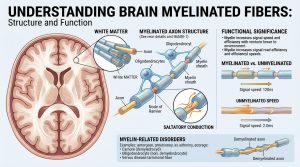
An action potential is a rapidly changing electrical event travelling along a neuron.
The nervous system therefore combines:
- electricity
- chemistry
- biological structure
- information processing
Electrical signals travel along neurons, while communication between many neurons commonly involves neurotransmitters at synapses.
Thus, the brain is not simply an electrical computer. It is an extraordinarily complex electrochemical information-processing network.
6. The heart: an electrical organ
The heart provides one of the clearest demonstrations of biological electrical coordination.
Heart muscle cells possess electrical properties that allow coordinated excitation and contraction.
The cardiac conduction system includes structures such as:
- sinoatrial node
- atrioventricular node
- His-Purkinje system
The electrical activity propagates through cardiac tissue and coordinates contraction.
This electrical activity can be measured externally using an electrocardiogram (ECG/EKG).
Conceptually:
Electrical excitation → calcium handling → muscle contraction → blood pumping
The heart therefore converts electrical signalling into mechanical work.
7. Muscles are electrically controlled machines
Skeletal muscle also depends on electrical signalling.
A simplified pathway is:
Motor neuron → neuromuscular junction → muscle-cell membrane excitation → calcium release → actin/myosin interaction → contraction
The electrical signal itself does not constitute the mechanical movement.
Instead, it initiates a cascade of biochemical and molecular events that produce force.
This gives us a broader principle:
Bioelectricity frequently acts as a control signal that causes biochemical and mechanical processes to occur.
8. The brain as an electrochemical information system
The brain contains billions of neurons connected through extraordinarily complex networks.
Its operation involves:
- membrane potentials
- action potentials
- synaptic transmission
- neurotransmitters
- ion channels
- receptor activity
- electrical oscillations
- metabolic energy
Brain electrical activity can be measured using techniques such as electroencephalography (EEG).
However, it would be misleading to describe consciousness simply as “electricity.”
Consciousness remains a much broader scientific problem involving neural networks, information processing, perception, memory, attention and many other processes.
9. Bioelectricity extends beyond the nervous system
One of the most important developments in modern biology is the recognition that bioelectric signalling is not restricted to neurons.
Cells outside the nervous system can also use electrical states as part of their communication and coordination.
Research in developmental bioelectricity has investigated how distributed electrical patterns can participate in:
- gene regulation
- tissue organization
- organ development
- regeneration
- pattern formation
Reviews of this field describe endogenous bioelectric signalling as an important mechanism by which groups of cells coordinate large-scale anatomical decisions. (PubMed Central (PMC))
10. Bioelectricity and regeneration
This is one of the most fascinating areas connected with the concept of The Body Electric.
Some animals have remarkable regenerative capabilities.
Research has investigated whether electrical states surrounding injured tissues contribute to determining how tissues respond to injury.
Robert Becker’s work helped popularize the hypothesis that electrical phenomena could participate in regeneration. (Open Library)
Modern developmental-biology research has continued investigating how bioelectric signalling influences tissue patterning and regeneration.
Importantly, this does not mean that humans can currently regenerate lost limbs simply by applying electricity. That would go beyond the established evidence.
11. The “bioelectric code”
A particularly interesting modern research concept is the possibility that electrical states across cells can contain information about biological structure.
The conceptual model is:
Electrical state → cellular communication → gene-expression changes → tissue behaviour → anatomical pattern
Research by developmental biologists has investigated how manipulating bioelectric states can influence anatomical development in experimental organisms. (The New Yorker)
This raises a profound scientific question:
Is DNA the entire information system of biological development?
The modern answer is more nuanced.
DNA provides an enormous amount of biological information, but cells also operate through:
- biochemical signalling
- mechanical forces
- electrical signalling
- spatial organization
- gene-regulatory networks
- cell-cell communication
Therefore, biological information is distributed across multiple interacting levels.
12. Wound healing and electrical signals
When tissue is damaged, the electrical environment around the wound can change.
Researchers have investigated endogenous electric fields associated with wounds and their possible influence on cell migration and tissue repair.
A simplified conceptual model is:
Injury → altered ionic environment → altered electrical field → cellular response → tissue repair
This is an active research area rather than a simple therapeutic formula.
13. The body is also electromagnetic
Whenever electrical charges move, electromagnetic phenomena are associated with that activity.
Consequently, electrically active organs generate measurable electromagnetic signals.
Examples include:
- cardiac electrical activity
- neural electrical activity
- muscle electrical activity
These signals can be measured using specialized instruments.
However, the body’s naturally generated electromagnetic fields should not be confused with exaggerated claims that the body possesses a large, powerful electromagnetic aura capable of producing extraordinary effects.
Scientific measurement requires distinguishing genuine bioelectromagnetic phenomena from unsupported interpretations.
14. Electricity requires energy
The body does not create electrical energy from nothing.
Biological electrical activity depends heavily on metabolism.
A simplified energy pathway is:
Food → chemical energy → ATP → ion pumps → ion gradients → membrane potentials → electrical signalling
This connects your “Body Electric” thesis directly to your previous work on the mitochondrial ecosystem.
Mitochondria are particularly important because oxidative phosphorylation produces ATP, which powers many processes required to maintain ion gradients.
Therefore:
Mitochondria → ATP → ion pumps → membrane gradients → bioelectric activity
The body’s electrical organization is therefore deeply connected to cellular energy metabolism.
15. The sodium-potassium pump
One of the most important molecular machines in the body is the Na⁺/K⁺-ATPase.
It uses ATP to transport sodium and potassium ions across cell membranes.
Conceptually:
ATP energy → ion transport → concentration gradients → membrane electrical properties
Without continuous maintenance of ion gradients, many electrically excitable cells could not function normally.
This illustrates an important principle:
Biological electricity is maintained by molecular machinery.
16. The body as a distributed electrical network
An engineering analogy can help illustrate the architecture:
| Biological system | Engineering analogy |
|---|---|
| Cell membrane | Electrical barrier/capacitor-like structure |
| Ion channel | Selective electrical gate |
| Ion pump | Powered transport machine |
| Neuron | Signal-processing cable |
| Synapse | Communication interface |
| Brain | Distributed information-processing network |
| Heart conduction system | Timing/control network |
| Muscle | Electromechanical actuator |
| Mitochondria | Energy-conversion system |
| Sensory receptor | Biological sensor |
| Hormones | Chemical communication network |
The analogy is useful, but the human body is vastly more complex than an engineered circuit.
17. Electricity, chemistry and mechanics
The body should therefore be understood as a coupled system.
Electrical
Voltage, current, ion movement and membrane potentials.
Chemical
ATP, neurotransmitters, hormones, proteins and metabolic reactions.
Mechanical
Muscle contraction, blood flow, tissue movement and cellular forces.
Information
Signals are interpreted by cells and networks.
Thermal
Metabolism generates and distributes heat.
These systems continuously interact.
A useful model is:
Energy → electrical state → information → biochemical response → mechanical action → feedback
18. Electrical measurement of the human body
Modern medicine uses several technologies to measure bioelectrical activity.
ECG
Measures electrical activity associated with the heart.
EEG
Measures electrical activity of the brain from electrodes placed on the scalp.
EMG
Measures electrical activity associated with skeletal muscles.
Nerve-conduction studies
Measure electrical responses associated with peripheral nerves.
These technologies demonstrate that the “body electric” is not merely a philosophical metaphor.
It is an experimentally measurable biological reality.
19. The body is not a simple electrical circuit
This distinction is essential for a scientifically rigorous thesis.
A human body is not equivalent to a copper wire.
Biological tissues have different electrical properties.
Their conductivity depends on factors including:
- tissue composition
- water content
- ion concentration
- temperature
- frequency
- membrane structure
The body is therefore a heterogeneous, dynamic electrical medium.
20. Electrical communication across scales
The complete hierarchy can be represented as:
ATOMS
  ↓
IONS
  ↓
MOLECULES
  ↓
CELL MEMBRANES
  ↓
CELLULAR ELECTRICAL STATES
  ↓
CELL–CELL COMMUNICATION
  ↓
TISSUES
  ↓
ORGANS
  ↓
NERVOUS / CARDIAC / MUSCULAR NETWORKS
  ↓
WHOLE-BODY COORDINATION
This is one of the strongest organizing structures for your thesis.
21. The body as an information system
A deeper interpretation is to consider electricity as one of the body’s information carriers.
For example:
Sensory stimulus
↓
Ion-channel response
↓
Electrical signal
↓
Neural network
↓
Brain processing
↓
Motor command
↓
Muscle activation
↓
Movement
This demonstrates that electricity can carry information through biological systems.
22. Electricity and the five senses
The sensory systems also rely heavily on electrochemical mechanisms.
Vision
Photoreceptors convert light into changes in cellular electrical activity.
Hearing
Mechanical vibration ultimately produces electrical responses in sensory cells.
Touch
Mechanical stimulation activates ion channels and changes electrical activity.
Taste
Chemical substances alter receptor-cell signalling.
Smell
Chemical interactions with receptors generate downstream electrical signalling.
Thus:
External physical world → sensory transduction → bioelectric signalling → nervous-system processing
23. Bioelectricity and cellular intelligence
A particularly important modern research question concerns how groups of cells coordinate themselves.
Cells constantly receive information from their environment and from neighbouring cells.
They can respond to:
- chemical gradients
- electrical states
- mechanical forces
- nutrients
- temperature
- physical contact
This does not mean that individual cells possess human-like consciousness.
Rather, it means that biological systems can perform sophisticated distributed coordination without requiring every decision to be controlled directly by the brain.
24. The Body Electric and artificial intelligence
This creates an interesting bridge to your technology-oriented research.
A biological nervous system can be compared conceptually with an information architecture:
Sensors → signal processing → memory → decision-making → actuators → feedback
An AI system might use:
Sensors → data → algorithms → model → inference → actuator → feedback
The similarity is conceptual, not literal.
Biology uses electrochemical networks, while artificial systems use electronic circuits and computational architectures.
This comparison could become an important chapter connecting biology, AI, robotics and future technology.
25. The Body Electric and future medicine
Bioelectricity is relevant to emerging fields including:
- neural interfaces
- neuromodulation
- bioelectronic medicine
- prosthetic control
- tissue engineering
- regenerative medicine
- developmental biology
- wearable biosensors
- human-machine interfaces
The long-term scientific goal is not simply to “put electricity into the body.”
It is to understand biological signalling sufficiently well that electrical or electronic systems can interact with biological processes precisely and safely.
26. The Body Electric and human-machine integration
This leads to a future-oriented architecture:
Human body
↕
Sensors
↕
Bioelectric signals
↕
Signal processing
↕
Computer/AI
↕
Decision system
↕
Actuator
↕
Human/environment
This is already relevant to technologies such as prosthetic control and biomedical interfaces.
The longer-term possibility is increasingly sophisticated communication between biological nervous systems and electronic computing systems.
27. Important scientific caution
A comprehensive thesis should clearly distinguish established science from hypothesis and speculation.
Well-established:
- cells maintain membrane potentials
- neurons use electrical signalling
- muscles depend on electrical excitation
- the heart has coordinated electrical activity
- bioelectric signals exist outside the nervous system
- ion channels are fundamental to cellular electrical behaviour
- electrical states participate in development and cellular communication
Active research:
- bioelectric patterning
- regenerative control
- bioelectric contributions to disease
- bioelectric information processing
- advanced bioelectronic medicine
- electrically guided tissue engineering
Unsubstantiated or exaggerated claims should not be presented as established science.
This distinction is particularly important because The Body Electric has inspired both legitimate scientific research and interpretations that extend considerably beyond the evidence.
28. A complete “Body Electric” systems model
Your thesis could ultimately present the body as:
                    THE BODY ELECTRIC
                           │
        ┌──────────────────┼──────────────────┐
        │                  │                  │
     ENERGY            INFORMATION        STRUCTURE
        │                  │                  │
   Mitochondria          Neurons           Cells
        │                  │                  │
       ATP             Electrical         Tissues
        │                signals             │
   Ion pumps               │               Organs
        │                   │                 │
 Ion gradients       Brain networks         │
        │                   │                 │
 Membrane voltage ──── Coordination ─── Mechanical action
        │                   │                 │
        └───────────────────┼─────────────────┘
                            │
                     WHOLE-BODY LIFE
The central insight is that electricity is one component of a much larger biological information-and-energy architecture.
29. Proposed thesis structure
For your Millennium Tech Saga 3001 research collection, I would structure “The Body Electric” into approximately 15 major chapters:
- Introduction: What Is the Body Electric?
- History of Electricity and Biological Thought
- Atoms, Electrons and Biological Ions
- The Electrical Architecture of the Cell
- Membrane Potential and Ion Channels
- Neurons and the Electrical Nervous System
- The Electrical Heart
- Electrical Control of Muscles
- The Brain as an Electrochemical Network
- Bioelectricity Beyond the Nervous System
- Bioelectricity, Development and Regeneration
- Mitochondria, ATP and Biological Energy
- Medical Measurement and Bioelectronic Technologies
- AI, Robotics and the Future Human-Machine Interface
- The Body Electric in the Millennium 3001 Civilization
The modern field of developmental bioelectricity makes the subject particularly relevant to a future-oriented research collection: contemporary reviews explicitly investigate how endogenous electrical signalling can influence gene expression, organ formation and large-scale anatomical patterning. (PubMed Central (PMC))
Core thesis
The human body is a dynamically coupled electrochemical system in which electrical potentials, ion flows, biochemical reactions, mechanical forces and information networks cooperate to maintain life, coordinate organs and regulate cellular behaviour.
That gives “The Body Electric” a much stronger scientific foundation than simply describing the human body as “electrical.” It places electricity within the larger architecture of energy, information, biology, computation and life itself.

Be First to Comment