
Introduction
The intelligence industry represents a convergence of advanced technologies, data analytics, and strategic operations that serve government agencies, defense organizations, and private enterprises. This sector encompasses both sophisticated manufacturing capabilities for specialized hardware and cutting-edge software applications that process, analyze, and disseminate critical information. From satellite systems and surveillance equipment to artificial intelligence platforms and cybersecurity tools, the intelligence industry has become increasingly complex and vital to national security and commercial interests.
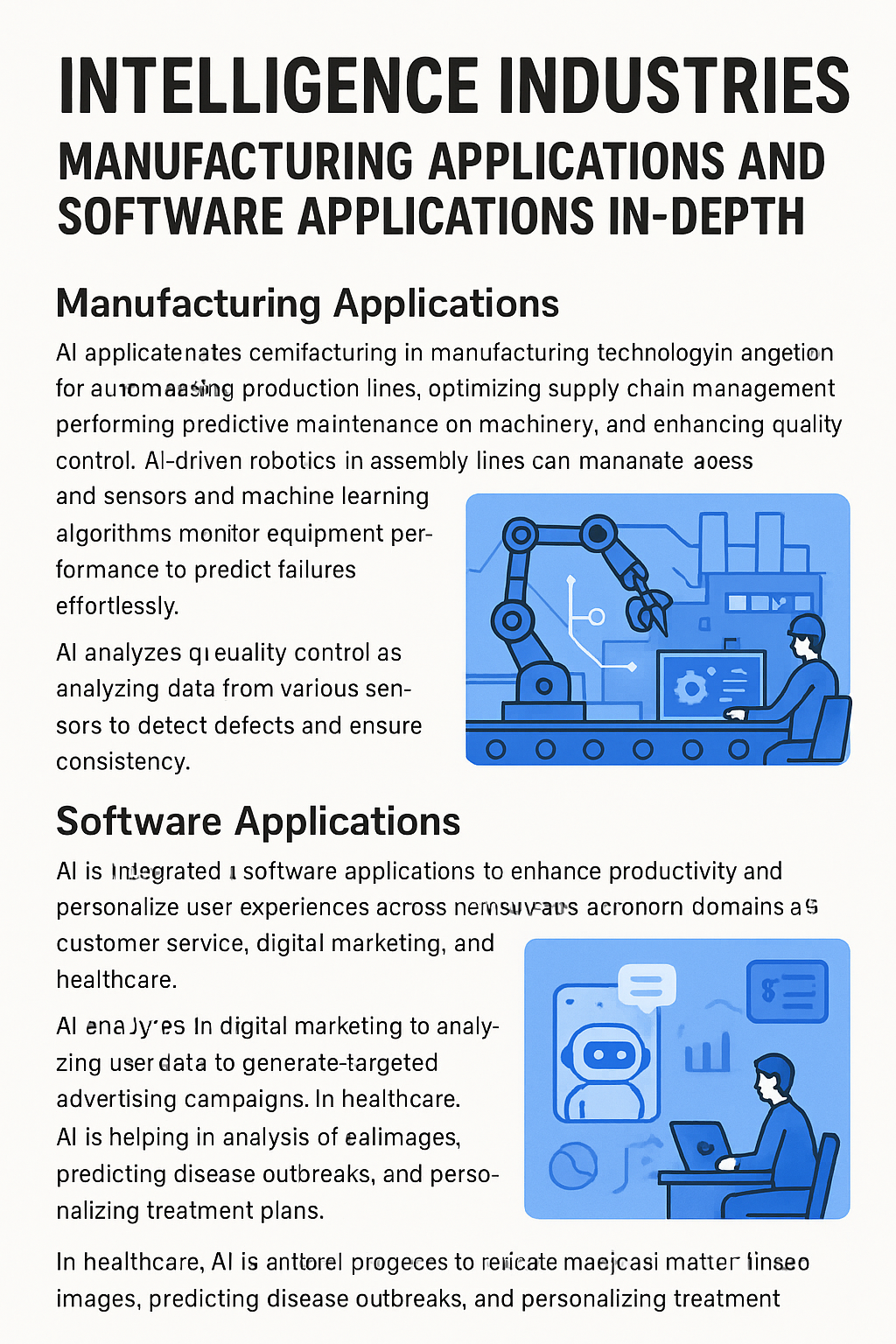
Manufacturing Applications in Intelligence Industries
Surveillance and Reconnaissance Equipment
The manufacturing of surveillance equipment forms the backbone of physical intelligence gathering. Modern surveillance systems integrate multiple technologies including high-resolution cameras, thermal imaging sensors, and advanced optics. Manufacturing facilities producing these systems must maintain stringent quality control processes and operate under strict security protocols.
Night vision devices represent a critical manufacturing segment, utilizing image intensifier tubes and infrared technology. These systems amplify ambient light or detect heat signatures, enabling operations in complete darkness. The manufacturing process involves creating photocathodes, microchannel plates, and phosphor screens with extremely tight tolerances. Modern facilities employ cleanroom environments and precision assembly techniques to ensure reliability in demanding operational environments.
Unmanned aerial vehicles (UAVs) and drone systems have revolutionized intelligence gathering capabilities. Manufacturing these platforms requires expertise in aerodynamics, materials science, and electronics integration. Carbon fiber composites, lightweight alloys, and advanced polymers are shaped into airframes that balance durability with minimal weight. Propulsion systems, flight control computers, and sensor payloads must be integrated seamlessly. Manufacturing facilities often produce modular systems that allow mission-specific configurations, from micro-drones weighing grams to larger platforms capable of extended endurance flights.
Signals Intelligence Hardware
Signals intelligence (SIGINT) equipment manufacturing focuses on devices that intercept, analyze, and process electromagnetic communications. Radio frequency receivers must cover vast frequency ranges with high sensitivity and selectivity. Manufacturing these systems involves creating specialized filters, amplifiers, and signal processing circuits that can operate in challenging electromagnetic environments.
Direction-finding equipment allows operators to locate signal sources through triangulation or more advanced techniques. Manufacturing these systems requires precise antenna arrays, calibrated receivers, and sophisticated processing hardware. Antenna manufacturing itself represents a specialized discipline, with phased arrays, directional antennas, and omnidirectional systems each requiring different production techniques and materials.
Software-defined radio (SDR) platforms have transformed SIGINT capabilities by implementing signal processing functions in reconfigurable software rather than fixed hardware. Manufacturing SDR systems focuses on high-speed analog-to-digital converters, powerful field-programmable gate arrays (FPGAs), and general-purpose computing hardware. These platforms enable intelligence agencies to adapt to evolving communication technologies without replacing entire systems.
Secure Communication Devices
Manufacturing secure communication equipment requires balancing usability with robust encryption and anti-tamper features. Encrypted radios, satellite phones, and data terminals must protect information while remaining reliable under adverse conditions. Production facilities implement hardware security modules during manufacturing, embedding cryptographic keys and implementing physical security measures that detect tampering attempts.
Tactical communication systems designed for field operations must withstand environmental extremes, physical shock, and electromagnetic interference. Manufacturing processes include environmental testing chambers, vibration tables, and electromagnetic compatibility facilities to verify performance under operational conditions. Many systems incorporate frequency-hopping spread spectrum or other anti-jamming technologies that require precise timing and frequency synthesis circuits.
Biometric Systems
Biometric identification systems have become essential intelligence tools, with manufacturing spanning fingerprint scanners, iris recognition cameras, facial recognition systems, and DNA analysis equipment. Fingerprint scanner manufacturing involves creating high-resolution optical or capacitive sensors that can capture ridge details under various conditions, including wet or dirty fingers.
Iris recognition systems require specialized cameras with near-infrared illumination and precise optics to capture the complex patterns in the iris. Manufacturing these systems demands alignment accuracy measured in micrometers and careful calibration to ensure consistent performance across diverse populations. Mobile biometric devices combine multiple modalities in ruggedized packages suitable for field operations.
Satellite Systems
Satellite manufacturing for intelligence applications represents one of the most complex manufacturing endeavors. Reconnaissance satellites integrate enormous optical systems, sophisticated electronics, and precise attitude control mechanisms. The manufacturing process spans years and involves countless specialized suppliers.
Optical systems for imaging satellites utilize mirrors measuring several meters in diameter, manufactured to tolerances measured in nanometers. These mirrors undergo extensive polishing, coating, and testing processes. The entire optical assembly must maintain alignment despite launch vibrations and the temperature extremes of space. Manufacturing facilities include thermal vacuum chambers, vibration test systems, and optical test ranges.
Synthetic aperture radar (SAR) satellites use large antenna arrays to create high-resolution images regardless of weather or lighting conditions. Manufacturing these antennas involves creating precisely dimensioned mesh or solid reflectors that unfold in space. The electronics must generate powerful radar pulses and process the returned signals with sophisticated algorithms. Radiation-hardened electronics withstand the space environment over mission durations spanning years or decades.
Cybersecurity Hardware
Specialized hardware for cybersecurity includes intrusion detection appliances, network monitoring systems, and hardware security modules. Manufacturing these devices focuses on high-throughput packet processing, cryptographic acceleration, and secure key storage. Many systems employ custom ASICs (application-specific integrated circuits) designed specifically for security functions.
Hardware security modules (HSMs) protect cryptographic keys and perform encryption operations in tamper-resistant packages. Manufacturing involves creating physical enclosures that detect and respond to intrusion attempts, often by erasing sensitive data. Environmental sensors, mesh layers, and active monitoring circuits are integrated during production. These devices undergo rigorous security testing and certification processes before deployment.
Software Applications in Intelligence Industries
Data Collection Platforms
Software platforms for intelligence data collection orchestrate sensors, manage communications, and ensure secure data transmission. Collection management systems allow analysts to task sensors, prioritize targets, and coordinate resources. These platforms implement complex scheduling algorithms that balance competing requirements while respecting technical constraints and operational security.
Web scraping and open-source intelligence (OSINT) tools automate the collection of publicly available information from websites, social media, news sources, and forums. Modern OSINT platforms employ natural language processing to extract entities, relationships, and events from unstructured text. Machine learning algorithms identify relevant content within the vast volumes of online information, while respecting legal and ethical boundaries.
Sensor management software controls physical intelligence collection devices, from cameras and microphones to complex radar systems. These applications handle configuration, calibration, data acquisition, and real-time quality assessment. Advanced systems implement automated target tracking, maintaining focus on subjects of interest while filtering irrelevant information.
Signal Processing Software
Digital signal processing applications transform raw sensor data into actionable intelligence. Audio processing software enhances speech quality, removes background noise, and separates multiple speakers. Voice recognition systems transcribe conversations and identify speakers through vocal characteristics. Modern systems employ deep learning models trained on diverse audio samples to achieve high accuracy across accents, languages, and acoustic environments.
Image and video processing software enhances surveillance footage, stabilizes shaky video, and extracts forensic details. Super-resolution algorithms combine multiple frames to increase effective resolution beyond native sensor capabilities. Object detection and tracking software automatically identifies and follows vehicles, people, or other entities across video sequences. Advanced systems employ convolutional neural networks that have learned to recognize thousands of object categories with human-level accuracy.
Radio frequency signal analysis software identifies communication protocols, demodulates signals, and extracts content from intercepted transmissions. These applications must adapt to diverse modulation schemes, error correction codes, and encryption methods. Spectrum analysis tools visualize frequency usage, detect anomalies, and identify signal types through pattern recognition. Software-defined radio applications provide flexible platforms that can be reprogrammed to handle evolving communication technologies.
Data Analytics and Fusion
Intelligence analysts face overwhelming volumes of data from diverse sources. Analytics platforms help identify patterns, anomalies, and relationships within massive datasets. Link analysis software visualizes connections between entities, revealing networks and organizational structures. Geospatial intelligence platforms integrate imagery, mapping data, and location information to provide spatial context for intelligence operations.
Data fusion systems combine information from multiple sources to create comprehensive intelligence pictures. These platforms resolve conflicts between sources, assess reliability, and integrate temporal information to track entities and events over time. Advanced fusion engines employ probabilistic reasoning to handle uncertain or contradictory information, providing analysts with confidence assessments alongside fused results.
Big data platforms built on distributed computing frameworks process intelligence data at unprecedented scales. These systems ingest streaming data, perform real-time analytics, and maintain historical repositories spanning petabytes. Graph databases efficiently store and query network relationships, enabling rapid analysis of complex organizational structures. Time-series databases optimize storage and retrieval of sensor data and event logs.
Artificial Intelligence and Machine Learning
Machine learning has transformed intelligence analysis, with supervised learning models trained to recognize patterns in labeled historical data. Classification algorithms categorize documents, images, or signals based on learned characteristics. Regression models predict future events or estimate unknown quantities. Anomaly detection algorithms identify unusual patterns that merit analyst attention, helping prioritize effort on the most significant information.
Deep learning models have achieved remarkable capabilities in image recognition, natural language processing, and speech recognition. Convolutional neural networks excel at visual tasks, identifying objects, faces, and activities in imagery. Recurrent neural networks and transformers process sequential data like text and speech, capturing context and meaning. These models require substantial computational resources for training but can process new data efficiently once trained.
Natural language processing applications extract meaning from text in multiple languages. Named entity recognition identifies people, organizations, locations, and other entities. Relationship extraction determines connections between entities. Sentiment analysis assesses opinions and emotions expressed in communications. Machine translation enables cross-language intelligence operations, though human oversight remains essential for nuanced content.
Predictive analytics applies statistical models and machine learning to forecast future events. Time-series forecasting predicts trends in collected intelligence. Classification models assess threat levels or estimate probabilities of specific outcomes. Recommendation systems suggest targets for collection or analysis based on current intelligence priorities and historical patterns.
Cybersecurity Software
Intrusion detection systems monitor networks and hosts for signs of compromise. Signature-based detection identifies known attack patterns, while anomaly-based systems flag unusual behavior. Modern systems employ machine learning to distinguish legitimate activity from potential threats, reducing false alarms that overwhelm security teams.
Security information and event management (SIEM) platforms aggregate logs from diverse sources, correlate events, and alert analysts to potential security incidents. These systems process millions of events per second, applying rules and analytics to identify meaningful patterns. Investigation tools help analysts understand attack timelines, identify affected systems, and assess impact.
Malware analysis platforms dissect suspicious software to understand capabilities and attribution. Static analysis examines code structure without execution, while dynamic analysis runs malware in isolated sandbox environments to observe behavior. Reverse engineering tools help analysts understand obfuscated or encrypted malware. Threat intelligence platforms share information about malware, attack techniques, and threat actors across organizations.
Vulnerability assessment software scans networks and systems for security weaknesses. These tools identify missing patches, misconfigurations, and known vulnerabilities. Penetration testing frameworks automate attack simulations to validate defenses. Compliance monitoring ensures systems meet security policies and regulatory requirements.
Geospatial Intelligence Software
Geographic information systems (GIS) form the foundation of geospatial intelligence, integrating map data, satellite imagery, and location-based intelligence. Modern GIS platforms handle three-dimensional terrain models, temporal data showing change over time, and real-time feeds from sensors and tracking systems. Spatial analysis functions calculate distances, viewsheds, optimal routes, and other geographic relationships.
Image analysis software processes satellite and aerial imagery to extract intelligence. Change detection algorithms identify differences between images captured at different times, highlighting new construction, vehicle movements, or environmental changes. Feature extraction automatically identifies buildings, roads, vehicles, and other objects. Mensuration tools measure dimensions and distances in imagery with high accuracy.
Full-motion video analysis software processes aerial surveillance video, often from UAVs. These applications track moving objects, create activity patterns, and generate alerts when predefined conditions occur. Multi-intelligence visualization platforms overlay video, signals intelligence, and other data sources on common geospatial displays, providing comprehensive operational pictures.
Collaboration and Dissemination Platforms
Intelligence portals provide centralized access to information, tools, and analytic products. These web-based platforms implement security controls, manage user permissions, and track access to sensitive information. Search capabilities span multiple data sources, with relevance ranking and filtering to help analysts find pertinent information quickly. Recommendation engines suggest related content based on user interests and current tasks.
Collaborative analysis environments enable multiple analysts to work together on complex problems. Shared workspaces maintain document versions, track contributions, and integrate communications. Workflow management tools route intelligence through production processes, from collection through analysis to dissemination. Automated notifications keep team members informed of relevant developments.
Intelligence dissemination systems deliver finished intelligence to consumers through appropriate channels. These platforms format reports, manage classification markings, and enforce need-to-know restrictions. Automated dissemination pushes time-sensitive intelligence to relevant consumers immediately. Consumer feedback mechanisms help intelligence organizations assess product value and adjust collection priorities.
Case Management Systems
Investigative case management platforms organize evidence, track leads, and manage investigative workflows. These systems maintain chain of custody for digital evidence, document analyst actions, and generate case reports. Link analysis visualizes relationships between subjects, locations, and events. Timeline tools sequence events to understand patterns and establish chronology.
Counterterrorism and counterintelligence applications track threat actors, monitor activities, and assess risk levels. Watch list management maintains databases of known or suspected individuals, with automated screening against travel, financial, and other records. Threat assessment tools evaluate intelligence to prioritize threats and allocate investigative resources.
Language Processing and Translation
Machine translation systems enable intelligence operations across language barriers. Neural machine translation models achieve near-human translation quality for many language pairs. Post-editing tools help human translators refine machine translations efficiently. Speech-to-text systems transcribe audio in multiple languages, enabling rapid processing of intercepted communications.
Cross-lingual information retrieval allows analysts to search documents in multiple languages using queries in their native language. These systems understand semantic meaning rather than just matching keywords, improving relevance for non-English content. Multilingual entity recognition identifies people, organizations, and locations regardless of language, enabling consistent tracking across diverse sources.
Specialized Analytical Tools
Financial intelligence platforms trace money flows, identify suspicious transactions, and map financial networks. These systems integrate banking records, transaction data, and entity information. Network analysis reveals complex financial relationships and identifies potential money laundering or terrorist financing. Sanctions screening checks transactions and entities against government watch lists.
Biographical intelligence tools compile comprehensive profiles of individuals from multiple sources. These systems aggregate communications intercepts, travel records, financial information, and open-source data. Relationship mapping shows associates, organizational affiliations, and historical connections. Behavioral analysis identifies patterns that indicate intent or predict future actions.
Scientific and technical intelligence applications track foreign technology developments, analyze weapon systems, and assess capabilities. These platforms integrate imagery, technical documents, and sensor data. Performance modeling estimates capabilities of foreign systems. Technology trend analysis identifies emerging threats and opportunities.
Integration and Interoperability
Modern intelligence operations require seamless integration across diverse systems. Application programming interfaces (APIs) enable data exchange between platforms, while standard data formats ensure interoperability. Service-oriented architectures decompose capabilities into reusable components that can be orchestrated into workflows.
Enterprise service buses provide messaging infrastructure that decouples systems, enabling flexible integration without point-to-point connections. Microservices architectures divide applications into small, independently deployable components that scale efficiently and update without disrupting entire systems. Containerization technologies package applications with dependencies, ensuring consistent operation across environments.
Cloud computing has transformed intelligence IT infrastructure, providing elastic scalability and geographic distribution. Private clouds maintain sensitive systems within controlled facilities, while hybrid approaches leverage commercial cloud services for appropriate workloads. Security architectures extend to cloud environments, with encryption, access controls, and monitoring adapted to cloud deployment models.
Emerging Technologies
Quantum computing promises to revolutionize cryptography and optimization problems central to intelligence operations. Quantum computers could potentially break widely used encryption schemes while enabling unbreakable quantum key distribution. Intelligence agencies are investing heavily in quantum technologies while also developing post-quantum cryptographic algorithms resistant to quantum attacks.
Edge computing moves processing closer to data sources, reducing latency and bandwidth requirements. Intelligence sensors increasingly incorporate substantial processing capabilities, performing initial analytics locally before transmitting results. This approach enables real-time decision-making even when communications are limited or compromised.
Blockchain technology offers potential for tamper-evident audit trails, secure multi-party computation, and decentralized intelligence sharing. Smart contracts could automate information sharing agreements between agencies while maintaining security controls. Distributed ledgers might track data provenance and chain of custody for digital evidence.
Synthetic data generation creates realistic training data for machine learning while protecting sensitive information. Generative adversarial networks produce imagery, communications, and other data that preserves statistical properties without exposing actual intelligence sources. This technology enables broader development and testing of intelligence systems while maintaining operational security.
Ethical and Legal Considerations
Intelligence industries operate under complex legal frameworks that vary by jurisdiction. Privacy protections, civil liberties, and oversight mechanisms constrain collection and analysis activities. Software systems must implement legal safeguards, including minimization procedures that limit retention of information about protected persons. Audit trails document system access and analyst actions to ensure accountability.
Artificial intelligence systems raise particular ethical concerns, including algorithmic bias, explainability, and appropriate human oversight. Intelligence organizations are developing frameworks to ensure AI systems operate fairly and transparently within mission contexts. Bias testing evaluates whether systems perform equitably across demographic groups. Explainable AI techniques help analysts understand why systems reached particular conclusions.
Export controls restrict international transfer of intelligence technology, with manufacturing and software capabilities subject to national security regulations. Defense contractors and intelligence vendors must navigate complex compliance requirements when operating internationally or collaborating with foreign entities.
Conclusion
The intelligence industry encompasses a vast ecosystem of manufacturing capabilities and software applications that enable governments and organizations to gather, analyze, and act on information. From the physical sensors that collect raw data to the sophisticated AI systems that extract actionable intelligence, this industry continues to evolve rapidly. Emerging technologies promise even greater capabilities while raising important questions about privacy, accountability, and international security. As threats evolve and technology advances, the intelligence industry will remain at the forefront of innovation, developing new tools and techniques to meet complex challenges in an interconnected world.


Be First to Comment