
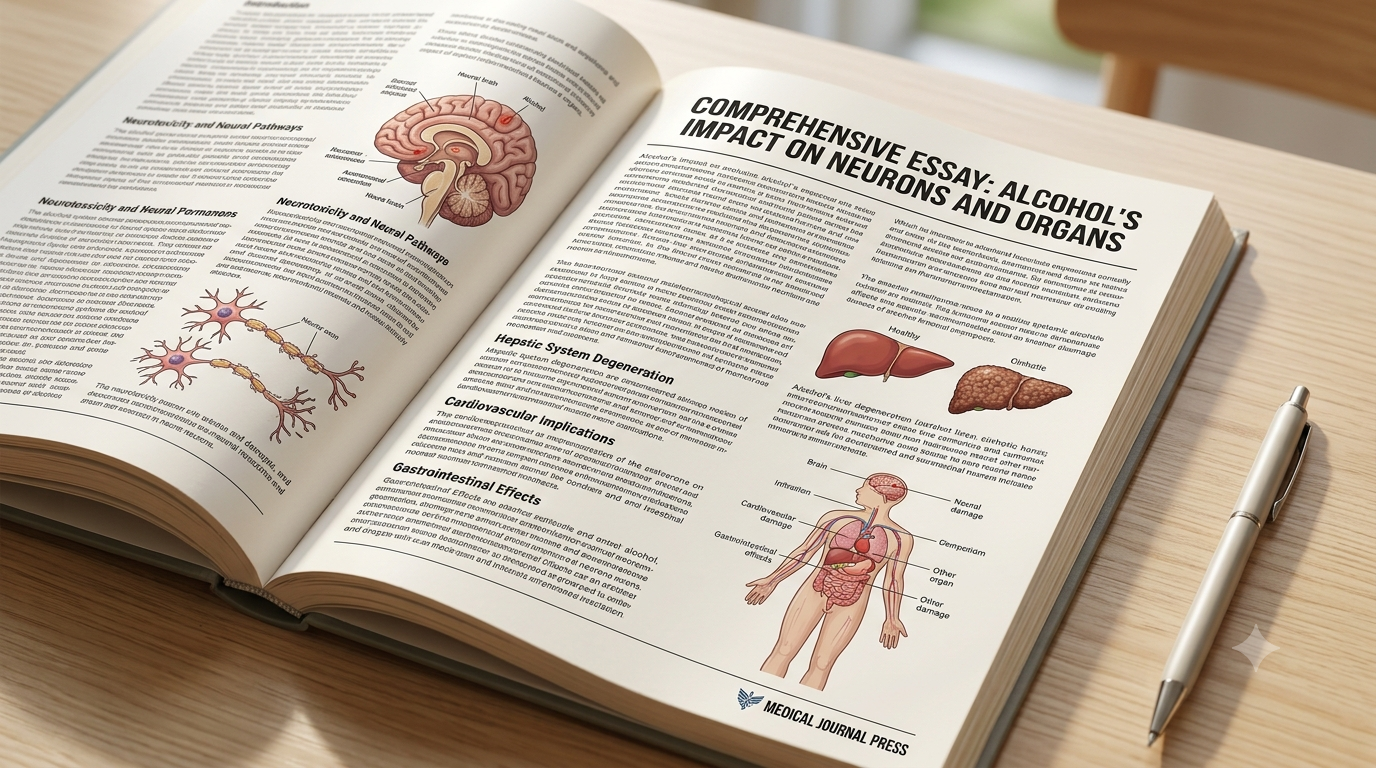
Introduction
Alcohol is one of the world’s most widely consumed psychoactive substances. While moderate consumption may be tolerated by some healthy adults, excessive or long-term alcohol use can affect nearly every organ system. The organ most vulnerable to alcohol is the brain, where billions of neurons communicate through complex electrical and chemical networks.
Alcohol is unique because it:
- Crosses the blood-brain barrier within minutes.
- Alters communication between neurons almost immediately.
- Affects memory, judgment, emotions, movement, and decision-making.
- Can damage organs directly and indirectly through inflammation, nutritional deficiencies, and toxic metabolic byproducts.
Understanding alcohol damage requires examining the human body as one interconnected biological system.
Human Body Systems Affected by Alcohol
| System | Primary Damage |
|---|---|
| Brain | Neuron dysfunction and loss |
| Nervous System | Peripheral neuropathy |
| Liver | Fatty liver, hepatitis, cirrhosis |
| Heart | Cardiomyopathy, arrhythmias |
| Kidneys | Dehydration and impaired regulation |
| Pancreas | Pancreatitis |
| Digestive Tract | Ulcers, gastritis, cancers |
| Immune System | Weakened defenses |
| Endocrine System | Hormonal disruption |
| Reproductive System | Reduced fertility and sexual dysfunction |
| Bones | Osteoporosis risk |
| Muscles | Muscle wasting |
| Skin | Dehydration and premature aging |
The Journey of Alcohol Through the Body
Alcohol moves through the body in several stages:
- Mouth
- Stomach
- Small intestine
- Bloodstream
- Liver
- Heart
- Brain
- Every organ
Unlike many foods, alcohol requires very little digestion and enters the bloodstream rapidly.
Alcohol and the Brain
The Brain: The Command Center
The human brain contains approximately 86 billion neurons.
Each neuron communicates through:
- Electrical impulses
- Chemical neurotransmitters
- Synapses
Alcohol interferes with every stage of this communication.
How Alcohol Damages Neurons
Step 1: Rapid Entry
Alcohol reaches the brain within minutes after drinking.
It passes through the blood-brain barrier, which normally protects the brain from many harmful substances.
Step 2: Neurotransmitter Disruption
Alcohol alters several major neurotransmitter systems.
GABA (Gamma-Aminobutyric Acid)
Role:
- Calms brain activity.
Alcohol:
- Enhances GABA activity.
- Causes drowsiness.
- Slows thinking.
- Reduces coordination.
Glutamate
Role:
- Learning
- Memory
- Alertness
Alcohol:
- Suppresses glutamate.
- Impairs learning.
- Causes blackouts.
- Slows information processing.
Dopamine
Role:
- Reward
- Motivation
- Pleasure
Alcohol:
- Produces a temporary dopamine surge.
- Reinforces repeated drinking.
- Can contribute to dependence over time.
Serotonin
Role:
- Mood
- Sleep
- Emotional regulation
Alcohol initially increases serotonin activity, but repeated heavy use can disrupt this system, contributing to mood changes and sleep problems.
Cellular Damage to Neurons
Long-term heavy alcohol use may contribute to:
- Oxidative stress
- Chronic inflammation
- Damage to cell membranes
- Mitochondrial dysfunction (reduced cellular energy production)
- Impaired repair mechanisms
These processes can injure neurons and supporting brain cells.
Brain Shrinkage
Research has shown that chronic heavy alcohol consumption is associated with reductions in brain volume.
Areas commonly affected include:
- Frontal lobe
- Cerebellum
- Hippocampus
Possible consequences include:
- Memory impairment
- Poor judgment
- Slower thinking
- Reduced coordination
Some recovery in brain structure and function is possible after sustained abstinence, although recovery varies among individuals.
The Hippocampus
Functions:
- Learning
- Memory formation
Heavy drinking may:
- Reduce the formation of new neurons.
- Impair memory.
- Increase the risk of blackouts.
The Frontal Lobe
Controls:
- Planning
- Judgment
- Self-control
- Decision-making
Alcohol impairs these functions, leading to:
- Risk-taking
- Poor decisions
- Reduced impulse control
Cerebellum
Responsible for:
- Balance
- Coordination
- Fine movement
Damage can lead to:
- Tremors
- Poor balance
- Difficulty walking
- Slurred speech
White Matter Damage
White matter acts as the brain’s communication network.
Alcohol can damage this network, resulting in:
- Slower thinking
- Reduced reaction time
- Poor coordination between brain regions
Peripheral Nervous System
Long-term alcohol use can contribute to peripheral neuropathy, a condition involving damage to nerves outside the brain and spinal cord.
Symptoms may include:
- Numbness
- Tingling
- Burning sensations
- Weakness
- Reduced balance
Alcohol and the Liver
Liver
The liver processes most of the alcohol consumed.
Stage 1: Fatty Liver
- Fat accumulates in liver cells.
- Often reversible with abstinence.
Stage 2: Alcoholic Hepatitis
- Inflammation
- Cell injury
- Scarring begins
Stage 3: Cirrhosis
- Extensive scar tissue replaces healthy liver tissue.
- Reduced liver function.
- Increased risk of liver failure and liver cancer.
Alcohol and the Heart
Heavy alcohol use can contribute to:
- High blood pressure
- Irregular heart rhythms
- Weakening of the heart muscle (alcohol-related cardiomyopathy)
- Increased risk of stroke
Alcohol and the Pancreas
Pancreas
Alcohol can:
- Trigger inflammation.
- Damage digestive enzyme-producing cells.
- Increase the risk of chronic pancreatitis.
Alcohol and the Kidneys
Alcohol:
- Promotes dehydration by reducing the effects of a hormone that helps the kidneys conserve water.
- Can disturb electrolyte balance.
- May contribute indirectly to kidney problems, particularly when combined with liver disease or high blood pressure.
Alcohol and the Immune System
Heavy drinking can:
- Reduce immune cell function.
- Increase susceptibility to infections.
- Delay wound healing.
Alcohol and the Digestive System
Alcohol may:
- Irritate the stomach lining.
- Increase acid production.
- Contribute to gastritis.
- Increase the risk of ulcers.
- Reduce nutrient absorption.
Vitamin Deficiencies
Heavy alcohol use often interferes with nutrition and absorption.
Common deficiencies include:
- Vitamin B1 (thiamine)
- Vitamin B6
- Vitamin B12
- Folate
- Vitamin D
Thiamine deficiency is particularly important because it can lead to severe neurological disorders.
Alcohol-Related Brain Disorders
Long-term heavy alcohol use, especially when combined with thiamine deficiency, can contribute to serious neurological conditions such as Wernicke encephalopathy and Korsakoff syndrome, which can cause confusion, problems with coordination, and significant memory impairment.
Alcohol and Cancer
Strong scientific evidence links alcohol consumption to an increased risk of several cancers, including:
- Mouth
- Throat
- Voice box
- Esophagus
- Liver
- Breast
- Colon and rectum
Risk generally increases with greater alcohol consumption.
Why Recovery Is Possible
The brain has some ability to adapt and recover through neuroplasticity.
After reducing or stopping alcohol, many people experience gradual improvements in:
- Attention
- Memory
- Sleep
- Mood
- Coordination
The degree of recovery depends on factors such as age, duration and amount of alcohol use, nutritional status, and overall health. Severe damage may not be fully reversible.
Early Warning Signs of Alcohol-Related Damage
Potential warning signs include:
- Frequent memory lapses
- Poor concentration
- Balance problems
- Persistent numbness or tingling
- Mood changes
- Sleep disturbances
- Yellowing of the skin or eyes
- Unexplained weight loss
- Frequent infections
- Fatigue
Anyone experiencing these symptoms should seek evaluation from a healthcare professional.
Protecting the Brain and Body
Evidence-based measures include:
- Avoid or limit alcohol consumption according to medical guidance.
- Eat a balanced, nutrient-rich diet.
- Stay physically active.
- Get adequate sleep.
- Manage chronic conditions such as high blood pressure and diabetes.
- Avoid smoking.
- Seek medical support if reducing alcohol use is difficult.
Conclusion
Alcohol affects virtually every organ in the human body, but the nervous system is particularly vulnerable. It disrupts communication between neurons within minutes of consumption and, with sustained heavy use, can contribute to structural brain changes, cognitive impairment, peripheral nerve damage, liver disease, cardiovascular disease, pancreatic injury, weakened immunity, nutritional deficiencies, and increased cancer risk.
Although the body has remarkable repair mechanisms and many effects improve after reducing or stopping alcohol use, prolonged heavy drinking can cause permanent damage. Understanding how alcohol interacts with the brain and other organs helps individuals make informed decisions about their health and underscores the importance of prevention, early recognition, and appropriate medical care.





Be First to Comment